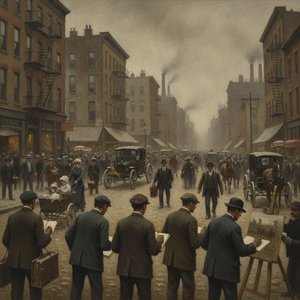
Edward Hopper: A Solitude Observed
Edward Hopper, a name inextricably linked to the quietude and subtle melancholy that permeated 20th-century American life, wasn’t simply a painter of scenes; he was a poet of light and shadow, a chronicler of modern isolation. Born in Nyack, New York, in 1882, to middle-class parents of Dutch ancestry, Hopper's early years provided a stable upbringing that nurtured his artistic inclinations. From childhood sketches meticulously dated and signed, it became evident that keen observation and an innate talent for drawing were central to his being.
Early Influences & Artistic Training
Though initially encouraged towards commercial illustration – a pragmatic suggestion from his parents – Hopper’s ambitions leaned toward fine art, leading him to the New York School of Art where he studied under William Merritt Chase and Robert Henri. These formative years instilled not only technical skill but also an appreciation for realism and a commitment to depicting the world as he saw it. He absorbed influences from Impressionism and Post-Impressionism, particularly Cézanne’s geometric simplification and Monet’s atmospheric effects, shaping his distinctive visual vocabulary.
The Style of Hopper: Light, Shadow & Psychological Depth
Hopper's artistic style is instantly recognizable for its austere compositions, muted color palettes dominated by earthy tones—browns, grays, ochres—and a masterful manipulation of light and shadow. He eschewed dramatic narratives or flamboyant gestures, instead focusing on capturing fleeting moments of everyday life with remarkable precision. His paintings often depict solitary figures inhabiting sparsely furnished interiors, conveying a profound sense of loneliness and introspection. This deliberate restraint wasn’t merely stylistic; it reflected Hopper's deep engagement with psychological themes—the anxieties of modern existence, the complexities of human relationships, and the yearning for connection.
Iconic Works & Recurring Themes
Among Hopper’s most celebrated paintings are “Nighthawks” (1942), a depiction of a late-night diner scene bathed in artificial light, and “Moonrise Over Saint Louis” (1927), which captures the stillness of twilight over a Midwestern cityscape. Recurring motifs—empty rooms, solitary figures gazing out windows, urban landscapes devoid of human presence—underscore Hopper’s preoccupation with themes of alienation and psychological isolation. These images resonate powerfully with viewers because they tap into universal anxieties about solitude and the challenges of navigating modern life.
Legacy & Influence
Edward Hopper's work continues to inspire artists and designers alike, cementing his place as one of America’s most influential painters. His uncompromising realism combined with poetic sensitivity—a careful balance between observation and emotion—established a new standard for depicting the human condition in art. He remains a cornerstone of American Realism, demonstrating that profound artistic expression can emerge from seemingly unremarkable subjects.



 Önizleme yap
 El yapımı tablo satın al
 Paylaş
 Paylaş
 Detayları Gör

 İndir
İndir
 Benzerlerini gör
 X-Işını
 Slayt Gösterisi


 Tümünü Gör






































 Cam seçeneği yalnızca 110 cm altındaki boyutlar için mevcuttur.