Atölye — Dünya çapında ücretsiz gönderim — 2–6 hafta içinde teslimat
Fotoğraftan Tablo Yapımı İstek Listesi Sepet
Önizleme yapÖnizleme yap AR ile önizleAR ile önizle Baskıya Geç Baskıya GeçGörsele Geç Görsele Geç PaylaşPaylaş
Detayları GörDetayları Gör Favorilere ekle Favorilere ekle İndirİndir Benzerlerini görBenzerlerini gör X-IşınıX-Işını Slayt GösterisiSlayt Gösterisi

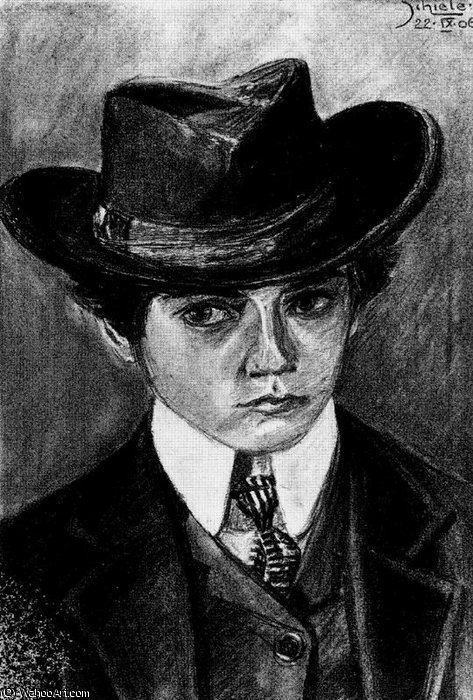
untitled (1661)

Explore Egon Schiele’s ‘untitled (1661)’ – a haunting charcoal portrait embodying his signature expressive style. Discover this pivotal early 20th-century artwork.

Egon Schiele’nin eserlerinde ölüm, cinsellik ve yalnızlık gibi karanlık konuları cesurca ele aldığına dikkat edin. Ekspresyonizm tarzıyla öne çıkan sanatçı Gustav Klimt'ten etkilenmiş ve insan ruhunun karmaşıklığını keşfetmek için biçimsel yenilikleri benimsemiştir.

El Yapımı Yağlı Boya Reproduksiyon

Sanatçılarımız tarafından sipariş üzerine hazırlanan; istediğiniz boyut ve çerçevede, tuval üzerine el boyaması yağlı boya. (Baskıya Geç Baskıya GeçGörsele Geç Görsele Geç)

P118B $10
P118H $10
P118W $10
P438Z $10
P508JH $12
P508YH $12
P805H $10
P805Z $10
P919BZ $10
P919G $10
P919XJ $10
P959ZH $10
P968JZ $12
W106C $8
W218G $10
W218JH $8
W218Y $10
W307PJ $10
W316G $10
W316PJ $8
W316Y $10
W398PJ $8
W4111J $10
W500HY $15
W500JH $15
W692G $12
W849H $8
W940BG $15
W953PJ $8

Standard
custom
CM
INCH

Eserin orijinal oranlarıyla uyumlu, önceden belirlenmiş boyutlarımız arasından seçim yapın.

genişlik
yükseklik

Belirli bir çerçeveye veya alana uyması için kendi boyutlarınızı girebilirsiniz. Seçtiğiniz boyut orijinal görüntünün oranlarıyla eşleşmiyorsa, sanat eserini kırparak veya ek el boyaması öğelerle resmi uzatarak ayarlayacağız. Üretim başlamadan önce onayınız için dijital bir taslak gönderilecektir.
Lütfen ekrandaki önizlemenin gerçek kırpmayı veya uzatmayı yansıtmadığını unutmayın. Nihai kompozisyonu yalnızca hazırlanan taslak doğru şekilde gösterecektir.
Özel boyutlar mevcut olsa da, orijinal oranları korumak adına önceden tanımlanmış listeden bir boyut seçmenizi öneririz.

Değiştirilebilecek örneklere dair: Yüzün müşteri fotoğrafıyla değiştirilmesi; Evcil hayvan eklenmesi (örneğin kedinin köpek ile değiştirilmesi); Arka plana gizli bir mesaj dahil edilmesi; Arka plan manzarasının veya öğelerinin değiştirilmesi.
Siparişten sonra, TopImpressionists.com ekibi talimatlar için müşteriye e-posta gönderecek ve bir taslak önizleme sunacaktır

Dünya Çapında Teslimat (); standart 5 hafta yerine 3/4 haftada. (31 Temmuz). Kaliteden ödün verilmez.

why_choose_icon
Dünya Çapında Ücretsiz Ekspres Kargo
why_choose_icon
Yüksek Kaliteli Keten Tuval
why_choose_icon
Tam Kapsamlı Nakliye Sigortası
why_choose_icon
Gümrük Vergisi İade Garantisi
why_choose_icon
Gerçek Renk Uyumu Garantisi
why_choose_icon
60 Günlük İade Politikası (Sadece Kusurlu Ürünler İçin)
why_choose_icon
%100 Para İade Garantisi
why_choose_icon
Toplu Alım İndirimi

Toplam Fiyat

$ 269

reproduction

untitled (1661)

Reproduksiyon Tekniği

Reproduksiyon Boyutu

-

Toplam Tutar

$ 269

Hızlı Bilgiler

  • Influences: Symbolic realism
  • Artist: Egon Schiele
  • Movement: Expressionism
  • Location: Private Collection
  • Notable elements or techniques: Dry charcoal hatching & crosshatching
  • Artistic style: Realistic with expressive shading

Eser Açıklaması

A Portrait of Intense Observation: Egon Schiele’s ‘untitled (1661)’

Egon Schiele's ‘untitled (1661)’ stands as a cornerstone of Expressionist art, capturing a moment of profound introspection within the confines of a strikingly compressed charcoal portrait. Executed in 1911, this piece exemplifies Schiele’s signature style—characterized by raw emotion and unflinching realism—marking an early triumph for the Austrian artist before his tragically premature demise in 1918. The artwork depicts a young man dressed impeccably in formal attire, complete with a hat, gazing directly at the viewer with unwavering intensity. This deliberate framing prioritizes facial expression above all else, emphasizing the subject’s gaze as a conduit of emotion and psychological depth.

Technical Mastery: Charcoal's Dance of Light and Shadow

Schiele’s technique is fundamentally rooted in dry charcoal drawing—a method he honed to achieve unparalleled textural nuance. The artist meticulously builds up tonal variations through hatching and cross-hatching, layering lines with varying pressure to sculpt the contours of the man’s face, clothing, and hat. This painstaking process isn't merely about representation; it’s an active engagement with materiality—the rough surface of the paper itself becomes integral to conveying the artwork’s mood. The dramatic interplay of light and shadow is skillfully manipulated, creating a palpable sense of volume and depth despite the limited perspective achieved through close cropping. Notice how the artist uses highlights to illuminate specific features, drawing attention to the man's eyes—a focal point that speaks volumes about his inner state.

Symbolism Within Form: Status and Silent Contemplation

Beyond its masterful execution, ‘untitled (1661)’ resonates with subtle symbolic layers. The formal attire – a waistcoat, jacket, and hat – immediately establishes a visual shorthand for social standing and adherence to convention. However, it’s the man's gaze that truly captivates—a stare devoid of warmth or amusement, hinting at an inner turmoil and perhaps a preoccupation with existential questions. This unflinching honesty reflects Schiele’s broader artistic concerns: confronting mortality and exploring the complexities of human psychology. The artist’s deliberate choice to depict this solitary figure underscores the importance of introspection and invites viewers to contemplate the unspoken narratives residing beneath the surface.

Historical Context: Expressionism's Embrace of Emotion

‘untitled (1661)’ emerged during the burgeoning Expressionist movement—a reaction against Impressionistic idealism and a fervent desire to convey subjective experience. Artists like Schiele sought to bypass rational representation, prioritizing emotional intensity over objective accuracy. This stylistic impulse was fueled by anxieties surrounding World War I and a growing awareness of psychological trauma—themes that permeate much of Schiele’s oeuvre. The artwork embodies the movement's core tenets: confronting uncomfortable truths about human existence and portraying inner landscapes with uncompromising honesty.

Emotional Resonance: A Window Into Inner Turmoil

Ultimately, ‘untitled (1661)’ transcends mere visual depiction; it communicates a palpable emotional resonance. The portrait’s stark simplicity—coupled with Schiele's masterful use of charcoal—creates an atmosphere of quiet contemplation punctuated by moments of unsettling vulnerability. It compels us to consider the gaze of the subject as a reflection of our own anxieties and uncertainties, reminding us that beauty can reside in confronting difficult emotions. Reproductions of this iconic artwork offer a powerful opportunity to engage with Schiele’s profound artistic vision and experience the enduring impact of Expressionist art firsthand.

Sanatçı Özgeçmişi

A Life Forged in Expression

Born in 1890 in Tulln an der Donau – a picturesque region with vineyards, onion-domed towers and Baroque monasteries – Egon Schiele’s life was a tempestuous journey marked by both extraordinary artistic vision and profound personal hardship. His early years were shadowed by illness and loss; his father succumbed to syphilis when Egon was just fourteen, a tragedy that would deeply resonate within his work, fueling an obsession with mortality and the fragility of existence. Raised initially by his mother and then under the somewhat controlling guardianship of his uncle Leopold Czihaczek, Schiele’s childhood lacked conventional stability but fostered a fiercely independent spirit. Even as a boy, he displayed an intense fascination with trains—a motif that subtly reappeared in later paintings—and a burgeoning talent for drawing, though this was initially met with disapproval from his father who saw it as a distraction from more practical pursuits. The early death of his sister Elvira also cast a long shadow over the young artist’s psyche. These formative experiences instilled within him a sensitivity and an emotional rawness that would become hallmarks of his artistic expression, a constant grappling with themes of life, death, and the human condition.

Early Influences & Artistic Training

Schiele's formal artistic training began at the Kunstgewerbeschule (School of Arts and Crafts) in Vienna, but he quickly found itself stifled by its conservative approach. He transferred to the Akademie der bildenden Künste (Academy of Fine Arts), only to become further disillusioned with its rigid academic traditions. This dissatisfaction led him to abandon formal training altogether, choosing instead to forge his own path—a testament to his unwavering artistic conviction. The influence of Gustav Klimt was pivotal during these early years; Schiele admired Klimt’s decorative style and exploration of symbolism, even receiving mentorship from the established artist. Klimt's bold use of color and stylized forms captivated young Schiele, shaping his aesthetic sensibilities and inspiring him to experiment with innovative techniques. However, Schiele soon diverged from Klimt's aesthetic, developing a distinctly individual voice characterized by its stark honesty and psychological intensity.

Vienna Secession & Artistic Breakthrough

Schiele joined the Vienna Secession in 1907 alongside fellow artists like Gustav Klimt, Oskar Kokoschka, and Josef Maria Olbrich—a group that championed artistic freedom and challenged the prevailing conservative values of Viennese society. The Secession’s manifesto declared a rejection of academic conventions and an embrace of expressive art as opposed to mere imitation of nature. This commitment to innovation profoundly impacted Schiele's artistic development, propelling him toward experimentation with new materials and techniques—particularly etching and lithography—that allowed him to convey emotion and psychological complexity in ways that traditional painting could not.

Major Themes & Artistic Style

Schiele’s art is immediately recognizable for its raw honesty and psychological depth. He fearlessly confronted themes often considered taboo – sexuality, death, anxiety, isolation – with an unflinching gaze. His distinctive style features elongated figures, contorted poses, and expressive lines that convey a sense of unease and emotional intensity. The human form, particularly the nude, became his primary subject, not as an object of idealized beauty but as a vessel for exploring the complexities of human experience. Schiele didn’t shy away from depicting himself in unflattering or vulnerable poses, revealing a profound level of self-awareness and introspection. Beyond self-portraiture, Schiele created numerous portraits of others, capturing their likenesses with an unsettling realism that seemed to penetrate beneath the surface. His landscapes, while less central to his work than his figurative paintings, demonstrate his mastery of form and color, often reflecting the same emotional intensity as his portraits. The use of line is particularly striking in Schiele’s work; it's not merely a tool for defining shape but an expressive force that conveys emotion and psychological tension.

Legacy & Influence

Despite facing censorship and legal challenges – including a brief imprisonment for allegedly corrupting minors with his art – Schiele gained recognition within Vienna’s avant-garde circles. His work challenged the conventions of the time, provoking both admiration and outrage. By the time of his untimely death during the Spanish flu pandemic in 1918 at the age of twenty-eight, he had established himself as a leading figure in Austrian Expressionism. Significant works such as Self-Portrait with Physalis, Couple Embracing, and Field Landscape (Kreuzberg near Krumau) stand as testaments to his artistic genius. His influence on subsequent generations of artists is undeniable, particularly those interested in exploring psychological themes and challenging conventional artistic norms. Schiele’s bold approach to form and subject matter continues to resonate with audiences today, making him one of the most important and influential figures in early 20th-century art. His paintings are now held in major museum collections worldwide, ensuring his artistic legacy endures.

Egon Şiele

Egon Şiele

1890 - 1918 , Avusturya

Kısa Bilgiler

  • Artistic Movement Or Style: İkinci Ekspresyonizm
  • Artists Or Movements Influenced By This Artist: ['Ekspresyonizm']
  • Artists Who Influenced This Artist: ['Gustav Klimt']
  • Date Of Birth: 12 Haziran 1890
  • Date Of Death: 31 Ekim 1918
  • Full Name: Egon Schiele
  • Nationality: Avusturyalı
  • Notable Artworks:
    • Portre
    • Çift Embracing
    • Kreuzberg Manzarası
  • Place Of Birth: Tulln, Avusturya
Temalara, stillere ve özelliklere göre düzenlenmiş sanat eserlerini keşfedin.
© TopImpressionists.com — Tüm Hakları Saklıdır  ·  100% El Boyası · Memnuniyet Garantili · Dünya Çapında Ücretsiz Gönderim
VISA MASTERCARD