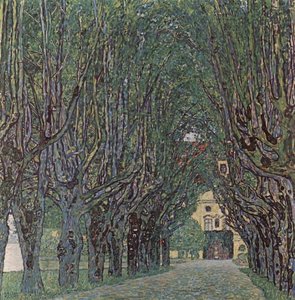
Introduction to the Painting
The painting Love by Gustav Klimt, created in 1895, is a perfect example of Symbolism, a cultural movement that emerged at the end of the 19th century in France and developed in several European countries. The symbolist painters sought ways for color and line to express ideas, placing a special emphasis on the world of dreams and mysticism. Klimt’s primary subject was the female body, and his works are marked by a frank eroticism. Amongst his figurative works, which include allegories and portraits, he painted landscapes. Klimt's work was an important influence on his younger peer Egon Schiele.
Composition and Symbolism
The painting Love is an oil painting on canvas, measuring 43 x 43 cm, and is currently housed in the Museum der Stadt Wien, Vienna. The painting depicts two naked figures, a man and a woman, entwined in a passionate embrace. The background is filled with intricate patterns and shapes, which are typical of Klimt's style. These patterns and shapes add depth and complexity to the painting, making it a visual delight.
Key Features of the painting include:
- The use of warm colors like red and orange to depict the bodies of the lovers
- The use of cooler colors like blue and green in the background
- Intricate patterns and shapes that add depth and complexity to the painting
For more information on Gustav Klimt and his works, please visit our website
TopImpressionists, where you can find high-quality hand-made oil paintings reproductions of his masterpieces, including Fulfillment1 and Roses under the Trees. You can also learn more about the Museum Menard Art Museum and its collection of art from around the world.
The painting Love is a beautiful depiction of love between two people, and its symbolism and composition make it a masterpiece of Symbolism. As seen in other works by Gustav Klimt, such as Head-and-Shoulders Portrait of a Child (Study for), his use of color and pattern adds depth and complexity to the painting, making it a visual delight.
Artist Information: Gustav Klimt
Gustav Klimt, born July 14, 1862, in Baumgarten, near Vienna, Austria, was one of the most prominent members of the Vienna Secession movement. His primary subject was the female body, and his works are marked by a frank eroticism. Son of Ernst Klimt, a gold engraver, and Anna Finster, his family faced financial challenges, leading to frequent moves within Vienna.
Early Talent: Demonstrated precocious drawing skills nurtured by his father’s profession and familial artistic inclinations. He enrolled at the Vienna Kunstgewerbeschule (School of Applied Arts) in 1876, studying architectural painting under Ferdinand Laufberger. This provided strong technical training but also exposed him to traditional academic styles. In 1877, formed the “Company of Artists” with his brother Ernst and Franz von Matsch, securing commissions for decorative murals and ceilings.
The Company of Artists and Early Success
Continued working with the “Company of Artists” after leaving the Kun



 Preview
 Tabloyu Sipariş Et
 Paylaş
 Paylaş
 Detayları Gör

 İndir
İndir
 Benzerlerini gör
 X-Işını
 Slayt Gösterisi

 Tümünü Gör






































 Cam seçeneği yalnızca 110 cm altındaki boyutlar için mevcuttur.