

Shown: · With its frame:
 Önizle
 Gönder
 Paylaş
 Detaylar
 Rehber

 Dosyayı İndir
 Benzerleri
 X-Işını
 Slayt Gösterisi
 Q&A
Q&A İstatistikler

₺ 13219
El Yapımı Yağlı Boya Reproduksiyon
Sanatçılarımız tarafından sipariş üzerine hazırlanan; istediğiniz boyut ve çerçevede, tuval üzerine el boyaması yağlı boya. ( Baskı Satışına Geç Dijital Görsel Satışına Geç)
Size
·Standart Boyutlar
özel boyutlu
CM
INCH
Eserin orijinal oranlarıyla uyumlu, önceden belirlenmiş boyutlarımız arasından seçim yapın.
Loading sizes...

genişlik
yükseklik
Çerçevenize veya duvarınıza uygun olması için ihtiyacınız olan genişliği ve yüksekliği yazın. Bu eser el boyamasıdır; bu nedenle farklı bir formdaki boyutlar için sanatçı, resmin etrafına biraz daha fazla boya ekleyebilir veya biraz daha kırpabilir — seçim sizin. Boyama işlemi başlamadan önce onaylamanız için size bir dijital taslak gönderiyoruz. Bu sayfada gösterilen resim gerçek sonucu yansıtmamaktadır — gerçek sonucu yalnızca taslak göstermektedir.
 Devamını oku
Finish
·
White ₺1

Blurside ₺1

Extended ₺1

P118B ₺10

P118H ₺10

P118W ₺10

P438Z ₺10

P508JH ₺12

P508YH ₺12

P805H ₺10

P805Z ₺10

P919BZ ₺10

P919G ₺10

P919XJ ₺10

P959ZH ₺10

P968JZ ₺12

W106C ₺8

W218G ₺10

W218JH ₺8

W218Y ₺10

W307PJ ₺10

W316G ₺10

W316PJ ₺8

W316Y ₺10

W398PJ ₺8

W4111J ₺10

W500HY ₺15

W500JH ₺15

W692G ₺12

W849H ₺8

W940BG ₺15

W953PJ ₺8

H24-GOLD ₺30

H24-SILVER ₺30

H36-GOLD ₺45

H36-SILVER ₺45
Shipped in a protective tube, ready for your own framer.
Above 105 cm the frame is shipped as a kit for a professional framer — read the details.
Extras
optionalWhat do the extras include?
Examples of what can be changed: Replace face with customer photo; Add pet (e.g., replace cat with dog); Include hidden message in background; Change background landscape or elements.
After order, TopImpressionists.com team will email client for instructions and provide a mockup preview
After order, TopImpressionists.com team will email client for instructions and provide a mockup preview
Dünya Çapında Teslimat (); standart 5 hafta yerine 3/4 haftada. (1 Kasım). Kaliteden ödün verilmez.
Koruyucu Vernik
İsimlik
İşlemeli Bronz Plaka Detayları
This elegant plaque features the artist's name and the title of the artwork, finely engraved for a timeless presentation.
It is made from bronze with a refined, elegant finish. The text is precisely laser-engraved for a sharp and permanent result. Measuring 9x2 cm, the plaque is compact yet easy to read. It's built to be durable and scratch-resistant, offering a professional, museum-quality look. Mounting is simple thanks to the included adhesive backing.
Şeffaf Akrilik Plaka Detayları
The plaque includes essential engraved details such as the artist's name, the title of the artwork, the date it was created, the type of media used-like oil on canvas or watercolor-a brief description of the piece, and a QR code that links to the complete artwork information.
It is crafted from clear acrylic, offering a sleek, modern appearance. The text is UV-engraved in black to ensure strong visual contrast. With a size of 10x15 cm, it ensures optimal readability. It comes equipped with two metal hooks for secure wall mounting. The plaque is designed to be weather-resistant, making it suitable for various environments, and it includes interactive features that work seamlessly with smartphone scanning.
Siyah Akrilik Plaka Detayları
This elegant plaque includes engraved information such as the artist's name, the title of the artwork, the date it was created, the type of media used (like oil on canvas or watercolor), a short description of the artwork, and a QR code for quick access to more information.
The plaque itself is made from refined black acrylic with a premium finish. The text is laser-engraved in white for high contrast and readability. Its size is 10x15 cm, designed to be easy to read. It comes with two metal hooks for professional mounting. The design is sleek and fits any interior style. It is also weather-resistant and durable, with built-in digital integration for mobile compatibility.
Cam seçeneği yalnızca 110 cm altındaki boyutlar için mevcuttur.
 Cam seçeneği yalnızca 110 cm altındaki boyutlar için mevcuttur.
- Dünya Çapında Ücretsiz Ekspres Kargo
- Yüksek Kaliteli Keten Tuval
- Tam Nakliye Sigortası
- Gümrük Vergisi İadesi Garantisi
- Gerçek Renk Uyumu Garantisi
- 100 Günlük İade Koşulları (Sadece Üretim Hatalı Ürünler İçin)
- %100 Para İade Garantisi
- Toplu Alım Avantajı


Koleksiyon Açıklaması
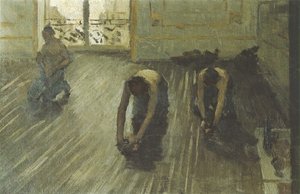
Gustave Caillebotte's 'The Floor Scrapers (study)' captures Parisian laborers with striking realism and light. Explore this iconic Impressionist work depicting urban life, showcasing Caillebotte’s unique perspective.
Sanatçı Özgeçmişi
Gustave Caillebotte (1848-1894): Paris yaşamının gerçekçi ve empresyonist resimlerini keşfedin. 'Paris Caddesi; Yağmurlu Gün' eseriyle tanınan bu Fransız usta, benzersiz perspektifleri ve modern hayatı yansıtmasıyla öne çıkar.
About the painting
The Floor Scrapers (Study) 02: A Glimpse into Parisian Labor
Gustave Caillebotte’s “The Floor Scrapers (Study) 02,” painted in 1875, isn't merely a depiction of three men diligently working; it’s a meticulously observed and subtly powerful portrait of urban life in late 19th-century Paris. This early work, often considered a pivotal piece in Caillebotte’s artistic development, offers a rare and intimate view into the lives of the city's working class – a subject largely absent from the grand narratives of the era. The painting immediately draws the eye with its stark contrast: the muted tones of the darkened room, punctuated by the bright white of the freshly sanded floorboards, create an almost photographic realism that was revolutionary for its time.
Caillebotte’s artistic journey began with a formal training in law and engineering, but it was his encounter with photography – particularly the work of Nadar – that profoundly shaped his approach to painting. He recognized the power of capturing fleeting moments and precise details, mirroring the photographic process. This influence is evident in the meticulous rendering of the men’s postures, their tools, and the textures of the wood. The composition itself feels deliberately staged, reminiscent of a photograph, with its careful attention to perspective and lighting. The figures are not idealized; they are presented as ordinary laborers, their faces obscured by shadow, emphasizing their anonymity within the bustling city.
Impressionistic Techniques and a Revolutionary Perspective
“The Floor Scrapers” exemplifies Caillebotte’s early embrace of Impressionism, though with a distinct realism that sets him apart from many of his contemporaries. He employed broken brushstrokes to capture the play of light on the wood and the men's clothing, creating a sense of movement and atmosphere. The use of complementary colors – the cool blues and greens of the shadows against the warm browns and yellows of the floor – adds depth and vibrancy to the scene. Notably, Caillebotte’s decision to depict these laborers in a darkened room, bathed in the diffused light of an unseen window, was a bold departure from traditional studio settings. This choice immediately imbued the painting with a sense of immediacy and authenticity.
Furthermore, Caillebotte's innovative perspective—a low-angle shot that emphasizes the scale of the men and their work—was groundbreaking. It forces the viewer to confront the scene directly, fostering a feeling of intimacy and engagement. The composition isn’t about glorifying labor; it’s about presenting it as a fundamental aspect of urban existence. The painting's technical mastery lies in its ability to convey both the physical reality of the work and the emotional weight of the men’s efforts.
Symbolism and Social Commentary
While seemingly straightforward, “The Floor Scrapers” carries subtle layers of symbolism. The act of scraping floors represents a repetitive, demanding task – a symbol of the daily grind endured by countless working-class individuals in Paris at the time. The absence of any discernible hierarchy or leadership among the men suggests a shared experience of labor and resilience. It’s important to note that Caillebotte was one of the first artists to depict urban proletariat, a subject rarely addressed in art during this period. This choice speaks volumes about his desire to challenge conventional artistic norms and offer a more nuanced representation of Parisian society.
The painting's historical context is crucial to understanding its significance. Paris in the 1870s was undergoing rapid industrialization, leading to significant social and economic changes. The working class faced harsh conditions, long hours, and low wages. Caillebotte’s work serves as a poignant reminder of these realities, offering a glimpse into the lives of those often overlooked by history.
A Timeless Reflection on Labor and Urban Life
“The Floor Scrapers (Study) 02” remains a powerful and evocative artwork. It's not just a depiction of three men working; it’s a meditation on labor, poverty, and the human condition. Caillebotte’s meticulous observation, innovative perspective, and subtle symbolism combine to create a work that continues to resonate with viewers today. Reproductions of this painting offer an opportunity to appreciate Caillebotte's artistic vision and gain a deeper understanding of Parisian life in the 19th century – a testament to the enduring power of art to illuminate social realities.
Soru ve Cevaplar
"The Floor Scrapers (study) 02" hangi malzemeden yapılmıştır ve hangi stildedir?
"The Floor Scrapers (study) 02", Acrylic On Canvas tekniğiyle Impressionist Painting üslubunda hazırlanmıştır.
Öğrenciler için Gustave Caillebotte imzalı "The Floor Scrapers (study) 02" hakkında bir bilgi sayfası mevcut mu?
Gustave Caillebotte imzalı "The Floor Scrapers (study) 02" eserinin Rehber sayfası; eserin kimlik tablosu, sanatçının yaşam süresindeki yerini gösteren on yıllık şerit, sanatçının diğer çalışmaları, ölçülmüş renk paleti ve dört farklı stilde kopyalamaya hazır atıfları içeren, iki sayfadan oluşan yazdırılabilir bir bilgi formu sunar.
"The Floor Scrapers (study) 02" eserinde en çok hangi renk öne çıkıyor?
"The Floor Scrapers (study) 02" adlı eserde en çok öne çıkan renk Espresso (#504d40)'dır. Baskın renk, bir sanat eserini iç mekânla eşleştirirken faydalıdır.
Quick facts and art quiz
About Gustave Caillebotte

Gustave Caillebotte
1848 - 1894, Fransa
Sanatçı Biyografisi
Yeni Çağın Parisli Sanatçısı: Gustave Caillebotte’un Yaşamı ve Eserleri
Gustave Caillebotte, 1848 yılında müreffeh bir Parisli aileye doğmuştu ve şehrini yeniden şekillendiren dramatik dönüşümleri yakalamak için eşsiz bir konumdaydı. Babası Martial Caillebotte, başarılı bir tekstil işini devralmış ve hakim olarak görev yapmıştı; Gustave’e hem finansal güvence hem de gelişen modern dünyayı gözlemleme imkanı sağlamıştı. Başlangıçta hukuk eğitimi almış – 1868 ve 1870 yıllarında hukuk dereceleri kazanmıştı – Caillebotte’un gerçek çağrısı sanat alanındaydı. Léon Bonnat altında resim eğitimine ciddi bir şekilde başladı, aynı zamanda resmini derinden etkileyecek yükselen bir ortam olan fotoğrafçılığa da büyük ilgi duydu. Bu erken dönemde edindiği fotografik prensiplerle tanışması – çerçeveleme, perspektif ve anlık yakalama yeteneği – ayırt edici stilinin temel unsurları haline geldi. Caillebotte sadece değişimi belgelemekle kalmıyordu; sunduğu estetik olanaklarla aktif olarak ilgileniyordu.Gerçekçiliğin İzlenimci Işıkla Harmanlanması
Caillebotte’un sanatsal yolu katı akademik gelenekten ayrıldı, ancak birçok İzlenimci meslektaşının tamamen optik keşiflerini benimsemedi. Edgar Degas ve Giuseppe de Nittis gibi sanatçılarla akrabalık kurdu, modern hayranlığı paylaştı ancak onu titiz bir gerçekçilik merceğinden yaklaştırdı. Erken dönem başyapıtı Les Raboteurs de Parquet (Zemin Cilacısı), 1875 Salonu’nda sergilendiğinde, hemen cesur ve alışılmadık bir ressam olarak itibarını pekiştirdi. Eser, üç işçinin ahşap zemini özenle cilalamasını tasvir ediyor; bazı izleyicileri şok eden ancak diğerlerini büyüleyen titiz bir dürüstlükle sunuluyor. Sadece konu – işçi sınıfı nadiren yüksek sanatın tuvaline yansıyordu – aynı zamanda kompozisyon da dikkat çekiciydi: kırpılmış, neredeyse rahatsız edici derecede doğrudan ve duygusal idealizasyondan uzak. Çağdaş yaşamı abartmadan tasvir etme taahhüdü, The Iron Bridge (Demir Köprü) gibi eserlerde devam etti; burada hızla değişen Paris’in endüstriyel manzarasını ustalıkla yakaladı. Ancak Caillebotte İzlenimciliğin etkisinden bağışık değildi; paleti kademeli olarak aydınlandı ve özellikle karla kaplı Paris çatılarının çarpıcı manzaralarında, kırık fırça darbeleri ve atmosferik efektlerle denemeye başladı, örneğin View of Rooftops (Snow).Bir Koruyucu ve Öncü: Sanat Dünyasında Yolunu Bulmak
Kendi sanatsal çabalarının ötesinde, Caillebotte İzlenimci hareketini desteklemede önemli bir rol oynadı. Finansal bağımsızlığı, Monet, Renoir, Pissarro, Cézanne, Degas ve diğerlerinin eserlerini satın almasına olanak tanıdı; bu sanatçılar resmi Salonda büyük ölçüde reddedildiğinde. Sadece bir koleksiyoncu değildi; bu sanatçıları aktif olarak savundu, geleneksel sanatsal normlara meydan okuyan birkaç İzlenimci seriyi organize etti ve finanse etti. Bu yeniliği teşvik etme arzusu kendi koleksiyonuna kadar uzandı; ölümünde 1894 yılında Fransız devletine bağışladı – başlangıçta dirençle karşılanan ancak sonunda Musée d’Orsay'ın ünlü İzlenimci elmalarının temelini oluşturan bir miras. Caillebotte’un benzersiz perspektifi kompozisyonlarında da kendini gösterdi; 1880 yılında çizilen Boulevard vu d’en haut (Yukarıdan Görünen Bulvar) gibi eserler, yükseltilmiş bir bakış açısı ve 20. yüzyılın fotografik perspektiflerini öngören dinamik kırpma kullanarak çarpıcı bir modern duyarlılık sergiliyor. Japon baskıları ve kendi fotografik deneyimlerinden etkilenmiş olabilecek bu yenilikçi kompozisyon yaklaşımı, onu gerçek bir öncü olarak tanımladı.Mirası ve Yeniden Keşfi: Kurtarılan Modern Bir Usta
Ölümünden sonraki onlarca yıl boyunca Caillebotte’un eseri nispeten gölgeli kaldı; daha ünlü İzlenimcilerin gölgesinde kaldı. Ancak 20. yüzyılın sonlarında, akademik araştırmalar ve büyük sergiler tarafından tetiklenen sanatının kapsamlı bir yeniden değerlendirilmesi başladı. Bu keşif, olağanüstü teknik beceriye, entelektüel derinliğe ve vizyoner içgörüye sahip bir sanatçıyı ortaya çıkardı. Caillebotte’un resimleri sadece modern yaşamın tasvirleri değil; aynı zamanda kentsel varoluşun karmaşıklığına, değişen sosyal manzaraya ve sanat ile gerçeklik arasındaki evrilen ilişkiye dair derin düşüncelerdir. Gerçekçiliği İzlenimci tekniklerle kusursuz bir şekilde harmanlama yeteneği, yenilikçi kompozisyonları ve çevresindeki dünyayı tasvir etmeye olan sarsılmaz bağlılığı, onu 19. yüzyıl sanatında önemli bir figür olarak sağlamlaştırdı. Bugün Caillebotte’un eserleri benzersiz perspektifi, ustalıkla yürütülmesi ve kalıcı alaka düzeyi nedeniyle kutlanıyor – yeni bir çağın ruhunu yakalayan bir sanatçının kanıtı.Önemli Eserler
- Les Raboteurs de Parquet (Zemin Cilacısı) (1875): Caillebotte’un gerçekçiliğini ve alışılmadık kompozisyonunu sergileyen çığır açan bir eser.
- View of Rooftops (Snow) (1878): Fotoğrafçılıktan ve Japon baskılarından etkilenerek yüksek bakış açılarını ve atmosferik efektleri gösteriyor.
- Boulevard vu d’en haut (Yukarıdan Görünen Bulvar) (1880): Dinamik bir perspektife sahip çarpıcı bir modern kompozisyon.
- Paris Street; Rainy Day (1877): Belki de en ünlü eseri, Paris yaşamının hareketli enerjisini benzersiz ve etkileyici bir şekilde yakalıyor.
- The Bezique Game(1881) : Paris eğlencesinin büyüleyici bir İzlenimci tablosu.
İlgili Eserler


Temalara, stillere ve özelliklere göre gruplandırılmış sanat eserlerini keşfedin.


Gustave Caillebotte
The Floor Scrapers (study) 02
() ·
With its frame: · Hand-painted in oil on linen
Total