Gerçek Boyutta Önizle
 Paylaş
 Paylaş
 Detayları Gör
 Rehber

 İndir
İndir
 Benzer ürünler
 X-Işını
 Slayt Gösterisi
 Soru & Cevap
 İstatistikler
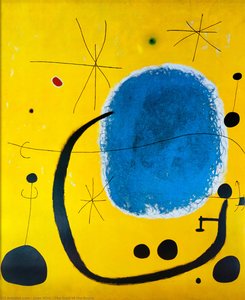
Mujer y perro cara a la luna

 Tümünü Gör
Joan Miró: Sürrealizm ve soyutlamanın öncüsü! Katalan kimliğini yansıtan renkli dünyası, sembolik formları ve özgün tarzıyla modern sanatın en önemli figürlerinden biri. 'Çiftlik', 'Hollanda İçleri' gibi eserleriyle tanınıyor.
Bu sayfada sergilenen eser telif hakkı yasasıyla korunmaktadır; bu da yasal olarak eserin birebir kopyasını oluşturamayacağımız veya satamayacağımız anlamına gelir. Bu koruma, aşağıdakiler gibi uluslararası anlaşmalar kapsamında uygulanmaktadır: Bern Sözleşmesi ve aşağıdakiler de dahil olmak üzere ulusal yasalarca belirlenen ABD Telif Hakkı Kanunu - 17. Başlık.
Bu yöntem, koruma altındaki sanat eserinin kopyalanmasını veya çoğaltılmasını içermediği için telif hakkı düzenlemelerine tam uyum sağlar. Bunun yerine, yaratıcı bir yeniden yorumlamadır; orijinalinden etkilenen ancak onunla aynı olmayan yeni bir tablodur.
Giclée / Sanat Baskısı
Hızlı üretim ve esnek bitiş seçenekleriyle müze kalitesinde giclée veya kanvas baskı. ( El Yapımı Tablo Satın Al Dijital Görsele Geç)




P118B ₺10

P118H ₺10

P118W ₺10

P438Z ₺10

P508JH ₺12

P508YH ₺12

P805H ₺10

P805Z ₺10

P919BZ ₺10

P919G ₺10

P919XJ ₺10

P959ZH ₺10

P968JZ ₺12

W106C ₺8

W218G ₺10

W218JH ₺8

W218Y ₺10

W307PJ ₺10

W316G ₺10

W316PJ ₺8

W316Y ₺10

W398PJ ₺8

W4111J ₺10

W500HY ₺15

W500JH ₺15

W692G ₺12

W849H ₺8

W940BG ₺15

W953PJ ₺8




Standart
özel boyutlu
CM
INCH
Eserin orijinal oranlarıyla uyumlu, önceden belirlenmiş boyutlarımız arasından seçim yapın.
Loading sizes...

genişlik
yükseklik
Çerçevenize veya duvarınıza uygun olması için ihtiyacınız olan genişlik ve yüksekliği yazın. Bir baskı yalnızca kesilebilir, görselden daha büyük hale getirilemez; bu nedenle farklı bir formdaki boyut seçimi, görselin bir kısmının kaybına neden olur. Herhangi bir baskı yapmadan önce onaylamanız için size bir dijital taslak gönderiyoruz. Bu sayfada gösterilen resim gerçek kesimi göstermez — bunu yalnızca taslak gösterir.
Dünya Çapında Teslimat (); standart 4/5 hafta yerine 2 haftada. (3 Kasım)

Dünya Çapında Ücretsiz Ekspres Kargo

Yüksek Kaliteli Keten Kanvas

Tam Nakliye Sigortası

Gümrük Vergisi İadesi Garantisi

Gerçek Renk Uyumu Garantisi

100 Günlük İade Politikası (Sadece Kusurlu Ürünler İçin)

%100 Para İade Garantisi

Toplu Alım İndirimi
 Cam seçeneği yalnızca 110 cm altındaki boyutlar için mevcuttur.

Mujer y perro cara a la luna
Giclée / Sanat Baskısı
Reproduksiyon Boyutu
-


Toplam Tutar
₺ 3441
A Portrait of Dreams and Catalan Identity
Joan Miró’s “Mujer y perro cara a la luna” (“Woman and Dog Facing the Moon”) transcends mere visual representation; it embodies the spirit of Surrealism and delves into the subconscious depths of Catalan culture. Painted in 1936, during a period marked by political upheaval and artistic experimentation—specifically coinciding with the Spanish Civil War—the artwork serves as a poignant reflection on anxieties surrounding conflict and an affirmation of resilience.
Born in Barcelona in 1893, Miró’s formative years were steeped in the vibrant atmosphere of Gaudí’s architectural legacy. This fascination for organic forms would permeate his artistic endeavors, shaping his distinctive style characterized by biomorphic shapes, simplified lines, and a palette dominated by earthy hues punctuated with bursts of color.
Stylistic Innovation: Abstract Expressionism Meets Catalan Folklore
Miró’s approach to painting defied conventional realism. He embraced abstraction as a vehicle for conveying emotion and exploring inner landscapes—a technique that aligns seamlessly with the burgeoning movement of Abstract Expressionism in America. However, unlike many of his contemporaries who sought purely formal explorations, Miró infused his work with elements rooted in Catalan folklore and mythology.
The composition itself is deliberately unsettling yet captivating. A woman’s figure—a recurring motif in Miró's oeuvre—is positioned alongside a dog’s head, which rests upon her shoulder. The dog’s open mouth suggests a gesture of repose or perhaps even yearning, creating an interplay between stillness and vulnerability.
Symbolism Under Moonlight
The moon dominates the canvas, serving as both a visual focal point and a symbolic representation of contemplation and transformation. Miró's use of color—primarily ochre and crimson—further amplifies the artwork’s emotional resonance. These hues evoke feelings of warmth, passion, and primal instinct.
Adding to the surrealist atmosphere are subtle details: two birds scattered across the background—one on the left and another near the top right corner—represent freedom and aspiration. A solitary cat nestled in the lower left quadrant embodies quiet observation and resilience. Collectively, these elements contribute to a tapestry of imagery that invites viewers to contemplate themes of solitude, vulnerability, and the enduring power of nature.
Technical Mastery: Pochoir Printing
“Mujer y perro cara a la luna” was executed using oil on canvas—a medium favored by Miró for its ability to capture nuanced tonal variations. However, what distinguishes this particular reproduction is its printing technique: pochoir. This method involves transferring ink onto paper through stencils, resulting in exceptionally precise and luminous prints that faithfully reproduce the artist’s original vision.
The Museo Nacional Centro de Arte Reina Sofía houses a stunning example of this artwork, offering visitors an opportunity to experience Miró's distinctive style firsthand. Its enduring appeal lies not only in its aesthetic beauty but also in its profound exploration of human emotion and the subconscious—a testament to Miró’s genius as one of the most influential artists of the 20th century.
Soru ve Cevaplar
Joan Miró imzalı "Mujer y perro cara a la luna" ne kadar tanınıyor?
Joan Miró imzalı "Mujer y perro cara a la luna", Iconic düzeyinde bir popülerliğe sahiptir. Bu sınıflandırma, eserin ne kadar geniş kitlelerce tanındığını yansıtmaktadır.
"Mujer y perro cara a la luna" eseri kamu malı mı?
Telif hakkı açısından, "Mujer y perro cara a la luna" eseri telif hakları ile korunmaya devam etmektedir statüsündedir.
Joan Miró imzalı "Mujer y perro cara a la luna" eserini odamda görmek için artırılmış gerçekliği kullanabilir miyim?
Uyumlu bir cihazda artırılmış gerçekliği kullanarak, Joan Miró imzalı "Mujer y perro cara a la luna" adlı eseri Artırılmış Gerçeklik Önizleme sayfası aracılığıyla kendi duvarınızda önizleyebilirsiniz.
Sanatçı Özgeçmişi
Joan Miró: Katalan Rüyalarının Renkli İzleri
Joan Miró i Ferrà, 1893 yılında Barselona’da doğmuş, 20. yüzyıl sanatının en etkileyici figürlerinden biri olarak tarihe geçmiştir. Onun sanatsal yolculuğu, sadece bir tarz evrimi değil, iç dünyaların keşfiydi; rüyaları, anıları ve Katalan kimliğini eşsiz bir şiirsel görsel dille tuvale aktarmaktı. Hastalıklarla dolu ve ailesinin sanatçı olma konusundaki ilk tereddütleriyle işaretlenen mütevazı başlangıçlarına rağmen, Miró, soyut kavramları ifade etme içgüdüsüyle yönlendirildi; gerçekliğin yüzeyinin altında yatan duyguları, duyumları ve bilinçaltı akıntılarını dışa vurma ihtiyacıyla hareket etti. Erken yaşamı, Antoni Gaudí’nin mimari harikaları sayesinde sanatla dolu bir şehir olan Barselona gelenekleriyle iç içe geçmişti; Gaudí'nin organik formları daha sonra Miró'nun soyutlamalarını ince biçimde etkileyecekti. Babasının kuyumculuk mesleği, titiz zanaatkarlığa karşı bir takdir geliştirirken, vahşi Katalan manzarası kariyeri boyunca tekrar eden bir motif ve ilham kaynağı haline geldi.Avangartın Çağrısı: Sürrealizm’e Doğru Bir Yolculuk
Miró'nun resmî sanat eğitimi, geleneksel teknikleri geliştirdiği Barselona'daki La Llotja'da başladı. Ancak, Paris'i kasıp kavuran avangart hareketlere maruz kalması yaratıcı evrimini ateşledi. Fauvizm’in canlı renkleri ve Kübism’in parçalanmış formları onu derinden etkiledi ve 1920 yılında Paris'e taşınmasına yol açtı. Bu dönem, Pablo Picasso gibi sanatçılarla tanışması ve giderek daha soyut kompozisyonlarla denemeler yapmaya başlaması açısından dönüm noktası oldu. Ancak Miró, bu stilleri basitçe benimsemedi; onları sentezleyerek kendi kendine özgü estetiğine doğru bir yol çizdi. Formları özüne indirgemeyi, temsili ayrıntıları ortadan kaldırarak sembolik şekiller ve çağrışım yaratan renkler lehine tercih etti. Bu keşif onu 1924 yılında Sürrealist gruba yöneltti; Max Ernst ve Salvador Dalí gibi sanatçılarla yan yana geldi. Sürrealizmin bilinçaltına olan ilgisini benimseyerken, Miró kendine özgü bir duyarlılığı korudu – çalışması şok edici görüntülerden veya Freudian sembolizmden ziyade, oyuncu formlar ve şiirsel çağrışımlar dünyası yaratmaya odaklandı.Sembollerin Dili: Başyapıtlar ve Sanatsal Yenilikler
1920'ler ve 30'larda Miró, biomorfik şekiller, yüzen formlar ve canlı renklerle dolu kendine özgü görsel sözlüğünü geliştirdi. Genellikle onun külliyatının temel taşı olarak kabul edilen Çiftlik (1922), bu geçişi örneklendirir. Sadece kırsal yaşamın bir tasviri değil, aynı zamanda Katalan kimliğinin çağrışımı ve doğal dünyanın sembolik bir temsiliydi. İşbirliği ruhu, Sergei Diaghilev'in balesi için tasarlanan desenlerde 1926 yılında Max Ernst ile birlikte öncülük ettiği *grattage* gibi yenilikçi tekniklere yol açtı; burada yüzeyleri ortaya çıkarmak için tuval üzerine boya kazınarak dokular ortaya çıkarılıyordu. Hollandalı İç Mekanlar (1928) serisi, Eski Usta'ları farklı bir modern bakış açısıyla yeniden yorumlama yeteneğini gösterdi ve ev içi sahneleri rüya benzeri soyutlamalara dönüştürdü. Resim (1933), cesur renkleri ve basitleştirilmiş formlarıyla Miró’nun bilinçaltını keşfetmesini ve geleneksel sanatsal sınırları reddetmesini somutlaştırıyor. Resmin ötesinde, Miró korkusuzca heykel, seramik ve baskı yapımıyla denemeler yaparak yaratıcı ufuklarını genişletti ve olağanüstü bir çok yönlülük gösterdi.Mirası ve Kalıcı Etkisi
Joan Miró'nun 20. yüzyıl sanatındaki etkisi yadsınamaz. O sadece bir ressam değil, aynı zamanda sanatsal ifadenin tanımını bile sorgulayan vizyoner bir sanatçıydı. Çalışmaları soyut dışavurumculuğun önünü açtı ve disiplinler arası sanatçılara ilham vermeye devam ediyor. Sanatının mirasının sürmesini sağlamak için 1975 yılında Barselona'da Fundació Joan Miró ve 1981 yılında Palma de Mallorca'da Fundació Pilar i Joan Miró olmak üzere iki vakıf kurdu; bu vakıflar sanatsal keşif ve eğitim için alanlar sağlıyor. Uzun kariyeri boyunca, sınırları zorlamaya, geleneklere meydan okumaya ve insan hayal gücünün derinliklerini keşfetmeye kendini adamıştır. Miró'nun sanatı, soyutlamanın, sembolizmin ve şiirsel ifadenin gücüne bir kanıttır; yaşamın, rüyaların ve Katalan kültürünün kalıcı ruhunun canlı bir kutlamasıdır. Çalışmaları dünya çapındaki izleyicilerle rezonansa girerek bizi her şeyin mümkün olduğu ve gerçeklik ile fantezi arasındaki sınırların büyüleyici bir renk ve form dansında bulanıklaştığı bir dünyaya davet ediyor.
Joan Miró
1893 - 1983 , İspanya
Kısa Bilgiler
- Artistic Movement Or Style: Sürrealizm, Soyut Sanat
- Artists Or Movements Influenced By This Artist:
- Sürrealizm
- Soyut Sanat
- Artists Who Influenced This Artist:
- Van Gogh
- Cézanne
- Date Of Birth: 20 Nisan 1893
- Date Of Death: 25 Aralık 1983
- Full Name: Joan Miró i Ferrà
- Nationality: İspanyol
- Notable Artworks:
- The Farm
- Dutch Interiors
- Painting
- Place Of Birth: Barselona, İspanya
Benzer Yazılar

The Soul of Color: A Journey into the Emotional Resonance of Lyrical Abstraction
Embark on a cultural journey through Lyrical Abstraction. Explore how masters like Kandinsky used color and motion to translate emotion into visual poetry. Discover the profound beauty of abstract expressionism and learn to curate emotional resonance in your own art collection.
Temalara, stillere ve özelliklere göre düzenlenmiş sanat eserlerini keşfedin.