

Shown: · With its frame:
 Önizle
 Gönder
 Paylaş
 Detaylar
 Rehber

 Dosyayı İndir
 Benzerleri
 X-Işını
 Slayt Gösterisi
 Q&A
Q&A İstatistikler

₺ 13194
El Yapımı Yağlı Boya Reproduksiyon
Sanatçılarımız tarafından sipariş üzerine hazırlanan; istediğiniz boyut ve çerçevede, tuval üzerine el boyaması yağlı boya. ( Baskı Satışına Geç Dijital Görsel Satışına Geç)
Size
·Standart Boyutlar
özel boyutlu
CM
INCH
Eserin orijinal oranlarıyla uyumlu, önceden belirlenmiş boyutlarımız arasından seçim yapın.
Loading sizes...

genişlik
yükseklik
Çerçevenize veya duvarınıza uygun olması için ihtiyacınız olan genişliği ve yüksekliği yazın. Bu eser el boyamasıdır; bu nedenle farklı bir formdaki boyutlar için sanatçı, resmin etrafına biraz daha fazla boya ekleyebilir veya biraz daha kırpabilir — seçim sizin. Boyama işlemi başlamadan önce onaylamanız için size bir dijital taslak gönderiyoruz. Bu sayfada gösterilen resim gerçek sonucu yansıtmamaktadır — gerçek sonucu yalnızca taslak göstermektedir.
 Devamını oku
Finish
·
White ₺1

Blurside ₺1

Extended ₺1

P118B ₺10

P118H ₺10

P118W ₺10

P438Z ₺10

P508JH ₺12

P508YH ₺12

P805H ₺10

P805Z ₺10

P919BZ ₺10

P919G ₺10

P919XJ ₺10

P959ZH ₺10

P968JZ ₺12

W106C ₺8

W218G ₺10

W218JH ₺8

W218Y ₺10

W307PJ ₺10

W316G ₺10

W316PJ ₺8

W316Y ₺10

W398PJ ₺8

W4111J ₺10

W500HY ₺15

W500JH ₺15

W692G ₺12

W849H ₺8

W940BG ₺15

W953PJ ₺8

H24-GOLD ₺30

H24-SILVER ₺30

H36-GOLD ₺45

H36-SILVER ₺45
Shipped in a protective tube, ready for your own framer.
Above 105 cm the frame is shipped as a kit for a professional framer — read the details.
Extras
optionalWhat do the extras include?
Examples of what can be changed: Replace face with customer photo; Add pet (e.g., replace cat with dog); Include hidden message in background; Change background landscape or elements.
After order, TopImpressionists.com team will email client for instructions and provide a mockup preview
After order, TopImpressionists.com team will email client for instructions and provide a mockup preview
Dünya Çapında Teslimat (); standart 5 hafta yerine 3/4 haftada. (29 Ekim). Kaliteden ödün verilmez.
Koruyucu Vernik
İsimlik
İşlemeli Bronz Plaka Detayları
This elegant plaque features the artist's name and the title of the artwork, finely engraved for a timeless presentation.
It is made from bronze with a refined, elegant finish. The text is precisely laser-engraved for a sharp and permanent result. Measuring 9x2 cm, the plaque is compact yet easy to read. It's built to be durable and scratch-resistant, offering a professional, museum-quality look. Mounting is simple thanks to the included adhesive backing.
Şeffaf Akrilik Plaka Detayları
The plaque includes essential engraved details such as the artist's name, the title of the artwork, the date it was created, the type of media used-like oil on canvas or watercolor-a brief description of the piece, and a QR code that links to the complete artwork information.
It is crafted from clear acrylic, offering a sleek, modern appearance. The text is UV-engraved in black to ensure strong visual contrast. With a size of 10x15 cm, it ensures optimal readability. It comes equipped with two metal hooks for secure wall mounting. The plaque is designed to be weather-resistant, making it suitable for various environments, and it includes interactive features that work seamlessly with smartphone scanning.
Siyah Akrilik Plaka Detayları
This elegant plaque includes engraved information such as the artist's name, the title of the artwork, the date it was created, the type of media used (like oil on canvas or watercolor), a short description of the artwork, and a QR code for quick access to more information.
The plaque itself is made from refined black acrylic with a premium finish. The text is laser-engraved in white for high contrast and readability. Its size is 10x15 cm, designed to be easy to read. It comes with two metal hooks for professional mounting. The design is sleek and fits any interior style. It is also weather-resistant and durable, with built-in digital integration for mobile compatibility.
Cam seçeneği yalnızca 110 cm altındaki boyutlar için mevcuttur.
 Cam seçeneği yalnızca 110 cm altındaki boyutlar için mevcuttur.
- Dünya Çapında Ücretsiz Ekspres Kargo
- Yüksek Kaliteli Keten Tuval
- Tam Nakliye Sigortası
- Gümrük Vergisi İadesi Garantisi
- Gerçek Renk Uyumu Garantisi
- 100 Günlük İade Koşulları (Sadece Üretim Hatalı Ürünler İçin)
- %100 Para İade Garantisi
- Toplu Alım Avantajı


Koleksiyon Açıklaması
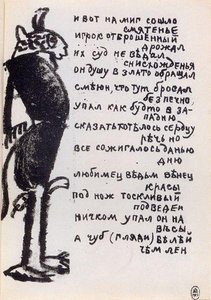
Kazimir Malevich's 'Demon' (1914) is a stark Suprematist depiction of a menacing figure, rendered in bold black and white with cryptic Cyrillic text – a haunting exploration of fear and the supernatural.
Sanatçı Özgeçmişi
Kazimir Maleviç (1878-1935), Soyut sanatın öncüsü! Süpümatizm akımını kurucusu ve 'Siyah Kare' gibi ikonik eserleriyle tanınır. Geometrik formlar, saf duygu ve 20. yüzyıl sanatına etkisi keşfedin.
About the painting
A Stark Vision of the Unseen: Kazimir Malevich's 'Demon'
Kazimir Malevich’s 1914 painting, “Demon,” is not merely a depiction of a monstrous figure; it’s a visceral exploration of primal fear and the unsettling power of suggestion. Rendered in a deceptively simple style—bold black outlines against a bleached-white backdrop—the artwork immediately commands attention with its raw intensity. This isn't the polished, idealized representation of art history; instead, we encounter a world stripped bare to its essential elements, echoing the nascent principles of Suprematism and hinting at the anxieties simmering beneath the surface of early 20th-century Europe.
The composition is dominated by the central demon itself. Its elongated form, with disproportionately large head, pointed ears, and a gaping mouth, evokes a sense of grotesque power. Malevich’s deliberate use of thick black lines doesn't simply define the figure; they pulsate with energy, creating an immediate and unsettling visual impact. The simplification of features—the vacant eyes, the sharp angles—heightens the feeling of otherworldliness, as if we are glimpsing a being from beyond our comprehension. Crucially, the painting’s stark palette – primarily black and off-white – amplifies this effect, creating an atmosphere of profound isolation and dread.
The Language of Symbols: Cyrillic Text and Spiritual Weight
What initially appears as a minimalist composition is profoundly enriched by the dense field of Cyrillic text that dominates the right side of the canvas. This isn’t mere decoration; it's integral to understanding the artwork’s meaning. While the exact translation remains debated, scholars believe this incantation or narrative likely served as a key to unlocking the demon’s nature and purpose within Malevich’s artistic vision. The inclusion of text adds layers of mystery, suggesting a connection between the visual image and a deeper spiritual or occult context – reflecting the prevalent interest in mysticism and the supernatural during that period.
The choice of Cyrillic script is particularly significant given Malevich's Ukrainian heritage and the painting’s creation during a time of shifting national identities. It subtly connects the artwork to Eastern European folklore and traditions, hinting at ancient beliefs surrounding demons and spirits. The text acts as a conduit, inviting the viewer to actively participate in deciphering the demon’s story – transforming the image from a static representation into an interactive experience.
Roots in Expressionism and the Dawn of Suprematism
“Demon” sits at a fascinating crossroads within art history. While undeniably influenced by the raw emotionality of Expressionism—evident in its distorted forms and unsettling subject matter—it also anticipates the revolutionary principles of Suprematism, which Malevich would later fully develop. The painting’s emphasis on pure form, reduced to its essential elements, foreshadows his later explorations of geometric abstraction. Malevich's early exposure to folk art, combined with a desire for modern expression, formed the foundation of his unique style. This piece demonstrates that journey—a deliberate move away from representational forms towards a purely abstract and spiritual realm.
Considering Malevich’s biography – born in Kyiv Oblast, Ukraine – adds another layer of complexity to the work. The painting can be viewed as a reflection on the anxieties and uncertainties of a nation undergoing rapid change and grappling with its identity. The demon, therefore, becomes not just a supernatural entity but also a symbol of internal conflict and the darker aspects of human nature.
A Legacy of Shadow and Form
“Demon” is more than simply a depiction of a frightening figure; it’s a profound meditation on fear, spirituality, and the power of visual language. Reproductions of this artwork offer a unique opportunity to experience Malevich's groundbreaking vision – a stark reminder that art can be both unsettling and deeply evocative. Its enduring appeal lies in its ability to tap into our primal anxieties while simultaneously pushing the boundaries of artistic expression.
Soru ve Cevaplar
Kazimir Maleviç imzalı "Demon" için hangi baskı boyutu öneriliyor?
Kazimir Maleviç imzalı "Demon" için önerilen baskı boyutu Medium'dır.
Kazimir Maleviç imzalı "Demon" eserinin algılanan parlaklığı nedir?
Algılanan parlaklık açısından, Kazimir Maleviç imzalı "Demon", brilliant düzeyindedir.
Kazimir Maleviç imzalı "Demon" hangi teknikle icra edilmiştir?
Kazimir Maleviç imzalı "Demon" eserinin tekniği Acrylic On Canvas kullanılarak uygulanmıştır. Çoğaltımlar, bu tekniğin görünümünü yansıtmayı amaçlamaktadır.
Quick facts and art quiz
About Kazimir Maleviç

Kazimir Maleviç
1878 - 1935, Ukrayna
Sanatçı Biyografisi
Kazimir Maleviç: Soyut Sanatın Yüce Öncüsü
Kazimir Maleviç, 1879’da Ukrayna'nın Kiev Oblastı'nda doğan ve 1935’te hayatını kaybeden Polonyalı kökenli bir ressam ve sanat teorisyeniydi. Onun adı, soyut sanatın sınırlarını zorlayan, geometrik formların ve saf renklerin hakim olduğu Süprematizm akımının yaratıcısıyla özdeşleşmiştir. Maleviç'in sanatı, sadece görsel bir deneyim sunmakla kalmayıp aynı zamanda duygu, düşünce ve ruhsal arayışlara dair derin felsefi sorgulamaları da beraberinde getirir. Çocukluğu Ukrayna’nın kırsal kesimlerinde geçmiş, geleneksel halk sanatına olan ilgisi onu şekillendiren önemli bir faktördü. Bu erken dönem etkileşimleri, daha sonraki çalışmalarında kendini gösterecek soyutlamanın tohumlarını atmıştı. Maleviç'in sanatsal yolculuğu, çeşitli akımların izlerini taşıyan bir evrim sürecinden geçti. İzlenimcilik, Simbolizm, Fovizm ve Kübizm gibi farklı üslupları deneyimledi. 1912’de Paris seyahati, Avrupa sanatındaki son gelişmeleri yakından görmesini sağladı ve onu daha radikal bir arayışa itti. Gördüğü bu yenilikler, Maleviç'i temsilci formlardan uzaklaşmaya, saf duygu kavramını ön plana çıkaran, geometrik şekiller ve renklerle oluşturulmuş özgün bir sanatsal dil yaratmaya yöneltti. Bu süreç, 1915 yılında ortaya çıkan Süprematizm hareketinin doğuşuna zemin hazırladı. Süprematizm, görünen dünyanın nesnelerini tasvir etme çabasını reddederek, temel geometrik formların ve renklerin üstünlüğünü savunuyordu. Maleviç'in en ikonik eseri olan "Siyah Kare" (1915), sanat tarihinde bir dönüm noktasıdır. Bu eser, geleneksel sanatsal anlayışlara meydan okuyan, soyutlamanın sınırlarını zorlayan cesur bir ifadedir. Sadece siyah bir kareden ibaret olmasına rağmen, Maleviç için derin anlamlar taşıyordu; saf duygunun, ruhsal arayışın ve yeni bir sanat bilinçliliğinin sembolüydü. "Beyaz Üzerine Beyaz" (1918) serisi ise, form ve rengin saflığını daha da ileriye taşır. Tamamen beyaz geometrik şekillerin beyaz bir arka plan üzerinde yer alması, soyutlamanın sınırlarını zorlayan minimalist bir yaklaşımdır. "Yapı Halindeki Ev" (1916), Süprematizm'in erken dönem örneklerinden biri olarak, Maleviç’in Ukrayna kültürüne olan bağlılığını geometrik formlar aracılığıyla ifade etme biçimini gözler önüne serer. Maleviç'in sanatsal mirası, 20. yüzyıl sanatını derinden etkilemiştir. Minimalizm ve Konstrüktivizm gibi akımların oluşumunda önemli bir rol oynamış, sanatçıları soyutlamanın olanaklarını keşfetmeye teşvik etmiştir. Onun formların ve renklerin gücüne dair felsefesi, günümüzde de birçok sanatçıyı etkilemeye devam ediyor. Stalin döneminde yaşadığı siyasi baskılar nedeniyle sanatsal üretimini kısıtlanmış olsa da, Maleviç öğretmeye ve yazmaya devam ederek sanat anlayışını gelecek nesillere aktarmıştır. Ölümünden sonra uzun yıllar unutulmuş olan eserleri, 20. yüzyılın sonlarında yeniden keşfedilerek hak ettiği değeri bulmuştur. Kazimir Maleviç, soyut sanatın zirvesine ulaşan, sanatsal düşünceyi ve ifade biçimlerini kökten değiştiren bir vizyondur.Maleviç'in Sanatında Tarihi ve Kültürel Bağlam
- Ukrayna Kökenleri: Maleviç’in çocukluğu Ukrayna kırsalında geçmesi, geleneksel halk sanatına olan ilgisini beslemiş ve çalışmalarında geometrik formların kullanımını etkilemiştir. Bu kökler, onun sanatsal kimliğinin temelini oluşturmuştur.
- Avangart Hareket: Maleviç, Rus avangard hareketinin önemli bir figürüydü. Kübizm, Fütürizm gibi akımlarla etkileşimde bulunarak kendi özgün Süprematizm anlayışını geliştirmiştir.
- Siyasi ve Sosyal Dönüşüm: Sanatçı, Rus Devrimi’ne tanık olmuş ve başlangıçta devrimci idealleri desteklemiştir. Ancak Stalin döneminde sanatının soyutluğu nedeniyle baskı görmüştür. Bu siyasi dönüşümler, sanatsal üretimini etkilemiş ve daha sonraki yıllarda figüratif unsurlara yönelmesine neden olmuştur.
Süprematizm: Saf Duygunun Sanatı
- Temel İlkeler: Süprematizm, nesnelerin görünen dünyadan bağımsız olarak saf renk ve geometrik formların üstünlüğünü savunur. Amaç, duygu ve ruhsal deneyimleri soyut bir dille ifade etmektir.
- Geometrik Formlar: Kareler, daireler, dikdörtgenler gibi temel geometrik şekiller, Süprematizm’in vazgeçilmez unsurlarıdır. Bu formlar, evrensel ve zamansız bir dil aracılığıyla duygusal ifadeyi mümkün kılar.
- Renklerin Rolü: Renkler, Süprematizm'de sadece görsel bir öğe değil, aynı zamanda duygu ve ruh halini etkileyen güçlü birer araçtır. Maleviç, renkleri dikkatli bir şekilde seçerek eserlerine derinlik ve anlam katmıştır.
Maleviç’in Mirası ve Etkileri
- Minimalizm ve Konstrüktivizm: Maleviç'in Süprematizmi, Minimalizm ve Konstrüktivizm gibi sanat akımlarının oluşumunda önemli bir rol oynamıştır. Bu akımlar, formların sadeliği ve geometrik düzeni vurgulayarak Maleviç’in mirasını devam ettirmiştir.
- El Lissitzky: Rus avangard sanatçı El Lissitzky, Maleviç'ten büyük ölçüde etkilenmiş ve Süprematizm ilkelerini kendi çalışmalarına uygulamıştır. İki sanatçı arasındaki yakın ilişki, sanat tarihine damgasını vurmuştur.
- Günümüz Sanatındaki Etkisi: Maleviç’in sanatı, günümüzde de birçok sanatçıya ilham vermeye devam ediyor. Soyutlamanın sınırlarını zorlayan ve duygusal ifadeyi ön plana çıkaran eserleri, modern sanatın temel taşlarından biri olarak kabul edilmektedir.
Quick facts about Kazimir Maleviç
- Artistic Movement Or Style: Süprematizm, Soyut Sanat
- Artists Or Movements Influenced By This Artist:
- Minimizm
- Konstrüktivizm
- El Lissitzky
- Artists Who Influenced This Artist:
- Kübizm
- Fovizm
- İzlenimcilik
- Date Of Birth: 23 Şubat 1879
- Date Of Death: 15 Mayıs 1935
- Full Name: Kazimir Maleviç
- Nationality: Ukraynalı/Rus
- Notable Artworks:
- Kara Kare
- Beyaz üzerine Beyaz
- Yapı Halindeki Ev
- Place Of Birth: Kiev, Ukrayna
Temalara, stillere ve özelliklere göre gruplandırılmış sanat eserlerini keşfedin.




Kazimir Maleviç
Demon
() ·
With its frame: · Hand-painted in oil on linen
Total