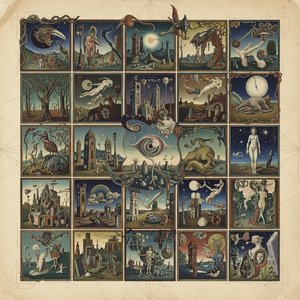
A Dreamlike Portrait of Domesticity – Exploring Chagall’s ‘Chichikov Shaves’
Marc Chagall’s “Chichikov Shaves,” created in 1923 during his formative years in Paris, stands as a quintessential example of Naïve Art—a movement that championed unfiltered emotion and imaginative vision over meticulous realism. More than just a depiction of shaving, this lithograph delves into the complexities of identity and memory, mirroring Chagall’s own artistic journey and deeply rooted in his Jewish heritage.
Composition and Technique: Flattened Perspective and Expressive Line
The artwork immediately captivates with its dynamic composition. Chagall employs a flattened perspective—a hallmark of Naïve Art—compressing space to create an unsettling yet alluring atmosphere. Figures are positioned at oblique angles, disrupting conventional spatial relationships and emphasizing movement. Thick hatching and crosshatching dominate the rendering of Chichikov’s hair and clothing, conveying texture and volume with remarkable accuracy despite the lack of traditional shading. These expressive lines contribute significantly to the overall mood—a blend of tranquility and unease.
Color Palette and Symbolism: Monochrome Contrasts and Mirror Reflections
Executed in a striking monochrome palette of black, white, and gray, “Chichikov Shaves” eschews color’s decorative role for emotional impact. The stark contrast between light and dark areas amplifies dramatic shadows and highlights, creating a theatrical effect. Beyond the visual aesthetic, the monochromatic scheme underscores the painting's introspective nature. Notably, the mirror reflects Chichikov’s image—a recurring motif in Chagall’s oeuvre—representing not merely physical appearance but also psychological self-awareness. The distorted reflection hints at hidden anxieties and adds to the artwork’s enigmatic quality.
Historical Context: Influenced by Folk Art and Jewish Tradition
Chagall's artistic style draws inspiration from folk art traditions, particularly those prevalent in Vitebsk—the town that profoundly shaped his worldview. This influence is evident in the simplified forms and stylized depictions of figures and objects. The painting’s subject matter—a seemingly mundane activity elevated by Chagall’s imaginative sensibility—reflects a broader preoccupation with exploring themes of memory, myth, and spirituality.
Emotional Impact: Whimsy Meets Introspection
"Chichikov Shaves" transcends mere representation; it invites contemplation. Its dreamlike atmosphere evokes feelings of nostalgia and wonder, prompting viewers to consider the interplay between inner experience and external reality. Chagall’s masterful use of line and texture—combined with the symbolic significance of the mirror—creates a powerfully evocative artwork that continues to resonate with audiences today.



 Önizleme yap
 El yapımı tablo satın al
 Paylaş
 Paylaş
 Detayları Gör

 İndir
İndir
 Benzerlerini gör
 X-Işını
 Slayt Gösterisi

 Tümünü Gör






































 Cam seçeneği yalnızca 110 cm altındaki boyutlar için mevcuttur.