

 Önizle
 Gönder
 Paylaş
 Detaylar
 Rehber

 Dosyayı İndir
 Benzerleri
 X-Işını
 Slayt Gösterisi
 İstatistikler
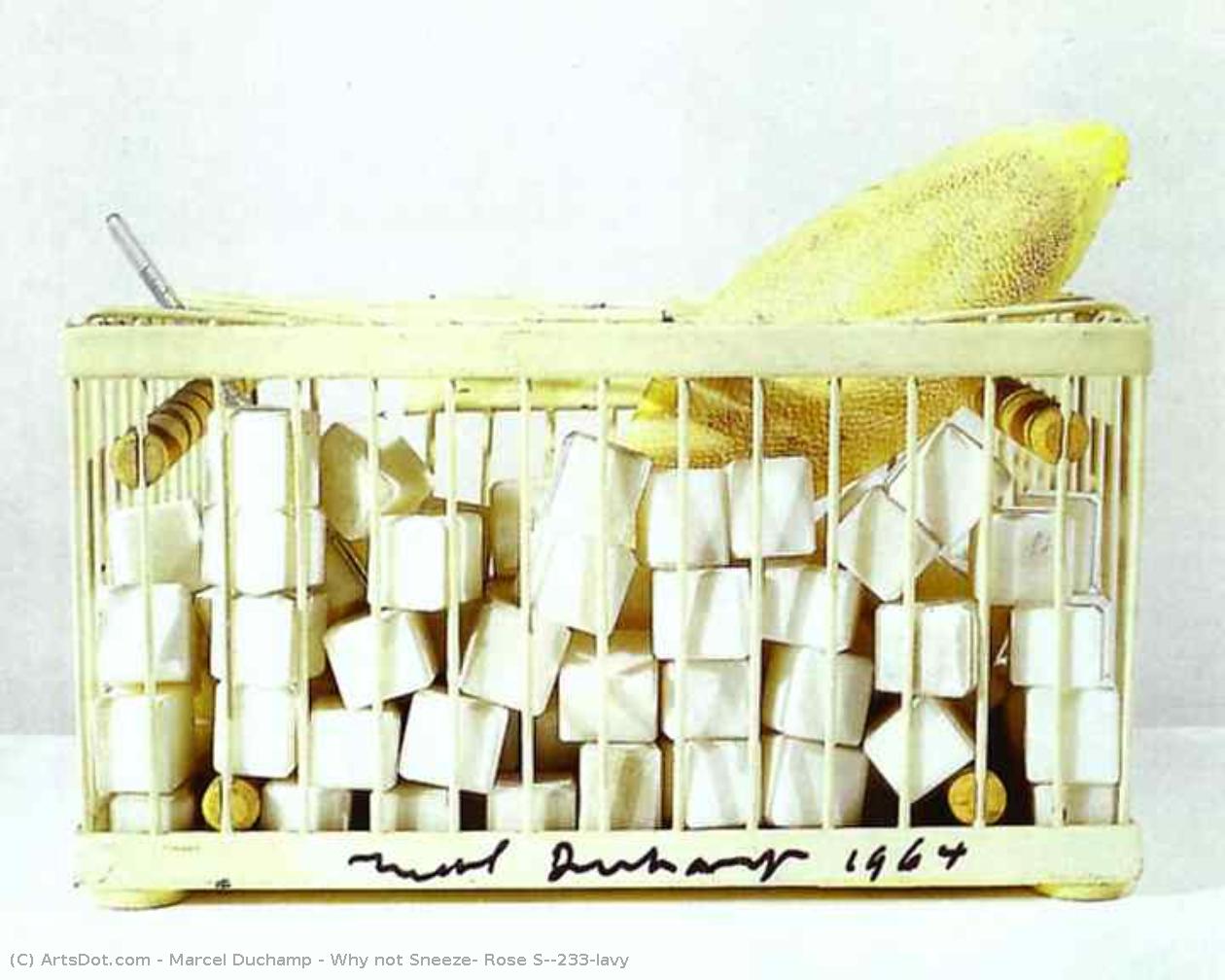
Why not Sneeze, Rose Sélavy
 Acrylic On Canvas
- WallArt
- Dada Gesamtkunstwerk
 1921
1921 12.0 x 22.0 cm
 Tate Modern
 Devamını Oku
Marcel Duchamp: Dadaizm ve hazır nesnelerle sanatın sınırlarını zorlayan devrimci sanatçı! 'Fountain' gibi ikonik eserleriyle modern sanata yön veren, kavramsal sanatın öncüsü.
Bu sayfada sergilenen eser telif hakkı yasasıyla korunmaktadır; bu da yasal olarak eserin birebir kopyasını oluşturamayacağımız veya satamayacağımız anlamına gelir. Bu koruma, aşağıdakiler gibi uluslararası anlaşmalar kapsamında uygulanmaktadır: Bern Sözleşmesi ve aşağıdakiler de dahil olmak üzere ulusal yasalarca belirlenen ABD Telif Hakkı Kanunu - 17. Başlık.
Saygılı ve yasal bir alternatif olarak, orijinalinden ilham alan, kişiye özel, el boyaması sanat eserleri sunuyoruz. Deneyimli ve profesyonel sanatçılarımız, aynı duyguyu uyandıran yeni ve benzersiz bir eser yaratmak için orijinalin stilini, ruhunu ve sanatsal özünü titizlikle inceler; üstelik bu eser, kendi başına özgün bir üretim olarak kalır.
Bu yöntem, koruma altındaki sanat eserinin kopyalanmasını veya çoğaltılmasını içermediği için telif hakkı düzenlemelerine tam uyum sağlar. Bunun yerine, yaratıcı bir yeniden yorumlamadır; orijinalinden etkilenen ancak onunla aynı olmayan yeni bir tablodur.
El Yapımı Yağlı Boya Reproduksiyon
Sanatçılarımız tarafından sipariş üzerine hazırlanan; istediğiniz boyut ve çerçevede, tuval üzerine el boyaması yağlı boya. ( Baskı Satışına Geç Dijital Görsel Satışına Geç)




P118B ₺10

P118H ₺10

P118W ₺10

P438Z ₺10

P508JH ₺12

P508YH ₺12

P805H ₺10

P805Z ₺10

P919BZ ₺10

P919G ₺10

P919XJ ₺10

P959ZH ₺10

P968JZ ₺12

W106C ₺8

W218G ₺10

W218JH ₺8

W218Y ₺10

W307PJ ₺10

W316G ₺10

W316PJ ₺8

W316Y ₺10

W398PJ ₺8

W4111J ₺10

W500HY ₺15

W500JH ₺15

W692G ₺12

W849H ₺8

W940BG ₺15

W953PJ ₺8




Standart Boyutlar
özel boyutlu
CM
INCH
Eserin orijinal oranlarıyla uyumlu, önceden belirlenmiş boyutlarımız arasından seçim yapın.
Loading sizes...

genişlik
yükseklik
Çerçevenize veya duvarınıza uygun olması için ihtiyacınız olan genişliği ve yüksekliği yazın. Bu eser el boyamasıdır; bu nedenle farklı bir formdaki boyutlar için sanatçı, resmin etrafına biraz daha fazla boya ekleyebilir veya biraz daha kırpabilir — seçim sizin. Boyama işlemi başlamadan önce onaylamanız için size bir dijital taslak gönderiyoruz. Bu sayfada gösterilen resim gerçek sonucu yansıtmamaktadır — gerçek sonucu yalnızca taslak göstermektedir.
Değiştirilebilecek örneklere dair: Yüzün müşteri fotoğrafıyla değiştirilmesi; Evcil hayvan eklenmesi (örneğin kedinin köpek ile değiştirilmesi); Arka plana gizli bir mesaj dahil edilmesi; Arka plan manzarasının veya öğelerinin değiştirilmesi.
Siparişten sonra, TopImpressionists.com ekibi talimatlar için müşteriye e-posta gönderecek ve bir taslak önizleme sunacaktır
Siparişten sonra, TopImpressionists.com ekibi talimatlar için müşteriye e-posta gönderecek ve bir taslak önizleme sunacaktır
Dünya Çapında Teslimat (); standart 5 hafta yerine 3/4 haftada. (22 Ekim). Kaliteden ödün verilmez.

Dünya Çapında Ücretsiz Ekspres Kargo

Yüksek Kaliteli Keten Tuval

Tam Nakliye Sigortası

Gümrük Vergisi İadesi Garantisi

Gerçek Renk Uyumu Garantisi

100 Günlük İade Koşulları (Sadece Üretim Hatalı Ürünler İçin)

%100 Para İade Garantisi

Toplu Alım Avantajı
 Cam seçeneği yalnızca 110 cm altındaki boyutlar için mevcuttur.

Why not Sneeze, Rose Sélavy
Baskı Tekniği
Baskı Boyutu
-


Toplam Fiyat
₺ 13137
A Provocative Pause: Unpacking “Why Not Sneeze, Rose Sélavy”
Marcel Duchamp’s "Why Not Sneeze, Rose Sélavy," painted in 1921, isn't merely a still life; it’s an audacious declaration. This deceptively simple image – a white box containing a yellow banana alongside several cups and spoons – immediately throws the viewer off balance, demanding they reconsider their assumptions about art itself. Duchamp, a pivotal figure in the Dada movement, wasn’t interested in replicating reality or expressing personal emotion through traditional means. Instead, he sought to dismantle established artistic conventions, forcing us to confront the very definition of what constitutes “art” and its role within society.
The painting's genesis lies within Duchamp’s exploration of chance and readymades – everyday objects presented as art without alteration. "Why Not Sneeze" exemplifies this approach perfectly. The choice of a banana, an utterly mundane item, elevates it to the status of subject matter through its placement within the box, transforming it into something worthy of contemplation. The inclusion of the cups and spoons further complicates the scene, suggesting a potential for consumption or ritual – elements deliberately devoid of inherent meaning, yet imbued with a subtle tension.
Dadaist Disruptions: Style and Technique
“Why Not Sneeze” is firmly rooted in the principles of Dadaism, a movement born from the disillusionment following World War I. Rejecting logic and reason, Dada artists embraced absurdity, chance, and anti-art sentiments. Duchamp’s technique reflects this ethos; he employed a precise, almost clinical approach to rendering the objects, using oil paint on canvas with a smooth, matte finish. There's no attempt at illusionistic depth or vibrant color – instead, the focus is entirely on the arrangement of the elements and their juxtaposition. The stark white box acts as a frame, isolating the objects and intensifying their impact.
Interestingly, Duchamp’s process involved a degree of chance. He reportedly placed the banana in the box after it had been emptied, allowing the positioning to be determined by accident. This element of randomness underscores the movement's core belief that art should not be dictated by conscious intention but rather emerge from unexpected encounters and unforeseen circumstances.
Symbolic Whispers: Interpretation and Context
The symbolism within “Why Not Sneeze” is deliberately ambiguous, inviting multiple interpretations. The banana itself has been suggested to represent fertility, sexuality, or even a subtle critique of consumer culture – a small, yellow object placed in an enclosed space, hinting at both abundance and confinement. The cups and spoons could symbolize hospitality, offering, or perhaps the act of consuming – again, devoid of any specific narrative but laden with potential meanings.
Furthermore, the title itself, “Why Not Sneeze?”, is a direct challenge to conventional artistic expectations. Duchamp’s question implies that there are no rules governing art, no prescribed methods for creating it. It's an invitation to embrace spontaneity and reject rigid constraints. The painting can be viewed as a meditation on the absurdity of artistic norms and a playful provocation against established aesthetic values.
A Timeless Dialogue: Emotional Impact and Legacy
Despite its seemingly simple composition, “Why Not Sneeze, Rose Sélavy” possesses a profound emotional impact. It’s unsettling, humorous, and thought-provoking – qualities that have cemented its place as one of the most significant works in modern art history. Duchamp's work continues to resonate today, prompting us to question our own perceptions of beauty, value, and the very nature of artistic expression. A reproduction of this iconic piece offers a unique opportunity to engage with a pivotal moment in art history and contemplate the enduring legacy of Marcel Duchamp’s revolutionary spirit.
Soru ve Cevaplar
"Why not Sneeze, Rose Sélavy" adlı eser bir sanat baskısı olarak mevcut mu?
Marcel Duchamp imzalı "Why not Sneeze, Rose Sélavy" eserinin bir baskısını edinmek için, sadece Sanat Baskısı sayfasından sipariş verebilirsiniz: pamuklu kanvas veya arşivlik kanvas kağıt üzerine yüksek kaliteli sanat baskısı.
"Why not Sneeze, Rose Sélavy" eserinde hangi ruh hali ve duygu bir araya geliyor?
"Why not Sneeze, Rose Sélavy" eserinde, Playful bir ruh hali Playful bir duyguya eşlik ediyor.
"Why not Sneeze, Rose Sélavy" adlı eser, Marcel Duchamp kariyerinin hangi dönemine ait?
"Why not Sneeze, Rose Sélavy", Marcel Duchamp kariyerinin Dada Phase dönemine aittir. Bu sınıflandırma, eseri sanatçının gelişim süreciyle ilişkilendirir.
Sanatçı Biyografisi
Marcel Duchamp: Sanatın Sınırlarını Yıkıp Arayan Devrimci Ruh
Marcel Duchamp, Henri-Robert-Marcel Duchamp adıyla 1887 yılında Blainville-Crevon, Normandiya’da doğmuş; yirminci yüzyıl sanatının en etkili figürlerinden biri olarak tarihe geçmiştir. Sanatçı kimliğinin yanı sıra, felsefi bir kışkırtıcı ve modern sanatın seyrini kökten değiştiren bir düşünür olmuştur. Ailesi sanata değer veren, kardeşleri de başarılı sanatçılar olan bir ortamda büyümüş olması, onun içindeki ikonoklastik eğilimlerin erken yaşta filizlenmesine zemin hazırlamıştır. Duchamp ilk eğitimlerini geleneksel teknikleri öğrenerek almış ve post-empresyonist tarzda eserler üretmiştir. Ancak bu akademik altyapı, sanatın doğası, amacı ve tanımı üzerine derin sorgulamalar yürütmek için bir başlangıç noktası olmuştur. Dünyayı betimlemekten öte, algılarımızı zorlayan ve sanatsal değerin ne anlama geldiğini sorgulatan eserler yaratmak istemiştir. Bu bitmeyen entelektüel merak, onun verimli kariyerinin belirleyici özelliği haline gelmiştir.Kübizm’den Dada’ya: Geleneksel Normlara Bir Red
Duchamp'ın sanatsal yolculuğu, sürekli bir evrim ve yerleşmiş normlardan uzaklaşma ile karakterize olmuştur. Kübizm ile ilk etkileşimi, *Çalgıcılar Portresi* (1911) gibi eserlerinde görülebilir; burada parçalanmış formlara ve çoklu perspektiflere olan ilgisi, geleneksel temsilden bir kopuşu işaret etmiştir. Ancak kısa sürede sadece görsel unsurları yeniden düzenlemenin yeterli olmadığına karar vermiş, daha derin soruları ele almak için farklı bir yaklaşıma ihtiyaç duyduğunu anlamıştır. I. Dünya Savaşı'nın dehşeti bu hoşnutsuzluğu körüklemiş ve onu Dadaizm’i kucaklamasına neden olmuştur. Dadaizm, mantığı, akılcılığı ve geleneksel sanatsal değerleri reddeden bir hareket olarak ortaya çıkmıştır. Duchamp tam da bu çerçevede sanatın geleneksel kavramlarını parçalamaya başlamıştır. Güzel nesneler yaratmakla değil, düşünceyi harekete geçirmek, varsayımları zorlamak ve estetik yargının keyfiliğini açığa çıkarmakla ilgilenmiştir. Bu dönemde en radikal yeniliği olan ‘hazır nesne’ konsepti doğmuştur.Hazır Nesneler ve Sanatın Alt Üst Edilmesi
Hazır nesnelerin tanıtımı – seçilip sanat eseri olarak sunulan sıradan üretilmiş objeler – 20. yüzyıl sanatına Duchamp'ın en önemli katkısıdır. Bunlar sadece bulunan objeler değildi; sanatsal yıkımın bilinçli eylemleriydi. Örneğin, bir lavaboyu (*Çeşme*, 1917) alıp “R. Mutt” imzasını atarak ve bunu bir sanat sergisine sunarak Duchamp, sanatsal becerinin ve yazarlığın tanımını sorgulamıştır. Eseri yaratan gerçekten sanatçının eli miydi, yoksa sanatçının *fikri* mi? Bu soru onun pratiğinin merkezine yerleşmiş ve Kavamsal Sanat'ın temellerini atmıştır. *L.H.O.O.Q.* (1919) gibi diğer önemli hazır nesneler, Mona Lisa’nın bir kartpostal reprodüksiyonunu bıyık ve sakalla değiştiren eserler, sanat tarihine ve yerleşik kültürel ikonlara karşı oynak ama keskin eleştiriler olmuştur. Bu eserler estetik nitelikleri için değil; tartışmayı uyandırmak ve izleyicilerin sanatı neyin oluşturduğunu hakkındaki önceden belirlenmiş fikirlerini yeniden düşünmelerini sağlamak amacıyla tasarlanmamıştır. Duchamp'a göre sanat, gözde değil zihinde bulunmalıdır.Mirası ve Süregelen Etkisi
Marcel Duchamp’ın sonraki nesillerdeki sanatçılar üzerindeki etkisi ölçülemezdir. Sanatın anlayışımızı kökten değiştirmiş, Kavamsal Sanat, Minimalizm, Pop Art ve sayısız diğer akımların önünü açmıştır. Sanatçının fikri – eserin ardındaki kavram – estetik niteliklerinden daha önemli olduğu vurgusu günümüzde de sanatçıları ilhamlandırmaya devam etmektedir.- Kübizm: Parçalanmış formların ve uzamsal temsilin ilk keşfi.
- Dadaizm: I. Dünya Savaşı'na tepki olarak mantığı, akılcılığı ve geleneksel sanatsal değerleri reddetme.
- Kavamsal Sanat: Eserin estetik niteliklerinden ziyade ardındaki fikre vurgu.

Marcel Duchamp
1887 - 1968 , Fransa
Kısa Bilgiler
- Artistic Movement Or Style:
- Kübizm
- Dadaizm
- Kavramsal Sanat
- Artists Or Movements Influenced By This Artist:
- Pop Sanatı
- Minimalizm
- Date Of Birth: 28 Temmuz 1887
- Date Of Death: 2 Ekim 1968
- Full Name: Marcel Duchamp
- Nationality: Fransız-Amerikalı
- Notable Artworks:
- Fountain
- L.H.O.O.Q.
- The Large Glass
- Place Of Birth: Blainville, Fransa
İlgili Yazılar

Dadaism Unveiled: The Beautiful Chaos of Art's Most Rebellious Movement
Explore the profound rebellion of Dadaism. Discover how this avant-garde movement emerged from the chaos of WWI to redefine art through absurdity, anti-logic, and a legacy that shaped Surrealism and Pop Art. A deep dive into the beautiful chaos of art history for the true enthusiast.

Pop Surrealism Unveiled: The Sophisticated Intersection of Vibrant Pop Art and Dreamlike Subconscious Landscapes
Explore the captivating world of Pop Surrealism. Discover how vibrant Pop Art meets dreamlike subconscious imagery through the works of masters like Jeff Soto and Ryan Heshka. An expert guide for discerning collectors seeking to understand this profound contemporary art movement.
Temalara, stillere ve özelliklere göre gruplandırılmış sanat eserlerini keşfedin.
![Henri-Robert-Marcel Duchamp (UK: , US: ; French: [maʁsɛl dyʃɑ̃]; 28 July 1887 – 2 October 1968) was a French American artist, chess player, and inventor who played a key role in the development of the avant-garde in the United States and in New York City,](/media/artworks/images-thumb/72/1a/721a0955aa80459ebfff5a502d33a968.jpg)


