
 Önizle
 Gönder
 Paylaş
 Detaylar
 Rehber

 Dosyayı İndir
 Benzerleri
 X-Işını
 Slayt Gösterisi
 Q&A
Q&A İstatistikler
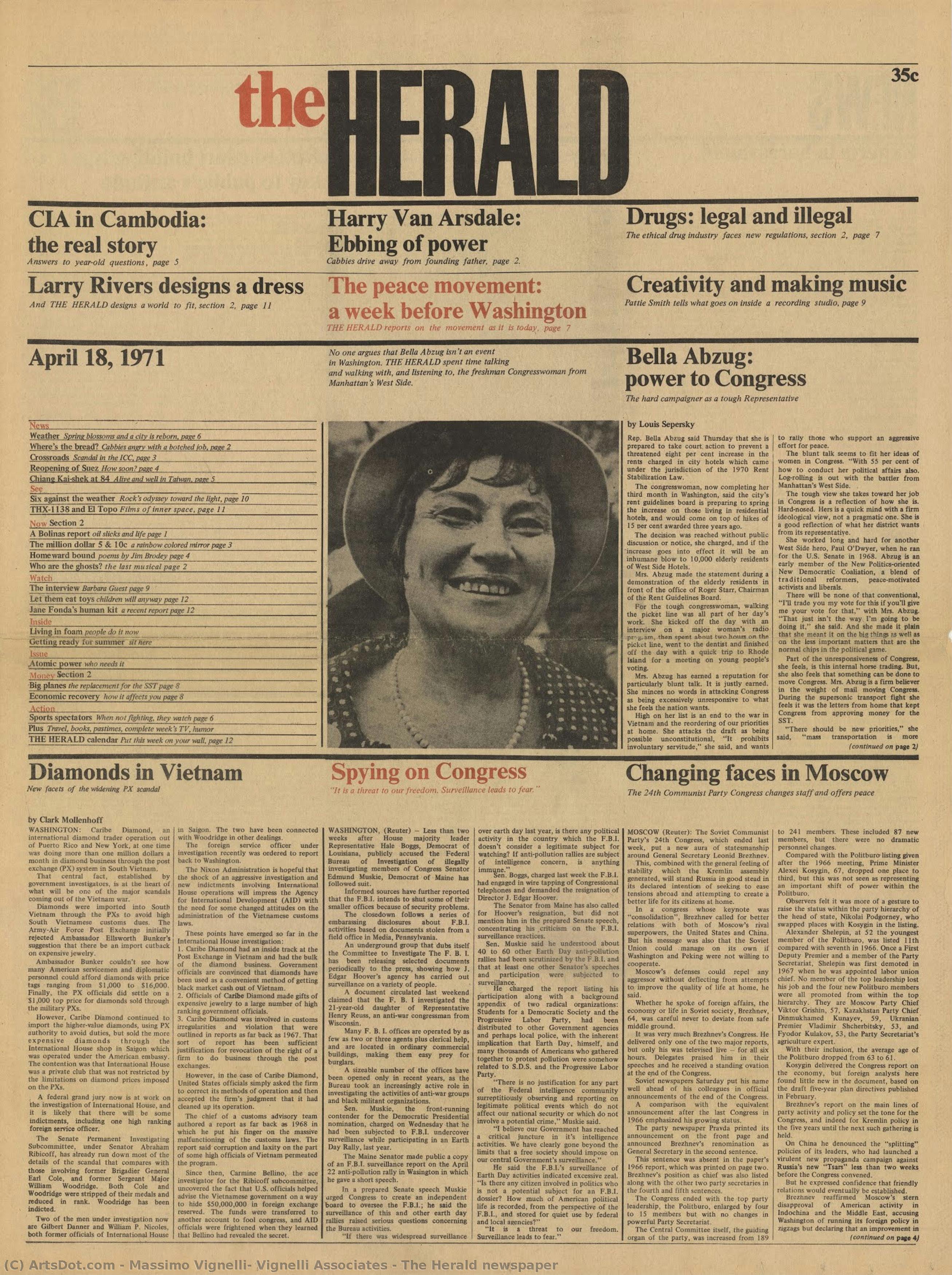
The Herald newspaper

- 43.0 x 57.0 cm


Experience the modernist grid design of The Herald newspaper by Massimo Vignelli (1971), showcasing vintage graphic communication art; discover this iconic piece today.
 Devamını Oku
Massimo Vignelli (1931-2014): NYC metro haritası ve kurumsal kimlikler dahil olmak üzere minimalist grafik tasarımlarıyla tanınan İtalyan tasarım ikonu. Mirasını keşfedin!
Bu sayfada sergilenen eser telif hakkı yasasıyla korunmaktadır; bu da yasal olarak eserin birebir kopyasını oluşturamayacağımız veya satamayacağımız anlamına gelir. Bu koruma, aşağıdakiler gibi uluslararası anlaşmalar kapsamında uygulanmaktadır: Bern Sözleşmesi ve aşağıdakiler de dahil olmak üzere ulusal yasalarca belirlenen ABD Telif Hakkı Kanunu - 17. Başlık.
Bu yöntem, koruma altındaki sanat eserinin kopyalanmasını veya çoğaltılmasını içermediği için telif hakkı düzenlemelerine tam uyum sağlar. Bunun yerine, yaratıcı bir yeniden yorumlamadır; orijinalinden etkilenen ancak onunla aynı olmayan yeni bir tablodur.
Giclée / Sanat Baskısı
Hızlı üretim ve esnek bitiş seçenekleriyle müze kalitesinde giclée veya kanvas baskı. ( El Yapımı Tablo Satın Al Dijital Görsel Satışına Geç)




P118B ₺10

P118H ₺10

P118W ₺10

P438Z ₺10

P508JH ₺12

P508YH ₺12

P805H ₺10

P805Z ₺10

P919BZ ₺10

P919G ₺10

P919XJ ₺10

P959ZH ₺10

P968JZ ₺12

W106C ₺8

W218G ₺10

W218JH ₺8

W218Y ₺10

W307PJ ₺10

W316G ₺10

W316PJ ₺8

W316Y ₺10

W398PJ ₺8

W4111J ₺10

W500HY ₺15

W500JH ₺15

W692G ₺12

W849H ₺8

W940BG ₺15

W953PJ ₺8




Standart Boyutlar
özel boyutlu
CM
INCH
Eserin orijinal oranlarıyla uyumlu, önceden belirlenmiş boyutlarımız arasından seçim yapın.
Loading sizes...

genişlik
yükseklik
Çerçevenize veya duvarınıza uygun olması için ihtiyacınız olan genişlik ve yüksekliği yazın. Bir baskı yalnızca kesilebilir, görselden daha büyük hale getirilemez; bu nedenle farklı bir formdaki boyut seçimi, görselin bir kısmının kaybına neden olur. Herhangi bir baskı yapmadan önce onaylamanız için size bir dijital taslak gönderiyoruz. Bu sayfada gösterilen resim gerçek kesimi göstermez — bunu yalnızca taslak gösterir.
Dünya Çapında Teslimat (); standart 4/5 hafta yerine 2 haftada. (1 Kasım)

Dünya Çapında Ücretsiz Ekspres Kargo

Yüksek Kaliteli Keten Tuval

Tam Nakliye Sigortası

Gümrük Vergisi İadesi Garantisi

Gerçek Renk Uyumu Garantisi

100 Günlük İade Koşulları (Sadece Üretim Hatalı Ürünler İçin)

%100 Para İade Garantisi

Toplu Alım Avantajı
 Cam seçeneği yalnızca 110 cm altındaki boyutlar için mevcuttur.

The Herald newspaper
Giclée / Sanat Baskısı
Baskı Boyutu
-


Toplam Fiyat
₺ 3390
The Grid of Modern Communication: Vignelli's The Herald
To encounter this piece is to step directly into the vibrant, structured chaos of mid-century New York journalism. This reproduction of The Herald newspaper from April 1971, conceived by Massimo Vignelli and his associates, is far more than mere ephemera; it is a meticulously designed artifact of visual communication history. It captures a moment when design principles—simplicity, functionality, and rigorous structure—were being aggressively applied to the seemingly unruly medium of print journalism. The very act of presenting this newspaper front page transforms what might be considered disposable media into a profound study in modernist graphic discipline.
A Masterclass in Structured Design
Vignelli’s genius, always rooted in an almost architectural understanding of space, is on full display here. The description notes the structure: a rigid grid of six columns and sixteen modules per column. This underlying skeleton dictates every element—the placement of headlines like "Diamonds in Vietnam," the accompanying portrait of the smiling woman, and the smaller articles detailing everything from spying congress to changing leaves in Moscow. Vignelli’s commitment to using a single typeface, Times Roman, across various weights and sizes, speaks volumes about his belief in universal legibility. It is a powerful testament to the idea that restraint—the disciplined use of negative space and consistent typography—can generate an overwhelming sense of order and sophistication.
Historical Resonance and Materiality
The year 1971 places this work within a fascinating cultural nexus, post-war modernism grappling with the burgeoning media landscape. While the paper itself ultimately folded due to distribution issues, its surviving design remains potent. For the collector or designer, understanding this context is key. This piece speaks to an era obsessed with efficiency and clarity in information transfer. When considering a reproduction for your space, you are not just acquiring art; you are curating a dialogue about how we consume knowledge—a conversation between the fleeting headline and the enduring power of good design.
Symbolism of the Grid
The grid itself functions as the primary symbolic element. In an age where digital information often feels overwhelming, this physical manifestation of order offers a visual anchor. It symbolizes control, but not oppressive control; rather, it suggests that even complex narratives—the confluence of international events and local interest—can be organized into digestible, beautiful patterns. The interplay between the large, arresting photograph and the tightly packed textual modules creates a dynamic tension, mirroring the very energy of a bustling city like New York in that era.
Bringing Modernist Precision Home
For interior design or gallery display, this piece offers an unparalleled opportunity to inject intellectual rigor into a space. It pairs beautifully with minimalist furniture, mid-century modern accents, or any setting that appreciates the clean lines of 20th-century industrial aesthetics. Owning this reproduction is an homage to Massimo Vignelli’s lifelong dedication to elevating the mundane—the daily newspaper—into something enduringly beautiful and intellectually stimulating.
Soru ve Cevaplar
"The Herald newspaper" hangi tarza aittir?
Massimo Vignelli, Vignelli Associates imzalı "The Herald newspaper" adlı eserin dahil olduğu akım Modernism akımıdır. Bu sınıflandırma, çalışmayı ilgili sanatçılar ve sanat eserleri arasında konumlandırır.
"The Herald newspaper" baskısının kullanım alanı için ne önerilir?
"The Herald newspaper" baskısının önerilen kullanım alanı Statement şeklindedir.
Massimo Vignelli, Vignelli Associates imzalı "The Herald newspaper" eserinin boyutları ve oranları nasıldır?
"The Herald newspaper" eserinin formatı Portrait olup orijinal boyutları 43 x 57 cm'dir. Her iki bilgi de bir reprodüksiyon planlarken oldukça kullanışlıdır.
Sanatçı Biyografisi
Forma Adanmış Bir Yaşam: Massimo Vignelli'nin Dünyası
1931 yılında İtalya'nın Milano kentinde dünyaya gelen Massimo Vignelli’nin yolculuğu, modernist tasarım ilkelerine duyulan sarsılmaz bir bağlılığın hikayesiydi. Genç yaşlarından itibaren görsel iletişim konusunda doğuştan gelen bir yetenek sergileyen sanatçı, mimarlık eğitimine Politecnico di Milano'da başlamış ve daha sonra Università Iuva di Venezia'da devam etmiştir. Ancak, İtalyan endüstriyel tasarımının öncüleri olan saygın Castiglioni kardeşlerin yanında yaptığı çıraklık, dünyayı düşünceli bir yaratıcılıkla şekillendirme tutkusunu asıl ateşleyen unsur olmuştur. Bu erken dönem deneyimi; ona işlevsellik, sadelik ve günlük sorunlara getirilen zarif çözümlerin gücüne olan inancını aşıladı. O, yalnızca nesneler tasarlamıyor; deneyimler kurguluyor, etkileşimleri yalınlaştırıyor ve sıradan olanı unutulmaz kılmaya çalışıyordu. Bu biçimlendirici dönem, kıtalar arası görsel kültürü yeniden tanımlayacak bir kariyerin temellerini attı.İtalya'dan New York'a: Transatlantik Bir Vizyon
Vignelli’nin yolu 1966 yılında Amerika'ya uzandı ve burada Unimark International'ın New York ofisinin kurulmasında kilit bir rol üstlendi. Bu dönem, sadece kendi kariyeri için değil, Amerikan tasarım dünyası için de dönüm noktası niteliğindeydi. Unimark kısa sürede büyük bir üne kavuştu ve Vignelli’nin en dikkat çekici katkılarından biri olan American Airlines için hazırladığı kalıcı logo, onun kurumsal kimlik konusundaki ustalığını perçinledi. Ancak, yaratıcı felsefelerdeki farklılaşan yaklaşımlar onu bağımsız bir girişim başlatmaya yöneltti. 1971 yılında, eşi ve ömür boyu süren iş ortağı Lella Vignelli ile birlikte Vignelli Associates'ı kurdu. Bu ortaklık; grafik tasarım, iç mimari, ürün tasarımı ve mimariyi kapsayan sofistine tasarım çözümleriyle özdeşleşerek olağanüstü derecede verimli bir hale geldi. Firmanın felsefesi, iyi tasarımın erişilebilir, zamansız ve derinlemesine kullanışlı olması gerektiği inancına dayanıyordu; bu ilkeler, kariyerleri boyunca tutkuyla savundukları değerlerdi.İkonik Yaratımlar: Bir Berraklık Mirası
Massimo Vignelli'nin etkisi modern yaşamın dokusuna işlenmiştir. Belki de en tanınmış başarısı, 1972 yılında New York Metrosu haritasını yeniden tasarlamasıdır. Başlangıçta coğrafi gerçeklikten uzaklaştığı gerekçesiyle tartışmalara yol açsa da, bu çalışma berraklık ve kullanılabilirlik adına atılmış cesur bir adımdı. Vignelli, haritalandırmada gerçekçi temsiller yerine okunabilirliği ve sezgisel navigasyonu önceliklendirerek, bugün bile milyonlarca yolcuya rehberlik etmeye devam eden diyagramatik bir harita yarattı. Bu proje, onun temel tasarım felsefesini özetler: iletişimi her şeyin üzerinde tutmak. Metro haritasının ötesinde, Vignelli Associates sayısız marka ve kurum üzerinde silinmez izler bıraktı. Bloomingdale’s için yaptıkları çalışmalar —basit beyaz logosuyla ikonikleşen kahverengi kağıt çanta dahil— bir alışveriş deneyimini bir stil ifadesine dönüştürdü. Knoll için mobilyalar, Heller için ambalajlar ve kalite ile inovasyonun anında tanınan sembolleri haline gelen kurumsal kimlikler tasarladılar. Onun Heller Rainbow Dinnerware serisi, temiz geometrik formlar içinde canlı renkleri sergileyerek minimalist estetiğinin bir kanıtı olarak durmaktadır. Tredicesima Triennale di Milano afişi, renk ve şekli cesurca kullanımını örneklendirirken, Knoll Design kapağı ise tanınmış markalar için çarpıcı görseller yaratma yeteneğini gözler önüne serer.Kalıcı Bir Etki: Estetiğin Ötesinde
Massimo Vignelli’nin etkisi bireysel projelerin çok ötesine geçer; tasarımın kendisini algılayış biçimimizi kökten değiştirmiştir. Tipografik disiplinin sadık bir savunucusu olan sanatçı, sınırlı bir yazı tipi paletini kullanmayı savunmuştur; çünkü ona göre gerçek yaratıcılık sonsuz seçeneklerde değil, özenle seçilmiş araçlarla sergilenen ustalıklı icrada yatar. Yazdığı The Vignelli Canon adlı kitabı, tasarımcılar için bir manifesto haline gelerek berraklık, sadelik ve kalıcı zarafet ilkelerini ana hatlarıyla belirledi. O, sadece görsel olarak hoş nesneler yaratmıyordu; kaostan düzen çıkarmaya, etkili iletişim kurmaya ve düşünceli tasarımlar aracılığıyla insan deneyimini yüceltmeye çabalıyordu. Çalışmaları, gerçek inovasyonun gereksiz olanı ayıklayıp öze odaklanmak olduğunu hatırlatarak nesiller boyu tasarımcıları ilham vermeye devam ediyor. Rochester Institute of Technology bünyesindeki Vignelli Tasarım Araştırmaları Merkezi, onun geniş kapsamlı arşivini koruyarak ve çığır açan fikirlerinin keşfini sürdürerek mirasına kalıcı bir saygı duruşu niteliği taşımaktadır. 2014 yılında aramızdan ayrılmış olsa da, tasarımları zamansız zarafetleri ve sarsılmaz berraklık tutkularıyla dünyamızı şekillendirmeye güçlü bir şekilde devam etmektedir.
Massimo Vignelli, Vignelli Associates
1931 - 2014 , İtalya
Kısa Bilgiler
- Artistic Movement Or Style: Modernizm, Minimalizm
- Date Of Birth: 10 Ocak 1931
- Date Of Death: 27 Mayıs 2014
- Full Name: Massimo Vignelli
- Nationality: İtalyan
- Notable Artworks:
- Heller Rainbow Dinnerware
- Tredicesima Triennale di Milano
- Knoll Design (kapak)
- Place Of Birth: Milano, İtalya
İlgili Yazılar

TopImpressionists.com F.A.Q.: Discover the Vibrant Beauty of Our Premium Art Poster Prints
Explore the technical excellence of TopImpressionists.com's premium art poster prints. Discover how our 12-color pigment system and archival inks capture the luminous beauty of Impressionist masterpieces with unmatched color fidelity and museum-grade durability for the discerning collector.
Temalara, stillere ve özelliklere göre gruplandırılmış sanat eserlerini keşfedin.


