Harlequin on a Horse: A Cubist Masterpiece by Pablo Picasso
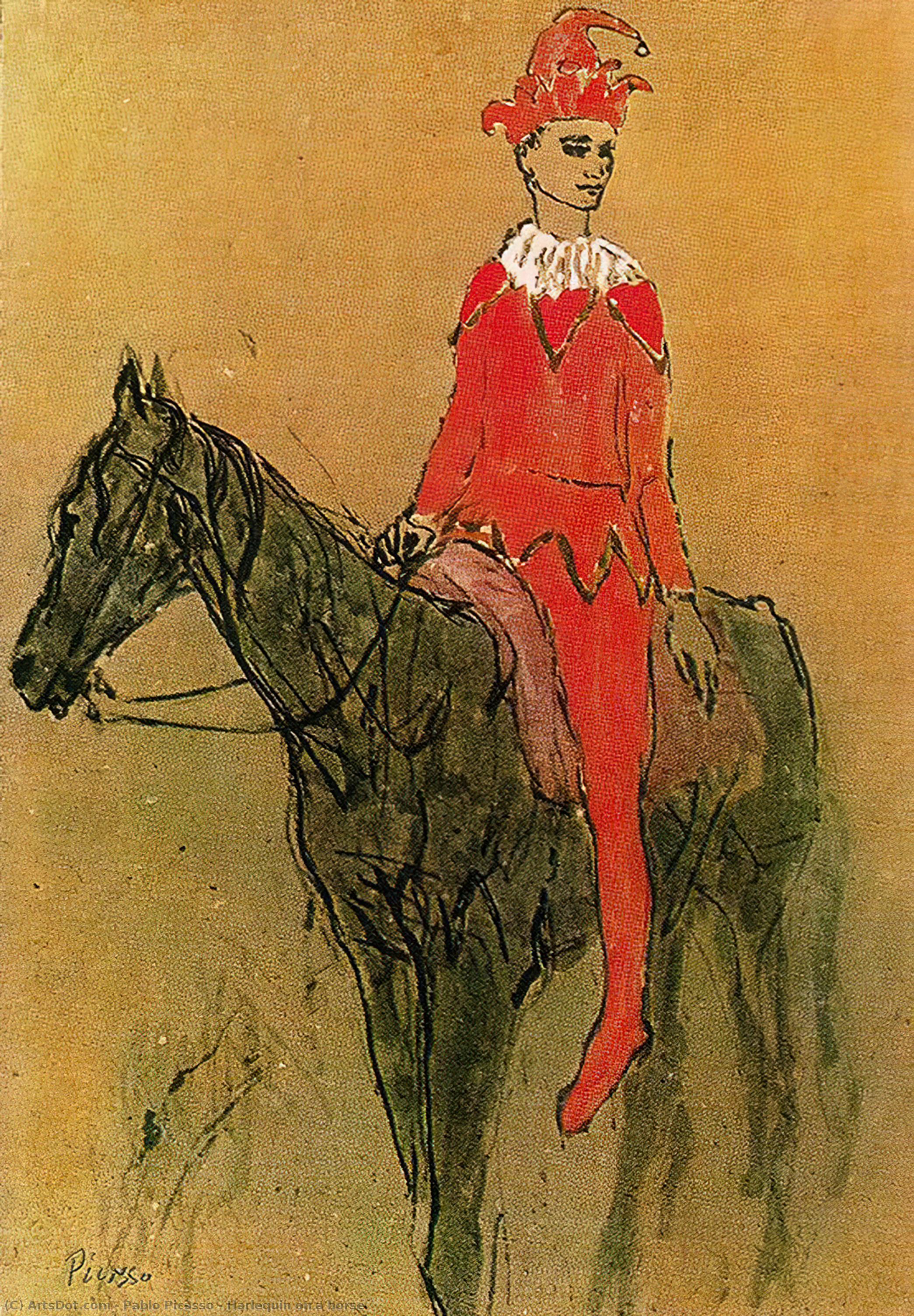
- Title: Harlequin on a Horse
- Artist: Pablo Picasso
- Date: Unknown
- Size: Unknown
- Medium: Oil on Canvas
Subject and Composition
“Harlequin on a Horse” is a captivating artwork by the renowned Spanish artist, Pablo Picasso. The painting depicts a man dressed as a harlequin riding atop a horse. This seemingly simple subject matter is transformed through Picasso’s innovative Cubist style, resulting in an image that is both intriguing and visually complex.
The composition is dynamic, with the figures occupying most of the canvas space. The harlequin's attire features a distinctive design, adding visual interest to the scene. The horse, rendered with bold strokes and geometric shapes, appears powerful yet stylized. Picasso’s use of color is vibrant, contributing to the overall energy and appeal of the piece.
Cubist Style and Artistic Influences
This artwork exemplifies Cubism, a revolutionary art movement pioneered by Picasso alongside Georges Braque. Cubism challenged traditional artistic conventions by breaking down objects into geometric forms and reassembling them from multiple viewpoints on a single canvas. This technique creates a fragmented yet cohesive representation of reality.
- Proto-Cubism: The period preceding Cubism saw artists experimenting with geometric forms and reduced color palettes, laying the groundwork for Picasso's later innovations.
- Influence of Paul Cézanne: Picasso was heavily influenced by Paul Cézanne, particularly his late paintings that emphasized the underlying structure of forms. Cézanne’s focus on geometry and simplification paved the way for Cubism’s radical approach to representation.
Symbolism and Interpretation
The harlequin figure is a recurring motif in Picasso's work, often interpreted as an allegorical self-portrait or representing the artist himself – a wandering performer navigating the complexities of life.
- Harlequin: Symbolizes transformation, adaptability, and the role of the artist as an observer and interpreter of society.
- Horse: Represents power, movement, and perhaps the journey through life.
The combination of these figures suggests a narrative of resilience, creativity, and the ability to find beauty amidst chaos – themes that resonate deeply with viewers.
Emotional Impact and Legacy
"Harlequin on a Horse" evokes a sense of playful energy combined with underlying introspection. The vibrant colors and fragmented forms create a visually stimulating experience while prompting contemplation about identity, transformation, and the nature of perception.
As a cornerstone of Cubism, this painting has had a profound impact on modern art, influencing subsequent movements such as Futurism, Surrealism, and Art Deco. It continues to inspire artists and captivate audiences with its innovative approach to representation and enduring emotional power.


 Preview
 Tabloyu Sipariş Et
 Paylaş
 Paylaş
 Detayları Gör

 İndir
İndir
 Benzerlerini gör
 X-Işını
 Slayt Gösterisi

 Tümünü Gör






































 Cam seçeneği yalnızca 110 cm altındaki boyutlar için mevcuttur.



