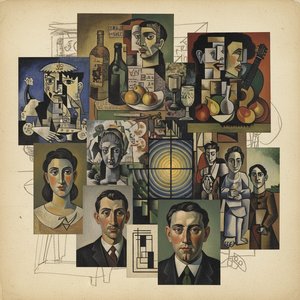
Seated Harlequin: A Study in Cubist Emotion
Pablo Picasso's "Seated Harlequin," painted in 1923, is more than just a portrait; it’s a poignant exploration of melancholy and the complexities of human emotion rendered through the lens of Cubism. This artwork, housed within the Museum Folkwang, exemplifies Picasso's mastery of fragmented forms and his ability to convey profound feelings with seemingly abstract shapes.
The Subject: The Harlequin as Symbol
The harlequin figure itself is rich in symbolic meaning. Traditionally a comedic character from commedia dell’arte, the harlequin represents duality – a blend of joy and sorrow, masking and revelation. Picasso's choice to depict this figure seated and withdrawn subverts the usual jovial portrayal. The slumped posture and downcast gaze suggest introspection and perhaps even loneliness. The costume, with its fragmented diamond patterns, visually reinforces the theme of brokenness and multifaceted identity. It’s a departure from the typical celebratory depiction, transforming the harlequin into a symbol of quiet contemplation.
Cubist Technique: Deconstruction and Reconstruction
“Seated Harlequin” is a prime example of Picasso's Cubist style, particularly his Synthetic Cubism phase. Unlike Analytical Cubism which focused on dissecting objects into their component parts, Synthetic Cubism reassembled these fragments to create new forms and perspectives. Notice how the figure isn’t rendered realistically; instead, it’s composed of geometric shapes – triangles, rectangles, and curves – arranged in a flattened space. The use of muted colors—primarily blues, browns, and ochres—further contributes to the painting's somber mood. The overlapping planes create a sense of depth while simultaneously denying traditional perspective. This deliberate distortion forces the viewer to actively engage with the artwork, piecing together the image and interpreting its meaning.
Historical Context: Picasso’s Personal Landscape
Painted in 1923, "Seated Harlequin" reflects a period of personal change for Picasso. His relationship with his first wife, Olga Khokhlova, was strained, and he was exploring new artistic directions. The harlequin figure can be interpreted as an autobiographical representation – a reflection of Picasso’s own internal struggles and the complexities of his emotional life. The artwork emerged during a time when Cubism had already revolutionized art but continued to evolve, pushing boundaries and challenging conventional notions of representation. It stands as a testament to Picasso's ongoing experimentation and his ability to adapt and innovate within his established style.
Emotional Impact: A Resonance of Melancholy
Despite its abstract nature, "Seated Harlequin" evokes a powerful emotional response. The painting’s quiet sadness is palpable; the figure seems lost in thought, burdened by an unspoken weight. The fragmented forms mirror the fractured state of mind, creating a sense of vulnerability and introspection. This artwork isn't about outward expression but rather about conveying inner turmoil through visual language. It invites viewers to contemplate themes of isolation, identity, and the complexities of human emotion – making it a timeless masterpiece that continues to resonate with audiences today.



 Preview
 Switch to hand made Painting
 Paylaş
 Paylaş
 Detayları Gör

 İndir
İndir
 Benzerlerini gör
 X-Işını
 Slayt Gösterisi

 Tümünü Gör






































 Cam seçeneği yalnızca 110 cm altındaki boyutlar için mevcuttur.