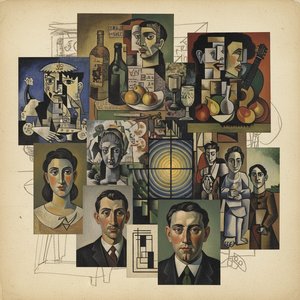
Study of Cannes (1927) by Pablo Picasso
The
Study of Cannes is a captivating pencil drawing by the renowned artist
Pablo Picasso, created in 1927. This surrealist artwork measures 30 x 23 cm and showcases the artist’s unique style, which blends reality and fantasy. The drawing features a sculpture with two large white legs and a head on top, adorned with horns, creating a sense of intrigue and mystery.
Artistic Style and Influences
Picasso's
Study of Cannes is characterized by its surrealist style, which was influenced by the artist’s experimentation with different techniques and mediums. The use of pencil as the primary medium adds a sense of simplicity and intimacy to the artwork, while the subject matter itself is reminiscent of the artist's fascination with mythology and the human form. For more information on Picasso's artistic style, visit
Pablo Picasso: Study of Cannes.
Historical Context
The artwork emerged during Picasso’s prolific period in Paris, coinciding with the burgeoning Surrealist movement. Inspired by Sigmund Freud's psychoanalytic theories and fueled by anxieties surrounding the looming threat of war—specifically the escalating tensions between Nazi Germany and Fascist Italy leading up to the Spanish Civil War—Picasso sought to express profound emotional states through distorted forms and illogical juxtapositions. The bombing of Guernica, a Basque town subjected to aerial bombardment by German Luftwaffe during the conflict, served as a catalyst for Picasso’s artistic response.
Symbolism and Composition
The sculpture depicted in “Study of Cannes” embodies several symbolic elements. The two large white legs represent stability and grounding, juxtaposed against the unsettling presence of the horned head—a motif frequently employed by Picasso to convey primal instincts and anxieties about mortality. The horns symbolize power and aggression, yet simultaneously evoke images of ancient myths and religious iconography. This deliberate layering of symbolism invites contemplation on themes of vulnerability, dominance, and the confrontation between rationality and irrationality.
Technical Considerations
Picasso executed this drawing with meticulous attention to detail using graphite pencil on paper—a technique that lends itself to capturing subtle tonal variations and conveying a sense of immediacy. The artist’s masterful control over line and shading contributes to the artwork's expressive quality, emphasizing its textural surface and enhancing its visual impact. It is remarkable how Picasso manages to convey both psychological depth and artistic precision within this deceptively simple composition.
Similar Artworks and Artists
Other notable artworks that showcase a similar blend of surrealism and experimentation include
Georg Scholz's
Female Nude with Plaster Head and
Georges Braque's
The bird and its shadow I. These artworks demonstrate the artists’ ability to push boundaries and challenge conventional representations of reality. For more information on these artists, visit
Frederick Sommer and explore the
Georg Scholz: Female Nude with Plaster Head page.
- Surrealist elements in Picasso's artwork, such as the use of unusual shapes and forms, create a sense of intrigue and mystery.
- The Walker Art Center in Minneapolis, United States, is a renowned institution that showcases contemporary art, including surrealist works like Picasso's Study of Cannes. Visit Walker Art Center (United States) - A Comprehensive Overview for more information.
- Picasso's artwork is characterized by its unique blend of reality and fantasy, making it a significant contribution to the surrealist movement.
Handmade oil painting reproductions of Picasso's
Study of Cannes are available on
TopImpressionists.com, allowing art enthusiasts to own a piece of surrealist history.
The
Study of Cannes is a testament to Picasso's innovative spirit and his ability to create thought-provoking artworks that continue to inspire and fascinate audiences today.




 Önizleme yap
 El boyaması versiyona geç
 Paylaş
 Paylaş
 Detayları Gör

 İndir
İndir
 Benzerlerini gör
 X-Işını
 Slayt Gösterisi


 Tümünü Gör






































 Cam seçeneği yalnızca 110 cm altındaki boyutlar için mevcuttur.