

Shown: · With its frame:
 Önizle
 Gönder
 Paylaş
 Detaylar
 Rehber

 Dosyayı İndir
 Benzerleri
 X-Işını
 Slayt Gösterisi
 Q&A
Q&A İstatistikler


₺ 13213
El Yapımı Yağlı Boya Reproduksiyon
Sanatçılarımız tarafından sipariş üzerine hazırlanan; istediğiniz boyut ve çerçevede, tuval üzerine el boyaması yağlı boya. ( Baskı Satışına Geç Dijital Görsel Satışına Geç)
Size
·Standart Boyutlar
özel boyutlu
CM
INCH
Eserin orijinal oranlarıyla uyumlu, önceden belirlenmiş boyutlarımız arasından seçim yapın.
Loading sizes...

genişlik
yükseklik
Çerçevenize veya duvarınıza uygun olması için ihtiyacınız olan genişliği ve yüksekliği yazın. Bu eser el boyamasıdır; bu nedenle farklı bir formdaki boyutlar için sanatçı, resmin etrafına biraz daha fazla boya ekleyebilir veya biraz daha kırpabilir — seçim sizin. Boyama işlemi başlamadan önce onaylamanız için size bir dijital taslak gönderiyoruz. Bu sayfada gösterilen resim gerçek sonucu yansıtmamaktadır — gerçek sonucu yalnızca taslak göstermektedir.
 Devamını oku
Finish
·
White ₺1

Blurside ₺1

Extended ₺1

P118B ₺10

P118H ₺10

P118W ₺10

P438Z ₺10

P508JH ₺12

P508YH ₺12

P805H ₺10

P805Z ₺10

P919BZ ₺10

P919G ₺10

P919XJ ₺10

P959ZH ₺10

P968JZ ₺12

W106C ₺8

W218G ₺10

W218JH ₺8

W218Y ₺10

W307PJ ₺10

W316G ₺10

W316PJ ₺8

W316Y ₺10

W398PJ ₺8

W4111J ₺10

W500HY ₺15

W500JH ₺15

W692G ₺12

W849H ₺8

W940BG ₺15

W953PJ ₺8

H24-GOLD ₺30

H24-SILVER ₺30

H36-GOLD ₺45

H36-SILVER ₺45
Shipped in a protective tube, ready for your own framer.
Above 105 cm the frame is shipped as a kit for a professional framer — read the details.
Extras
optionalWhat do the extras include?
Examples of what can be changed: Replace face with customer photo; Add pet (e.g., replace cat with dog); Include hidden message in background; Change background landscape or elements.
After order, TopImpressionists.com team will email client for instructions and provide a mockup preview
After order, TopImpressionists.com team will email client for instructions and provide a mockup preview
Dünya Çapında Teslimat (); standart 5 hafta yerine 3/4 haftada. (30 Ekim). Kaliteden ödün verilmez.
Koruyucu Vernik
İsimlik
İşlemeli Bronz Plaka Detayları
This elegant plaque features the artist's name and the title of the artwork, finely engraved for a timeless presentation.
It is made from bronze with a refined, elegant finish. The text is precisely laser-engraved for a sharp and permanent result. Measuring 9x2 cm, the plaque is compact yet easy to read. It's built to be durable and scratch-resistant, offering a professional, museum-quality look. Mounting is simple thanks to the included adhesive backing.
Şeffaf Akrilik Plaka Detayları
The plaque includes essential engraved details such as the artist's name, the title of the artwork, the date it was created, the type of media used-like oil on canvas or watercolor-a brief description of the piece, and a QR code that links to the complete artwork information.
It is crafted from clear acrylic, offering a sleek, modern appearance. The text is UV-engraved in black to ensure strong visual contrast. With a size of 10x15 cm, it ensures optimal readability. It comes equipped with two metal hooks for secure wall mounting. The plaque is designed to be weather-resistant, making it suitable for various environments, and it includes interactive features that work seamlessly with smartphone scanning.
Siyah Akrilik Plaka Detayları
This elegant plaque includes engraved information such as the artist's name, the title of the artwork, the date it was created, the type of media used (like oil on canvas or watercolor), a short description of the artwork, and a QR code for quick access to more information.
The plaque itself is made from refined black acrylic with a premium finish. The text is laser-engraved in white for high contrast and readability. Its size is 10x15 cm, designed to be easy to read. It comes with two metal hooks for professional mounting. The design is sleek and fits any interior style. It is also weather-resistant and durable, with built-in digital integration for mobile compatibility.
Cam seçeneği yalnızca 110 cm altındaki boyutlar için mevcuttur.
 Cam seçeneği yalnızca 110 cm altındaki boyutlar için mevcuttur.
- Dünya Çapında Ücretsiz Ekspres Kargo
- Yüksek Kaliteli Keten Tuval
- Tam Nakliye Sigortası
- Gümrük Vergisi İadesi Garantisi
- Gerçek Renk Uyumu Garantisi
- 100 Günlük İade Koşulları (Sadece Üretim Hatalı Ürünler İçin)
- %100 Para İade Garantisi
- Toplu Alım Avantajı


Koleksiyon Açıklaması
Paul Sérusier's 'The Grammar' (1892) is an iconic Cloisonnism painting, pioneering abstract art & inspiring the Nabis movement. Explore its symbolism and artistic innovation.
Sanatçı Özgeçmişi
Paul Sérusier (1864-1927), Fransız Post-Empresyonist ressam ve soyut sanatın öncüsü. 'Talisman' gibi önemli eserleriyle tanınan, Nabis hareketini etkileyen ve Kloazonizm tarzını benimseyen bir sanatçı.
About the painting
The Grammar: A Pioneering Exploration of Abstraction
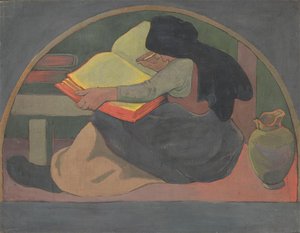
Paul Sérusier’s “Grammar,” painted in 1892, stands as a pivotal work not just within the artist's oeuvre but also as a foundational piece in the development of modern art. More than simply a portrait, it’s an intensely personal and experimental exploration of color, form, and the very nature of representation – a bold step towards abstraction that profoundly influenced generations of artists to come. The painting depicts a woman seated on the ground, absorbed in reading a book, a scene rendered with remarkable intimacy and a deliberate departure from traditional academic styles.
Sérusier’s artistic journey was deeply intertwined with the burgeoning Nabis movement, a group of Symbolist painters who sought to move beyond mere imitation of nature towards expressing inner emotions and spiritual truths. He initially studied at the Académie Julian, but it was his summer sojourn in Pont-Aven, Brittany, that proved transformative. There, under the tutelage of Paul Gauguin – a figure whose influence extended far beyond technique – Sérusier encountered the revolutionary approach of Cloisonnism, championed by Gauguin himself. This style, characterized by sharply defined outlines and areas of flat color applied in small, separate strokes, aimed to mimic the appearance of stained glass, creating a sense of luminous clarity and symbolic resonance.
Cloisonnism and the Language of Color
“Grammar” exemplifies this Cloisonnism technique with striking precision. The woman’s figure is not rendered through subtle gradations of tone but rather defined by bold, distinct outlines – a deliberate simplification that prioritizes color and form over meticulous detail. Sérusier employs a vibrant palette, dominated by deep blues, greens, and ochres, creating an atmosphere both serene and slightly melancholic. The colors aren’t blended; instead, they are applied in small, separate strokes, building up layers of hue and texture. This technique, combined with the flattened perspective, creates a sense of immediacy and directness, as if the painting is capturing a fleeting moment of contemplation.
Crucially, Sérusier’s use of color isn't merely descriptive; it carries symbolic weight. The blues evoke a sense of introspection and mystery, while the greens suggest connection to nature – a key theme in Symbolist art. The muted ochres contribute to the painting’s overall feeling of quietude and contemplation. The deliberate choice of colors, rather than realistic representation, is central to the work's expressive power.
A Study in Form and Abstraction
Beyond its technical mastery, “Grammar” represents a significant shift towards abstraction. While not entirely devoid of recognizable forms – the woman’s figure, the book, the surrounding objects – the painting prioritizes the exploration of color and form over strict representation. The simplified shapes, flattened perspective, and emphasis on pure color anticipate later developments in abstract art, foreshadowing the work of artists like Kandinsky and Mondrian. It's a deliberate move away from photographic realism towards a more subjective and expressive approach to visual language.
The painting’s title, “Grammar,” is particularly intriguing. It suggests that Sérusier was not simply depicting a scene but rather exploring the fundamental building blocks of artistic expression – the elements of color, line, and form – in a way that transcends traditional representation. The book itself becomes a symbol of knowledge and contemplation, inviting the viewer to engage with the painting on a deeper level.
Legacy and Inspiration
“Grammar” remains a vital work in the history of modern art, demonstrating Sérusier’s pioneering spirit and his profound influence on subsequent generations. It's a testament to the power of abstraction to convey emotion, ideas, and spiritual truths. Reproductions of this evocative painting continue to inspire artists and collectors alike, offering a glimpse into the heart of artistic innovation and the enduring quest for new forms of visual expression.
Soru ve Cevaplar
Paul Sérusier imzalı "The Grammar" eserini odamda görmek için artırılmış gerçekliği kullanabilir miyim?
Uyumlu bir cihazda artırılmış gerçekliği kullanarak, eserin AR Önizleme sayfası aracılığıyla Paul Sérusier imzalı "The Grammar" adlı çalışmayı kendi duvarınızda önizleyebilirsiniz.
"The Grammar" eserinin üslubu, yaratıcısının dönemle nasıl bir ilişki içindedir?
Paul Sérusier imzalı "The Grammar", yaratıcısının 19. Yüzyıl döneminde, Cloisonnism / Nabis akımı içerisinde yer almaktadır.
Paul Sérusier imzalı "The Grammar" hangi doygunluk ve yoğunluğu sergiliyor?
"The Grammar" eserinin rengi, Muted doygunlukta ve Monochromatic yoğunluktadır.
Quick facts and art quiz
About Paul Sérusier

Paul Sérusier
1864 - 1927, Fransa
Sanatçı Biyografisi
Erken Yaşamı ve Eğitim Dönemi
9 Kasım 1864’te Paris’te doğan Paul Sérusier, Fransız resim sanatının çalkantılı ve yenilikçi dönemlerine tanıklık eden bir figürdür. Sanat yolculuğu, Académie Julian’da başladığında şekillenmeye başladı. Burada sadece teknik becerilerini geliştirmekle kalmadı, aynı zamanda dönemin önde gelen avangart düşünceleriyle de tanıştı. Sérusier'in erken dönem eğitimleri, onu daha sonraki yaşamında izleyeceği soyut sanatın öncü hareketlerine hazırlayan bir temel oluşturdu.
Pont-Aven ve Gauguin’in Etkisi
Sérusier’in sanatsal dönüşümünün en kritik anlarından biri, 1888 yazında Pont-Aven kasabasını ziyaret etmesiyle yaşandı. Burada Paul Gauguin liderliğindeki küçük bir sanatçı grubuyla bir araya geldi. Gauguin'in etkisi, Sérusier’in resim anlayışını derinden etkiledi ve onu daha önce denenmemiş yollar keşfetmeye teşvik etti. Bu dönemde tamamladığı “Talisman” adlı eser, Cloisonnism akımının en belirgin örneklerinden biri olarak kabul edilir. Resimde görülen yoğun renkler, düz formlar ve belirgin hatlar, soyut sanata doğru atılan cesur bir adımdı. Gauguin’in rehberliğinde Sérusier, geleneksel perspektiflerden uzaklaşarak, duygusal ifadeyi ön plana çıkaran yeni bir estetik anlayış geliştirdi.
Nabis Hareketi ve Synthetism
Sérusier, Post-Empresyonist hareketin önemli temsilcilerinden biri olarak Les Nabis grubunun aktif bir üyesi oldu. Pierre Bonnard, Édouard Vuillard ve Maurice Denis gibi sanatçılarla birlikte, geleneksel sanatsal normlara meydan okuyan yenilikçi yaklaşımlar benimsediler. Nabis’in temel amacı, doğayı birebir taklit etmek yerine, öznel deneyimleri ve sembolik anlamları resimlerine yansıtmaktı. Bu doğrultuda Sérusier, Synthetism (Sentetizm) akımının gelişiminde önemli bir rol oynadı. Sentetizm, renkleri ve formları basitleştirerek, nesnelerin temel yapılarını vurgulamayı amaçlıyordu. Sérusier’in eserlerinde görülen bu yaklaşım, modern sanatın soyutlama eğilimlerini güçlendirdi.
Önemli Eserler ve Mirası
Sérusier'in sanatsal kariyeri boyunca yarattığı birçok önemli eser bulunmaktadır. Bunlardan bazıları şunlardır:
- L’Averse (1893), Paris Musée d’Orsay
- Paul Ranson'ın Portresi (1890), Paris Musée d’Orsay
- Melankoli (1890)
- Yılan Yiyenler (1894), Varşova Muzeum Narodowe
Sérusier’in son dönemleri, Académie Ranson’da öğretmenlik yapması ve 1921 yılında yayınladığı “Boyacılığın ABC’si” adlı kitabıyla geçti. Bu kitapta, genç sanatçılara kendi sanatsal felsefesini aktarmaya çalıştı. 7 Ekim 1927’de Morlaix’de hayatını kaybeden Sérusier, soyut sanatın öncülerinden biri olarak tarihe geçmiştir. Onun Cloisonnism ve Sentetizm akımlarındaki çalışmaları, modern sanatın gelişimine önemli katkılar sağlamış ve sonraki nesil sanatçılara ilham kaynağı olmuştur.
Sanatsal Akımlar ve Etkileri
Cloisonnism, kalın hatlarla ayrılmış düz renk alanlarını kullanan bir stil olup, Sérusier’in eserlerinde belirgin şekilde görülür. Bu akım, modern sanatın temelini oluşturan birçok yeniliği beraberinde getirmiştir. Sérusier'in sanatı, sadece teknik açıdan değil, aynı zamanda felsefi ve sembolik derinliğiyle de dikkat çeker. Onun resimleri, izleyiciyi duygusal bir yolculuğa çıkarır ve geleneksel sanat anlayışlarını sorgulamaya teşvik eder.
Quick facts about Paul Sérusier
- Bu Sanatı Etkileyenler: ['Paul Gauguin']
- Doğum Tarihi: 9 Kasım 1864
- Doğum Yeri: Paris, Fransa
- Etkilediği Sanatçılar:
- Pierre Bonnard
- Édouard Vuillard
- Sanatsal Akım: Post-Empresyonizm
- Tam Adı: Louis-Paul-Henri Sérusier
- Uyruğu: Fransız
- Ölüm Tarihi: 7 Ekim 1927
- Önemli Eserleri:
- Talisman
- L'Averse
- Melankoli
İlgili Eserler




Paul Sérusier
The Grammar
() ·
With its frame: · Hand-painted in oil on linen
Total