

 Gerçek Boyutta Önizle
 Paylaş
 Paylaş
 Detayları Gör
 Rehber

 İndir
İndir
 Benzer ürünler
 X-Işını
 Slayt Gösterisi
 Soru & Cevap
 İstatistikler
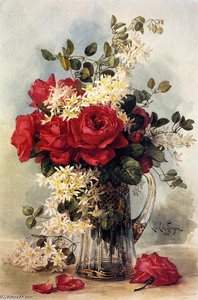
Roses and Bumblebees

Raoul de Longpre (1859-1911) was a French artist renowned for his exquisite floral still life paintings, particularly roses & clematis. Explore his delicate gouache works and discover the beauty of late 19th/early 20th century botanical art.
 Tümünü Gör
Web önizlemesinin çok ötesinde, baskıya hazır bir dosya edinin. Sattığımız her dijital görüntü, stok veri tabanımızdaki yüksek çözünürlüklü bir ana dosyadan —genellikle 5.000 ila 15.000 piksel genişliğinde— gelir; böylece büyük boyutlarda baskı alabilir, dar kırpmalar yapabilir veya ince detayları güvenle yeniden üretebilirsiniz.
Stüdyomuzdan çıkan hiçbir dosya işlenmeden çıkmaz. Bir dijital uzman, renkleri orijinal tabloyla karşılaştırarak kontrol eder ve gerekirse düzeltir; ardından profesyonel rötuş araçlarıyla netliği ve detayları artırır — bunu yaparken her zaman sanatçının fırça darbelerine ve üslubuna sadık kalır. Sonuç, filtrelenmiş bir tarama gibi değil, bizzat tablonun kendisi gibi görünen bir görüntüdür.
İşlem tamamlanmadan önce onayınız alınır: Uzmanımız, incelemeniz için görseli 72 saat içinde e-posta ile gönderir. Memnun kalmadınız mı? İyileştirme veya düzeltme talep edebilir ya da kalite beklentinizin altında kalırsa iade isteyebilirsiniz.
Yayıncıların, tasarım stüdyolarının, galerilerin ve matbaaların güvendiği kalite budur.
Dijital Görsel Sanatlar
Kişisel kullanım, baskı ve yaratıcı projeleriniz için yüksek çözünürlüklü bir dosya indirin. ( Baskı Satışına Geç El Yapımı Tablo Satın Al)
Her Dijital Görüntü Siparişine Dahil Olanlar
Uzman Dijital Teslimat Garantisi
TopImpressionists.com seçtiğinizde, sadece bir görsel edinmekle kalmaz; titizlikle hazırlanmış, profesyonelce iyileştirilmiş dijital bir sanat eserine sahip olur ve memnuniyet garantisiyle güvence altına alınırsınız. Siparişinizle birlikte otomatik olarak sunulan her şey şunlardır:

Hızlı E-posta ile Teslimat
Yüksek çözünürlüklü dijital görüntü dosyanız, siparişinizin ardından en geç 72 saat içinde e-posta ile size gönderilecek ve hemen kullanıma hazır olacaktır.

Yapay Zeka Destekli Dijital Görüntü İşleme
Sanat eseriniz; maksimum detay, netlik ve renk doğruluğu sağlamak amacıyla gelişmiş yapay zeka araçları ve manuel düzenleme kullanılarak profesyonelce optimize edilmektedir.

Ömür Boyu Ücretsiz Yeniden Gönderim
Dosyanızı yanlışlıkla mı sildiniz yoksa kayıp mı oldu? Endişelenmeyin; dosyanızı dilediğiniz zaman size ücretsiz olarak tekrar göndereceğiz.

Hiçbir Zaman İthalat Ücreti Ödemeyin
Sanat eserinizin tadını gümrük vergisi, harç veya teslimat ücreti ödemeden anında çıkarın; dijital indirmeler her zaman vergiden muaftır.

Renk Doğruluğu Garantisi
Profesyonel araçlar ve renk yönetimi kullanarak dijital görselinizin orijinal renklere mümkün olduğunca yakın yansıtılmasını sağlıyoruz.

100 Günlük Memnuniyet Garantisi
If you're not satisfied with your digital image, we'll revise it or refund 100% within 100 days - no questions asked.

100% Para İadesi Garantisi
Memnun kalmadınız mı? Dijital dosyanızı teslim aldıktan sonraki 100 gün içinde, hiçbir soru sorulmaksızın tam para iadesi alabilirsiniz.

Toplu Sipariş İndirimleri
Buy 3 images, save 10% - Buy 5, save 15% - Buy 10+, save 20%. Great for creative projects, galleries, and agencies.




Sanatçı Özgeçmişi
The Poet of Roses: The Lyrical World of Raoul de Longpre
Raoul de Longpre (1859-1911) stands as one of the most evocative figures in the history of French botanical art, a painter whose work transcends mere scientific documentation to reach the realm of pure emotion. Born in Lyon, France, into an environment saturated with artistic heritage, Longpre was the son of a sculptor, Jean Antoine. This familial connection to form and texture likely planted the seeds of his profound sensitivity to the natural world. While history often remembers his brother, Paul de Longpré, as a more prominent figure in the American landscape, Raoul carved out a singular identity within the French tradition. His paintings were never just still lifes; they were poetic meditations on the fleeting beauty of life, captured with a meticulousness that bordered on the devotional.
His artistic journey was shaped by the rigorous academic atmosphere of Paris. At the École Supérieure des Beaux-Arts, he studied under the legendary masters Alexandre Cabanel and Gustave Boulanger. These instructors were titans of the academic style, emphasizing precision, classical composition, and technical mastery. However, where his mentors sought to uphold the grand traditions of historical and mythological painting, Longpre found his true calling in the delicate, often overlooked details of the garden. He moved away from the sweeping narratives of the academy toward a more intimate, observational approach, choosing instead to find grandeur in the velvet petal of a rose or the intricate vine of a clematis.
A Mastery of Gouache and Botanical Devotion
The hallmark of Longpre’s technique was his extraordinary command of gouache. Unlike the translucent layers of watercolor, gouache allowed him to build up opaque, rich textures that mimicked the physical presence of flora. He often utilized dark, moody backgrounds—a stylistic choice that may have been an homage to his father’s sculptural depth—to make the vibrant colors of his subjects emerge with startling clarity. This contrast created a dramatic, almost theatrical atmosphere, where each bloom seemed to glow from within a shadowed sanctuary.
His process was as much scientific as it was artistic. Longpre was known for a painstaking method of study that involved dissecting botanical specimens under magnification. He would document the minute architecture of a flower—the way a stamen curved, the specific gradient of a petal's edge, or the subtle bruising of a leaf—before ever touching brush to paper. This dedication ensured that his work possessed an undeniable botanical accuracy, yet he never allowed science to stifle the soul of his art. In his hands, a painting of roses or clematis became a study in light, shadow, and the ephemeral nature of existence.
Legacy and Artistic Significance
Though he did not seek the international fame that accompanied some of his contemporaries, Raoul de Longpre’s influence remains deeply felt in the genre of floral still life. His ability to blend the precision of a naturalist with the heart of a romantic poet allowed him to create works that are both intellectually stimulating and emotionally resonant. His contributions to the decorative arts were also notable; archives in Lyon even hold volumes of his textile designs, proving that his eye for pattern and beauty extended far beyond the canvas.
Today, collectors and historians look to Longpre as a master of the late 19th-century botanical movement. His work serves as a window into an era that valued the quiet observation of nature's wonders. To view a Longpre original is to participate in his private ritual of admiration—a moment of stillness where the viewer can appreciate the intricate, fleeting glory of the natural world through the eyes of a true master.

Raoul De Longpre
1859 - 1911 , France
Kısa Bilgiler
- Artistic Movement Or Style: Floral Painting
- Artists Or Movements Influenced By This Artist: ['Impressionism']
- Artists Who Influenced This Artist: ['Jean-Baptiste Camille Corot']
- Date Of Birth: 1859
- Date Of Death: 1911
- Full Name: Raoul de Longpre
- Nationality: French
- Notable Artworks: ['Roses & Clematis']
- Place Of Birth: Lyon, France