

Görüntülenen: · Çerçevesiyle birlikte:
 Gerçek Boyutta Önizle
 Paylaş
 Paylaş
 Detayları Gör
 Rehber

 İndir
İndir
 Benzer ürünler
 X-Işını
 Slayt Gösterisi
 Soru & Cevap
 İstatistikler
- 47.0 x 32.0 cm


₺ 13256
El Yapımı Yağlı Boya Reproduksiyon
Sanatçılarımız tarafından sipariş üzerine hazırlanan; istediğiniz boyut ve çerçevede, tuval üzerine el boyaması yağlı boya. ( Baskı Satışına Geç Dijital Görsele Geç)
Boyut Seçimi
·Standart
özel boyutlu
CM
INCH
Eserin orijinal oranlarıyla uyumlu, önceden belirlenmiş boyutlarımız arasından seçim yapın.
Boyutlar yükleniyor...

genişlik
yükseklik
Çerçevenize veya duvarınıza uygun olması için ihtiyacınız olan genişlik ve yüksekliği yazın. Bu eser el boyamasıdır; bu nedenle farklı bir formdaki boyutlar için sanatçı, resmin etrafına biraz daha fazla boya ekleyebilir veya kenarlardan biraz kırpabilir — seçim sizin. Boyama işlemi başlamadan önce onaylamanız için size bir dijital taslak gönderiyoruz. Bu sayfada gösterilen resim gerçek sonucu yansıtmamaktadır; gerçek sonucu yalnızca taslak göstermektedir.
 Daha fazla bilgi edinin
Bitir
·
Beyaz kenar bitişi ₺1

Bulanık kenar bitişi ₺1

Kenar boyalı ₺1

P118B ₺10

P118H ₺10

P118W ₺10

P438Z ₺10

P508JH ₺12

P508YH ₺12

P805H ₺10

P805Z ₺10

P919BZ ₺10

P919G ₺10

P919XJ ₺10

P959ZH ₺10

P968JZ ₺12

W106C ₺8

W218G ₺10

W218JH ₺8

W218Y ₺10

W307PJ ₺10

W316G ₺10

W316PJ ₺8

W316Y ₺10

W398PJ ₺8

W4111J ₺10

W500HY ₺15

W500JH ₺15

W692G ₺12

W849H ₺8

W940BG ₺15

W953PJ ₺8

H24-GOLD ₺30

H24-SILVER ₺30

H36-GOLD ₺45

H36-SILVER ₺45
Koruyucu bir tüp içerisinde gönderilir, kendi çerçeveletmeniz için hazırdır.
Ekstralar
isteğe bağlıEkstralar neleri içeriyor?
Değiştirilebilecek örneklere göz atın: Yüzü müşteri fotoğrafıyla değiştirme; Evcil hayvan ekleme (örneğin, kediyi köpek ile değiştirme); Arka plana gizli bir mesaj dahil etme; Arka plan manzarasını veya öğelerini değiştirme.
Siparişten sonra, TopImpressionists.com ekibi talimatlar için müşteriye e-posta gönderecek ve bir taslak önizleme sunacaktır
Siparişten sonra, TopImpressionists.com ekibi talimatlar için müşteriye e-posta gönderecek ve bir taslak önizleme sunacaktır
Dünya Çapında Teslimat (); standart 5 hafta yerine 3/4 haftada. (7 Kasım). Kaliteden ödün verilmez.
Koruyucu Vernik Katmanı
Eser Etiketi
İşlemeli Bronz Plaka Detayları
This elegant plaque features the artist's name and the title of the artwork, finely engraved for a timeless presentation.
It is made from bronze with a refined, elegant finish. The text is precisely laser-engraved for a sharp and permanent result. Measuring 9x2 cm, the plaque is compact yet easy to read. It's built to be durable and scratch-resistant, offering a professional, museum-quality look. Mounting is simple thanks to the included adhesive backing.
Şeffaf Akrilik Plaka Detayları
The plaque includes essential engraved details such as the artist's name, the title of the artwork, the date it was created, the type of media used-like oil on canvas or watercolor-a brief description of the piece, and a QR code that links to the complete artwork information.
It is crafted from clear acrylic, offering a sleek, modern appearance. The text is UV-engraved in black to ensure strong visual contrast. With a size of 10x15 cm, it ensures optimal readability. It comes equipped with two metal hooks for secure wall mounting. The plaque is designed to be weather-resistant, making it suitable for various environments, and it includes interactive features that work seamlessly with smartphone scanning.
Siyah Akrilik Plaka Detayları
This elegant plaque includes engraved information such as the artist's name, the title of the artwork, the date it was created, the type of media used (like oil on canvas or watercolor), a short description of the artwork, and a QR code for quick access to more information.
The plaque itself is made from refined black acrylic with a premium finish. The text is laser-engraved in white for high contrast and readability. Its size is 10x15 cm, designed to be easy to read. It comes with two metal hooks for professional mounting. The design is sleek and fits any interior style. It is also weather-resistant and durable, with built-in digital integration for mobile compatibility.
Cam seçeneği yalnızca 110 cm altındaki boyutlar için mevcuttur.
 Cam seçeneği yalnızca 110 cm altındaki boyutlar için mevcuttur.
- Dünya Çapında Ücretsiz Ekspres Kargo
- Yüksek Kaliteli Keten Kanvas
- Tam Nakliye Sigortası
- Gümrük Vergisi İadesi Garantisi
- Gerçek Renk Uyumu Garantisi
- 100 Günlük İade Politikası (Sadece Kusurlu Ürünler İçin)
- %100 Para İade Garantisi
- Toplu Alım İndirimi


Eser Açıklaması
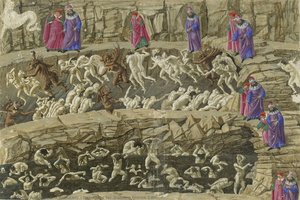
Experience the ethereal grace of Sandro Botticelli's Renaissance drawings for Dante's Divine Comedy, where delicate lines and theological depth invite you to explore a profound visual masterpiece.
Sanatçı Biyografisi
Rönesansın büyüleyici ressamı Sandro Botticelli'yi keşfedin! 'Venüs'ün Doğuşu' ve 'İlkbahar' gibi başyapıtlarıyla tanınan Botticelli, mitolojiyle harmanladığı zarif tarzıyla sanat tarihine damgasını vurmuştur.
Tablo hakkında
A Visual Echo of Dante’s Epic Journey
In the delicate interplay of line and light, Sandro Botticelli’s Drawings for Dante’s Divine Comedy offer far more than a mere illustration of a literary masterpiece; they serve as a profound intellectual and artistic dialogue between poet and painter. Created around 1495-1496 under the prestigious patronage of Lorenzo di Pierfrancesco de’ Medici, these works emerged during the height of Florentine humanism. Botticelli did not simply seek to replicate the narrative beats of Dante's Inferno, Purgatorio, and Paradiso; instead, he wrestled with the monumental challenge of translating complex theological allegory and philosophical contemplation into a visual language. The result is a series of works that capture the very essence of the soul's journey through the afterlife, inviting viewers to wander through landscapes of both profound terror and celestial grace.
The composition of these drawings presents a captivating tapestry of religious and mythological elements. Within the frame, one might encounter angels poised atop rolling hills, their ethereal presence acting as silent sentinaries over the human drama unfolding below. A diverse crowd of figures—some gathered in solemn lines, others scattered in moments of individual struggle—populates the scene, creating a sense of rhythmic movement that guides the eye across the panel. This arrangement creates an intriguing visual experience, where the boundaries between the earthly and the divine become beautifully blurred, making it an ideal centerpiece for those seeking art that provokes deep thought and conversation.
Mastery of Line and the Florentine Spirit
Beyond their narrative purpose, these drawings reveal Botticelli’s unmistakable stylistic signature, characterized by a graceful fluidity and an almost otherworldly luminosity. While many of his contemporaries in Florence were moving toward bolder, more muscular forms, Botticelli maintained a devotion to disegno—the art of precise, expressive drawing. His technique, often utilizing tempera on poplar panels, allows for subtle tonal gradations that lend the figures a soft, breathing quality. The meticulous attention to detail, from the delicate folds of drapery to the emotive, searching expressions on the faces of celestial beings, demonstrates a mastery of form that serves as the foundation for his more famous paintings.
For the discerning collector or interior designer, these works represent a pinnacle of Renaissance elegance. The fine, rhythmic linework provides a sense of structural clarity, while the delicate coloration offers a warmth that can elevate any sophisticated space. Whether placed in a sunlit study or a grand gallery, a high-quality reproduction of these drawings brings with it the intellectual fervor of the Medici era. They are not merely decorations but windows into a period where art and literature were inextricably linked, offering an enduring sense of beauty, mystery, and historical depth that continues to inspire the modern eye.
Soru ve Cevaplar
Sandro Botticelli imzalı "Drawings for Dante´s Divine Comedy" bir tablo mu, çizim mi yoksa baskı mı?
Katalogda, Sandro Botticelli imzalı "Drawings for Dante´s Divine Comedy" eseri WallArt olarak sınıflandırılmıştır. Bu kategori, benzer eserlerin bulunmasına yardımcı olur.
"Drawings for Dante´s Divine Comedy" eserinde kontrast ve uyum nasıl bir araya geliyor?
Sandro Botticelli imzalı "Drawings for Dante´s Divine Comedy" eserinin renk analizi, Gentle bir kontrast ve Strong Color Unity bir uyum sergilemektedir.
Sandro Botticelli imzalı "Drawings for Dante´s Divine Comedy" eserinin atmosferi nasıl tanımlanıyor?
Sandro Botticelli imzalı "Drawings for Dante´s Divine Comedy", ruh hali açısından Serene olarak tanımlanmaktadır. Bu sınıflandırma, eserin bir mekana uyum sağlamasına yardımcı olabilir.
Kısa bilgiler ve sanat testi
Sandro Botticelli Hakkında

Sandro Botticelli
1445 - 1510, İtalya
Sanatçı Özgeçmişi
Alessandro Filipepi: Rönesansın Zarafet ve Mitoloji Üstadı Sandro Botticelli
Floransa’nın kalbinde, 1445 yılında doğan Alessandro di Mariano di Vanni Filipepi, sanat tarihine Sandro Botticelli olarak geçecek bir dâhinin ilk adımıydı. Ognissanti mahallesinde büyüyen genç Alessandro, kısa sürede “Küçük Fıçı” lakabıyla tanınacak ve Floransa’nın o dönemki canlı sanat atmosferi içinde kendine özgü bir yer edinecekti. Babasının önce kuyumculuk, sonra dericilik mesleği, onun ince işçiliğe olan ilgisini şekillendirirken, Fra Filippo Lippi'nin atölyesinde aldığı resim eğitimi ise yeteneğini parlatma fırsatı sundu. Bu dönemde Medici ailesi gibi güçlü patronlarla tanışması, sanatının gelişiminde önemli bir rol oynadı.
Botticelli’nin sanatsal tarzı, geç Gotik gelenekleri ve yükselen Rönesans estetiği arasında ustaca bir köprü kurdu. Fra Angelico ve Paolo Uccello gibi ustalardan etkilenmiş olsa da, kendine has bir vizyonla onları aştı. Eserlerinde zarif çizgiler, akıcı formlar ve yumuşak renk kullanımı ön plana çıkarken, figürleri mistik bir güzellikle canlandırdı. Botticelli’nin en belirgin özelliklerinden biri, eserlerine sıkça mitolojik ögeler katmasıydı. Antik Yunan ve Roma mitolojisinden ilham alarak aşk, güzellik ve ruhani arayış gibi evrensel temaları işledi. Bu sadece bir illüstrasyon değil, aynı zamanda antik hikâyelere yeni anlamlar yükleme çabasıydı.
Teknik açıdan Botticelli, döneminin ötesine geçen yenilikler getirdi. Gümüş kalem tekniğiyle yaptığı ön çizimler, eserlerine ışık ve detay katarken, tempera boyaların kullanımı canlı renklerin elde edilmesini sağladı. Daha sonra yağlı boyalara yönelmesi ise ifade olanaklarını genişletti. Venüs'ün Doğuşu (1482-1486) ve Primavera (İlkbahar) gibi başyapıtları, kompozisyon yeteneğini, atmosferik derinlik yaratma becerisini ve insan duygularını anlamasını gözler önüne seriyor. Venüs'ün Doğuşu, Rönesans ideallerini somutlaştıran bir alegori olarak sanat tarihinde ölümsüzleşirken, Primavera ise karmaşık sembolizmiyle izleyiciyi büyülemeye devam ediyor.
Sanatının farklı evreleri gözlemlenebilir. 1470’lerin başında dini konulara yoğunlaşarak teknik becerilerini geliştirdi ve ün kazandı. 1480’ler, yaratıcılığının zirvesi olarak kabul edilirken, bu dönemde mitolojik başyapıtlarını yarattı. Ancak 1490’ların sonu, Girolamo Savonarola'nın ateşli vaazlarının etkisiyle sanatsal bir dönüşüme işaret etti. Bu dönem eserlerinde daha sade ve duygusal bir ifade tarzı hakim oldu, ruhani yoğunluk ön plana çıktı. Örneğin, Gizemli Doğuş (1501) bu değişimin önemli bir göstergesi.
Botticelli’nin Mirası ve Yeniden Keşfi
Sanatçının 1510'daki ölümünden sonra ünü giderek azaldı. Yaklaşık üç yüzyıl boyunca unutulmaya yüz tutan Botticelli, 19. yüzyılın sonlarında İngiliz sanatçı grubu Pre-Raphaelite Brotherhood’un ilgisiyle yeniden keşfedildi. Bu grup, akademik kuralları reddederek İtalyan Rönesansının erken dönemlerine yöneldi ve Botticelli'nin zarif çizgilerini, canlı renklerini ve şiirsel duyarlılığını takdir etti.
Bu yeniden değerlendirme, sanat tarihine olan katkısını ortaya koyarak onu Erken Rönesans’ın en önemli sanatçılarından biri olarak kabul edilmesini sağladı. Günümüzde Botticelli, eşsiz sanatsal vizyonu, ustalıkla kullandığı teknikler ve güzelliği, duyguyu ve ruhani düşünceyi uyandırma yeteneğiyle tanınıyor. Eserleri, sonraki nesillere ilham vermeye devam ediyor ve Floransa sanatının sembolü olarak kalbimizde yaşamaya devam ediyor.
Başlıca Eserler
- Venüs'ün Doğuşu (c. 1486): Rönesans güzellik ideallerini somutlaştıran ikonik bir tasvir.
- Primavera (İlkbahar) (c. 1482): Baharı ve aşkı kutlayan karmaşık bir alegorik resim.
- Magi'lerin Tapınışı (1475-1476): Kompozisyon ve perspektif konusundaki erken dönem ustalığını sergiliyor.
- Gizemli Doğuş (1501): Kariyerinin sonuna doğru ruhani temalara yöneldiğinin bir yansıması.
Sandro Botticelli hakkında kısa bilgiler
- Doğum Tarihi: 1 Mart 1445
- Doğum Yeri: Floransa, İtalya
- Etkilenen Sanatçılar:
- Fra Angelico
- Paolo Uccello
- Notable Eserler:
- Venüs'ün Doğuşu
- İlkbahar
- Müneccim Kralların Tapınağı
- Sanat Akımları: ['Pre-Raphaelite']
- Sanatsal Akım: Erken Rönesans
- Tam Adı: Alessandro di Mariano Filipepi
- Uyruk: İtalyan
- Ölüm Tarihi: 17 Mayıs 1510
Temalara, stillere ve özelliklere göre düzenlenmiş sanat eserlerini keşfedin.


Sandro Botticelli
Drawings for Dante´s Divine Comedy
() ·
Çerçevesiyle birlikte: · Keten üzerine yağlı boya ile el yapımı
Toplam