Önizle
 Gönder
 Paylaş
 Detaylar
 Rehber

 Dosyayı İndir
 Benzerleri
 X-Işını
 Slayt Gösterisi
 İstatistikler
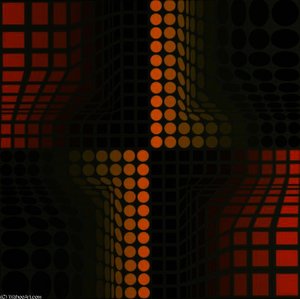
Vilag II


Experience Victor Vasarely's 'Vilag II,' a mesmerizing Op Art masterpiece! This vibrant serigraph plays with perception, creating dynamic illusions and captivating viewers with its geometric patterns and bold colors.
 Devamını Oku
Op Sanatı'nın öncüsü Victor Vasarely (1906-1997)! Geometrik soyutlamaları, optik illüzyonları ve modern sanat & tasarım üzerindeki kalıcı etkisi keşfedin. 'Zebra', 'Suomi' seramikleri gibi eserleriyle tanınır.
Bu sayfada sergilenen eser telif hakkı yasasıyla korunmaktadır; bu da yasal olarak eserin birebir kopyasını oluşturamayacağımız veya satamayacağımız anlamına gelir. Bu koruma, aşağıdakiler gibi uluslararası anlaşmalar kapsamında uygulanmaktadır: Bern Sözleşmesi ve aşağıdakiler de dahil olmak üzere ulusal yasalarca belirlenen ABD Telif Hakkı Kanunu - 17. Başlık.
Bu yöntem, koruma altındaki sanat eserinin kopyalanmasını veya çoğaltılmasını içermediği için telif hakkı düzenlemelerine tam uyum sağlar. Bunun yerine, yaratıcı bir yeniden yorumlamadır; orijinalinden etkilenen ancak onunla aynı olmayan yeni bir tablodur.
Giclée / Sanat Baskısı
Hızlı üretim ve esnek bitiş seçenekleriyle müze kalitesinde giclée veya kanvas baskı. ( El Yapımı Tablo Satın Al Dijital Görsel Satışına Geç)




P118B ₺10

P118H ₺10

P118W ₺10

P438Z ₺10

P508JH ₺12

P508YH ₺12

P805H ₺10

P805Z ₺10

P919BZ ₺10

P919G ₺10

P919XJ ₺10

P959ZH ₺10

P968JZ ₺12

W106C ₺8

W218G ₺10

W218JH ₺8

W218Y ₺10

W307PJ ₺10

W316G ₺10

W316PJ ₺8

W316Y ₺10

W398PJ ₺8

W4111J ₺10

W500HY ₺15

W500JH ₺15

W692G ₺12

W849H ₺8

W940BG ₺15

W953PJ ₺8




Standart Boyutlar
özel boyutlu
CM
INCH
Eserin orijinal oranlarıyla uyumlu, önceden belirlenmiş boyutlarımız arasından seçim yapın.
Loading sizes...

genişlik
yükseklik
Çerçevenize veya duvarınıza uygun olması için ihtiyacınız olan genişlik ve yüksekliği yazın. Bir baskı yalnızca kesilebilir, görselden daha büyük hale getirilemez; bu nedenle farklı bir formdaki boyut seçimi, görselin bir kısmının kaybına neden olur. Herhangi bir baskı yapmadan önce onaylamanız için size bir dijital taslak gönderiyoruz. Bu sayfada gösterilen resim gerçek kesimi göstermez — bunu yalnızca taslak gösterir.
Dünya Çapında Teslimat (); standart 4/5 hafta yerine 2 haftada. (23 Ekim)

Dünya Çapında Ücretsiz Ekspres Kargo

Yüksek Kaliteli Keten Tuval

Tam Nakliye Sigortası

Gümrük Vergisi İadesi Garantisi

Gerçek Renk Uyumu Garantisi

100 Günlük İade Koşulları (Sadece Üretim Hatalı Ürünler İçin)

%100 Para İade Garantisi

Toplu Alım Avantajı
 Cam seçeneği yalnızca 110 cm altındaki boyutlar için mevcuttur.

Vilag II
Giclée / Sanat Baskısı
Baskı Boyutu
-


Toplam Fiyat
₺ 3374
The Genesis of Illusion: Unveiling Vilag II
Victor Vasarely’s Vilag II isn't merely a painting; it’s an invitation into a world where perception itself is playfully challenged. Born Károly Vaszary in Pécs, Croatia, in 1906, Vasarely wasn’t destined for the canvas initially. His early pursuits leaned towards medicine before he was captivated by the burgeoning possibilities of visual expression, ultimately leading him to the influential Sándor Bortnyik’s Műhely workshop – a crucible where the principles of Bauhaus design and geometric abstraction were forged into his signature style. This formative environment instilled within him a systematic approach to artmaking, one rooted in logic and precision, moving beyond traditional representational forms.
Vilag II, created in 1978, exemplifies this philosophy perfectly. It’s a serigraph – a screenprint technique that allows for the creation of incredibly vibrant and detailed images – utilizing bold hues of blue, red, and black against a stark white background. The composition isn't about depicting a recognizable scene; instead, it’s an intricate dance of intersecting circles, each subtly differentiated through variations in color and texture. These aren’t static forms; they seem to vibrate with energy, creating a sense of movement and depth that defies the limitations of a two-dimensional surface.
Op Art's Architect: Vasarely and the Pursuit of Spatial Illusion
Vasarely is undeniably one of the pioneers of Op Art – Optical Art. This movement sought to manipulate visual perception, creating illusions of depth, movement, and three-dimensionality through purely formal means. He wasn’t interested in mimicking reality; rather, he aimed to reveal the inherent dynamism within how we *see* the world. His method involved meticulously calculated grids and mathematical principles, translating these into patterns that actively engage the viewer's brain, triggering a fascinating interplay between what is seen and what is perceived.
The creation of Vilag II reflects this dedication to controlled experimentation. Vasarely’s systematic approach ensured that each element contributed to the overall illusion, working in harmony to generate a complex yet balanced visual experience. The piece draws heavily on principles of Gestalt psychology – the idea that our brains automatically organize visual information into meaningful groups and patterns – further enhancing its captivating effect.
A Transatlantic Dialogue: Vasarely's Influence
Vasarely’s work transcended national boundaries, engaging in a transatlantic exchange with artists like Alexander Calder, Fernand Léger, and Carlos Cruz-Diez. He played a pivotal role in the renovation of Ciudad Universitaria de Caracas (1944-70) under Carlos Raúl Villanueva, contributing to public artworks that transformed the campus into a symbol of modernity and urban planning. This project showcased Vasarely’s ability to create art accessible to all, democratizing visual experience and solidifying his legacy as a visionary artist.
The inclusion of elements like the interlocking circles and contrasting colors in Vilag II speaks to this broader engagement. It's not simply an isolated artwork; it’s part of a larger narrative – a testament to Vasarely’s commitment to pushing the boundaries of art and its relationship with society. The piece invites contemplation on how we perceive reality, mirroring the artist's own exploration into the fundamental principles governing perception and form.
Collecting the Illusion: A Timeless Masterpiece
Vilag II is more than just a beautiful image; it’s an investment in a piece of art history. Reproductions capture the vibrancy and complexity of the original, offering a way to bring Vasarely's groundbreaking vision into your home or office. Consider this artwork not merely as decoration, but as a portal – a reminder that our perception is constantly being shaped by the world around us, and that even the simplest forms can hold profound meaning.
Soru ve Cevaplar
Victor Vasarely imzalı "Vilag II" ev dekorasyonunda nasıl kullanılabilir?
"Vilag II" eseri Statement için önerilmektedir; kullanım için en uygun alan ise bir Living Room'dur.
"Vilag II" eserinin yazarı kimdir ve hangi akıma aittir?
"Vilag II", Victor Vasarely tarafından Op Art üslubunda yaratılmıştır. Sanatçı ve akım, eserin ait olduğu geleneği tanımlar.
Victor Vasarely imzalı "Vilag II" hangi akıma ve hangi döneme yerleştirilmektedir?
Victor Vasarely imzalı "Vilag II" eserinde, Op Art akımı Modern Dönem dönemiyle buluşuyor.
Sanatçı Biyografisi
Geometride Yaşayan Bir Hayat: Victor Vasarely'nin Dünyası
Victor Vasarely, asıl adı Károly Vaszary olarak 1906 yılında Avusturya-Macaristan İmparatorluğu’nun bir parçası olan Pécs şehrinde doğdu. Sanata adanmışlığı, tıbbi eğitimini bırakarak resme yönelmesiyle somutlaşan bir dönüm noktasıyla başladı. Budapeşte'deki Eötvös Loránd Üniversitesi'nde tıp eğitimi alırken, görsel ifadeye duyduğu derin arzu onu Podolini-Volkmann Akademisi’ne yöneltti ve böylece hayatının geri kalanını şekillendirecek bir yolculuğa çıktı. Sanat eğitiminde Sándor Bortnyik’in Műhely atölyesiyle tanışması, Vasarely'nin Bauhaus hareketinin ilkelerini özümsediği ve geometrik soyutlamanın temellerini attığı kritik bir an oldu. Bu erken dönem deneyimleri, geleneksel sanatsal normları yıkarak mantık ve kesinliğe dayalı yeni bir görsel dil yaratma arzusunu ateşledi.Soyuttan Optik Sanatın Şafağına
1920'lerin sonu ve 1930'ların başlarında Vasarely, temsili sanattan uzaklaşarak geometrik soyutlamanın derinliklerine daldı. "Mavi Çalışma" ve "Yeşil Çalışma" gibi eserleri, anlatısal içeriği saf formlar ve renk ilişkileri lehine bırakma konusundaki bilinçli bir çabayı yansıtıyor. Piet Mondrian ve Kazimir Malevich gibi ustaların etkisinde kalmasına rağmen Vasarely, onların stillerini basitçe taklit etmekten kaçındı. Öncüllerinin statik kompozisyonlarını aşmayı amaçlayarak, izleyicinin algısını aktif olarak meşgul edecek bir dinamizm yaratmaya çalıştı. 1930 yılında Paris'e yerleşmesiyle birlikte grafik tasarımcı ve reklam sanatçısı olarak kendini kanıtladı; becerilerini geliştirirken benzersiz sanatsal vizyonunu şekillendirmeye devam etti. Tam da bu dönemde, Optik Sanat’ın alametifarikası haline gelecek tekniklerle denemeye başladı – hareket ve derinlik illüzyonları yaratarak şekilleri ve renkleri manipüle etmek.Sistematik İllüzyon: Bir Hareketi Tanımlamak
1960'lı yıllarda Victor Vasarely, yükselen Optik Sanat hareketi içinde önde gelen bir figür olarak ortaya çıktı. Pek çok sanatçının sezgi ve spontane ifadelere dayanarak çalıştığı yerde, Vasarely çalışmalarına kesinlikle sistematik bir metodolojiyle yaklaştı. Görsel titreşimler, girdap efektleri ve fiziksel olarak var olmamasına rağmen derinlik hissi yaratan güçlü optik illüzyonlar yaratarak desenler oluşturmak için ızgaraları ve matematiksel ilkeleri kullandı. Amaç hile yapmak değil; algının içindeki yerleşik dinamizmi ortaya çıkarmaktı. Sanatın sergiler ve müzelerin sınırlarının ötesinde, herkesin erişebileceği bir sanat yaratma konusunda yeniden üretilebilirliğe ve kitlesel çekiciliğe inanıyordu. Çalışmaları, izleyicileri kendi görsel deneyimlerini sorgulamaya zorlayarak anlamın yaratımına aktif olarak katılmaya teşvik etti. Bu kasıtlı katılım, Optik Sanatı ayırdetti ve Vasarely'nin ön saflarında yerini sağlamlaştırdı. Sadece resimler çizmiyor; deneyimler inşa ediyordu.Tuvalden Ötesi: Hareketli Keşifler ve Kalıcı Miras
Vasarely’nin sanatsal keşfi statik illüzyonlarla sınırlı kalmadı. Artan şekilde kinetik sanata yönelerek, gerçek hareketi içeren veya dikkatlice düzenlenmiş görsel efektlerle hareket ediyor gibi görünen eserler yarattı. Paris'teki Centre Pompidou'da sergilenen büyük bir kinematik nesne olan "Georges Pompidou" (1976), bu hırsın kanıtıdır – mimari ve kentsel tasarım ile sanatın entegrasyonu. Ayrıca, Rosenthal porselenle yaptığı işbirliği sayesinde ikonik “Suomi” tabak serisiyle ince sanat ile fonksiyonel nesneler arasındaki sınırları bulanıklaştırarak sanatı gündelik hayata nüfuz ettirme konusundaki inancını daha da vurguladı. Vakıf Vasarely'nin geniş eser yelpazesinin korunmasını ve tanıtılmasını sağlayan Fondation Vasarely’nin kurulması, Fransız-Sovyet Salyut 7 uzay aracı üzerindeki serigrafların dahil edilmesi gibi olağanüstü bir olayla sanatının küresel tanınması ve insanlığın keşif çabasıyla bağlantısı sembolize edildi. Victor Vasarely'nin mirası resim alanının ötesine geçiyor; grafik tasarım, moda, iç tasarım ve hatta erken bilgisayar grafikleri üzerinde derin bir etki bırakarak nesillerce sanatçıyı yenilikçi vizyonu ve algı olasılıklarını keşfetme konusundaki sarsılmaz bağlılığıyla ilham verdi. Modern sanat tarihinde önemli bir figür olarak kalmaya devam ediyor; ne olabileceğini sorgulamaya cesaret eden gerçek bir öncü.Tarihsel Önem
Vasarely’nin sanat tarihindeki katkısı çok yönlüdür. Geleneksel resim tekniklerinin ötesine geçerek, izleyicinin algısını aktif olarak meşgul eden eserler yarattı. Sistematik yaklaşımı, sanatsal yaratıcılığın geleneksel kavramlarını zorladı ve bilgisayarla oluşturulmuş sanat ve dijital tasarım için öncülük etti. Yeniden üretilebilirlik ve ticari uygulamaları benimseyerek Vasarely, ince sanat ile popüler kültür arasındaki sınırları bulanıklaştırdı ve her ikisinde de kalıcı bir iz bıraktı. Sadece estetik açıdan hoş nesneler yaratmıyordu; dünyayı nasıl gördüğümüz hakkında temel gerçekleri ortaya çıkaran görsel deneyler yürütüyordu.
Victor Vasarely
1906 - 1997 , Hırvatistan
Kısa Bilgiler
- Artistic Movement Or Style: Op Sanatı, Kinetik Sanat
- Artists Or Movements Influenced By This Artist:
- Grafik tasarım
- İç dekorasyon
- Artists Who Influenced This Artist:
- Piet Mondrian
- Kazimir Malevich
- Date Of Birth: 9 Nisan 1906
- Date Of Death: 15 Mart 1997
- Full Name: Victor Vasarely
- Nationality: Macar-Fransız
- Notable Artworks:
- Blue Study
- Green Study
- Zebra
- Place Of Birth: Pécs, Hırvatistan
İlgili Yazılar

Victor Vasarely: Pioneering Op Art & Democratizing Visual Experience
Explore the revolutionary world of Victor Vasarely, father of Op Art. Discover his geometric masterpieces, artistic system, & lasting impact on modern design. A guide for discerning art collectors.

Mastering Illusion: The Vibrant World of Victor Vasarely's Op Art and the Geometry of Perception
Explore the mesmerizing world of Victor Vasarely. Discover how his Bauhaus-inspired Op Art masters the science of perception through geometric abstraction and vibrant color. A sophisticated guide for discerning art collectors seeking to understand the legacy of optical illusion.

Op Art Unveiled: The Science of Optical Illusion and Kinetic Movement in Geometric Abstraction
Explore the science of Op Art through the lens of masters like Victor Vasarely. Discover how geometric abstraction uses optical illusions to create movement and delve into the neuroaesthetics of perception with our expert art history guide.

Geometrik Soyutlamanın Öncü Eserleri: Sanat Tarihinin İzinde 🖼️🎨
Geometrik Soyutlamanın 10 başyapıtını keşfedin! Mondrian, Malevich ve Kandinsky gibi sanatçıların ikonik eserleriyle modern sanatın derinliklerine yolculuk edin. Evinizi lüks sanat baskılarıyla renklendirin. TopImpressionists.com'da tüm koleksiyonu inceleyin!

Neo-Abstract Art: The High-Impact Evolution of Modern Visual Energy and Geometric Sophistication
Discover the power of Neo-Abstract art. Explore how bold geometric forms and high-impact visual energy are redefining modern design. Learn to curate sophisticated, high-energy spaces with the latest trends in contemporary abstraction and structural color.
Temalara, stillere ve özelliklere göre gruplandırılmış sanat eserlerini keşfedin.