

Görüntülenen: · Çerçevesiyle birlikte:
 Gerçek Boyutta Önizle
 Paylaş
 Paylaş
 Detayları Gör
 Rehber

 İndir
İndir
 Benzer ürünler
 X-Işını
 Slayt Gösterisi
 Soru & Cevap
 İstatistikler

₺ 15732
El Yapımı Yağlı Boya Reproduksiyon
Sanatçılarımız tarafından sipariş üzerine hazırlanan; istediğiniz boyut ve çerçevede, tuval üzerine el boyaması yağlı boya. ( Baskı Satışına Geç Dijital Görsele Geç)
Boyut Seçimi
·Standart
özel boyutlu
CM
INCH
Eserin orijinal oranlarıyla uyumlu, önceden belirlenmiş boyutlarımız arasından seçim yapın.
Boyutlar yükleniyor...

genişlik
yükseklik
Çerçevenize veya duvarınıza uygun olması için ihtiyacınız olan genişlik ve yüksekliği yazın. Bu eser el boyamasıdır; bu nedenle farklı bir formdaki boyutlar için sanatçı, resmin etrafına biraz daha fazla boya ekleyebilir veya kenarlardan biraz kırpabilir — seçim sizin. Boyama işlemi başlamadan önce onaylamanız için size bir dijital taslak gönderiyoruz. Bu sayfada gösterilen resim gerçek sonucu yansıtmamaktadır; gerçek sonucu yalnızca taslak göstermektedir.
 Daha fazla bilgi edinin
Bitir
·
Beyaz kenar bitişi ₺1

Bulanık kenar bitişi ₺1

Kenar boyalı ₺1

P118B ₺10

P118H ₺10

P118W ₺10

P438Z ₺10

P508JH ₺12

P508YH ₺12

P805H ₺10

P805Z ₺10

P919BZ ₺10

P919G ₺10

P919XJ ₺10

P959ZH ₺10

P968JZ ₺12

W106C ₺8

W218G ₺10

W218JH ₺8

W218Y ₺10

W307PJ ₺10

W316G ₺10

W316PJ ₺8

W316Y ₺10

W398PJ ₺8

W4111J ₺10

W500HY ₺15

W500JH ₺15

W692G ₺12

W849H ₺8

W940BG ₺15

W953PJ ₺8

H24-GOLD ₺30

H24-SILVER ₺30

H36-GOLD ₺45

H36-SILVER ₺45
Koruyucu bir tüp içerisinde gönderilir, kendi çerçeveletmeniz için hazırdır.
Ekstralar
isteğe bağlıEkstralar neleri içeriyor?
Değiştirilebilecek örneklere göz atın: Yüzü müşteri fotoğrafıyla değiştirme; Evcil hayvan ekleme (örneğin, kediyi köpek ile değiştirme); Arka plana gizli bir mesaj dahil etme; Arka plan manzarasını veya öğelerini değiştirme.
Siparişten sonra, TopImpressionists.com ekibi talimatlar için müşteriye e-posta gönderecek ve bir taslak önizleme sunacaktır
Siparişten sonra, TopImpressionists.com ekibi talimatlar için müşteriye e-posta gönderecek ve bir taslak önizleme sunacaktır
Dünya Çapında Teslimat (); standart 5 hafta yerine 3/4 haftada. (7 Kasım). Kaliteden ödün verilmez.
Koruyucu Vernik Katmanı
Eser Etiketi
İşlemeli Bronz Plaka Detayları
This elegant plaque features the artist's name and the title of the artwork, finely engraved for a timeless presentation.
It is made from bronze with a refined, elegant finish. The text is precisely laser-engraved for a sharp and permanent result. Measuring 9x2 cm, the plaque is compact yet easy to read. It's built to be durable and scratch-resistant, offering a professional, museum-quality look. Mounting is simple thanks to the included adhesive backing.
Şeffaf Akrilik Plaka Detayları
The plaque includes essential engraved details such as the artist's name, the title of the artwork, the date it was created, the type of media used-like oil on canvas or watercolor-a brief description of the piece, and a QR code that links to the complete artwork information.
It is crafted from clear acrylic, offering a sleek, modern appearance. The text is UV-engraved in black to ensure strong visual contrast. With a size of 10x15 cm, it ensures optimal readability. It comes equipped with two metal hooks for secure wall mounting. The plaque is designed to be weather-resistant, making it suitable for various environments, and it includes interactive features that work seamlessly with smartphone scanning.
Siyah Akrilik Plaka Detayları
This elegant plaque includes engraved information such as the artist's name, the title of the artwork, the date it was created, the type of media used (like oil on canvas or watercolor), a short description of the artwork, and a QR code for quick access to more information.
The plaque itself is made from refined black acrylic with a premium finish. The text is laser-engraved in white for high contrast and readability. Its size is 10x15 cm, designed to be easy to read. It comes with two metal hooks for professional mounting. The design is sleek and fits any interior style. It is also weather-resistant and durable, with built-in digital integration for mobile compatibility.
Cam seçeneği yalnızca 110 cm altındaki boyutlar için mevcuttur.
 Cam seçeneği yalnızca 110 cm altındaki boyutlar için mevcuttur.
- Dünya Çapında Ücretsiz Ekspres Kargo
- Yüksek Kaliteli Keten Kanvas
- Tam Nakliye Sigortası
- Gümrük Vergisi İadesi Garantisi
- Gerçek Renk Uyumu Garantisi
- 100 Günlük İade Politikası (Sadece Kusurlu Ürünler İçin)
- %100 Para İade Garantisi
- Toplu Alım İndirimi


Eser Açıklaması
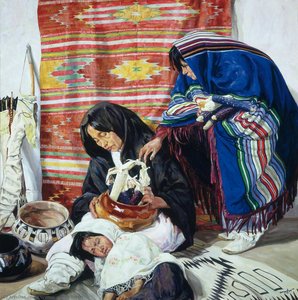
Explore Walter Ufer’s ‘Sleep,’ a poignant oil painting of Native American women in Taos. Discover realism, rich detail & cultural symbolism – a unique 20th-century artwork.
Sanatçı Biyografisi
Walter Ufer (1876-1936), New Mexico, Taos'taki Kızılderili yaşamını etkileyici tablolarla betimleyen Alman asıllı Amerikalı sanatçıdır. 'Taos Ten'in kilit üyesi; tür sahneleri ve canlı manzaralarıyla tanınır.
Tablo hakkında
The Weight of Tradition: An Encounter with Walter Ufer’s “Sleep”
Walter Ufer's "Sleep," painted in 1923, isn’t merely a depiction of three Native American women; it’s an immersion into a world steeped in ritual and profound reverence. The painting immediately draws the viewer in with its rich tapestry of color – predominantly warm reds, oranges, and browns that evoke the earth itself, grounded by cooler blues and greens woven through the textiles and pottery. This palette isn't simply decorative; it speaks to the cultural heritage of the subjects, hinting at a deep connection to the land and ancestral traditions. The composition is carefully orchestrated, centering on the kneeling woman as a focal point, yet subtly inviting us into the periphery of the scene, suggesting an active participation in this sacred space.
Ufer’s masterful technique reveals layers of painstaking detail. He employs a layered oil painting approach, building up texture with deliberate brushstrokes that create a palpable sense of roughness on the clothing – perhaps representing the wear and tear of daily life intertwined with ceremonial garb – while simultaneously rendering the pottery with smooth, almost polished surfaces. This juxtaposition speaks to the duality inherent in Native American culture: the balance between practicality and spirituality, the tangible and the intangible. The lighting, soft and diffused, isn’t dramatic; it's deliberately muted, casting subtle shadows that lend a sense of solemnity and depth to the figures and objects, as if illuminating a secret whispered within a sacred space.
A Window into Taos: Contextualizing Ufer’s Vision
To fully appreciate “Sleep,” it's crucial to understand its historical context. Painted in 1923, during his time in Taos Pueblo, New Mexico, the artwork represents a pivotal moment in Walter Ufer’s career and his deep engagement with Native American culture. He was part of the "Taos Ten," a group of artists who sought to document and celebrate the lives and traditions of the region's indigenous communities. This wasn’t simply an act of observation; it was a deliberate attempt at understanding and portraying these cultures with respect and authenticity, a rare undertaking for American art at the time.
Ufer’s background as a German-born artist profoundly shaped his approach. His training in Europe instilled a meticulous attention to detail and a sophisticated understanding of composition – elements he skillfully translated into his depictions of Native American life. However, it was his immersion within the Taos community that truly informed his work, allowing him to capture not just appearances but also the spirit and essence of these traditions. The painting’s realism is tempered by an underlying sense of mystery, inviting viewers to contemplate the deeper meanings embedded within the scene.
Symbolism Woven into the Fabric
The details within “Sleep” are laden with symbolic significance. The intricately patterned rug serves as a visual anchor, framing the central figures and providing a rich backdrop that speaks to the importance of storytelling and communal life within Native American culture. The pottery, often adorned with geometric designs and natural motifs, represents both artistic skill and spiritual connection – a tangible link to ancestors and the earth. The women themselves, engaged in what appears to be a ritualistic activity, are not simply subjects; they embody generations of tradition, wisdom, and connection to the divine.
The act depicted—kneeling in reverence—suggests healing or a profound spiritual ceremony. The quiet dignity of the figures, coupled with the muted colors and soft lighting, evokes a sense of solemnity and timelessness. It’s an image that transcends mere representation, offering a glimpse into a world governed by ancient beliefs and deeply rooted traditions.
A Legacy of Authenticity: Reproductions and Beyond
Walter Ufer's "Sleep" remains a powerful testament to the beauty and complexity of Native American culture. TopImpressionists offers high-quality, hand-painted reproductions that faithfully capture the painting’s rich detail and evocative atmosphere. These reproductions are more than just images; they are windows into another world—a world of sacred rituals, profound traditions, and enduring wisdom. Investing in a reproduction is an investment in preserving this important piece of American art history and honoring the legacy of Walter Ufer's insightful portrayal.
Soru ve Cevaplar
"Sleep" ışık ve karanlığı nasıl dengeliyor?
Walter Ufer imzalı "Sleep" için kaydedilen değerler şöyledir: bright parlaklık, Gentle Luminance aydınlık.
Walter Ufer imzalı "Sleep", Contemporary Realism akımı içerisinde nasıl bir duygu yansıtıyor?
"Sleep" eserinin Melancholic duygusu, Contemporary Realism üslubuyla birleşiyor.
"Sleep" eserinin yazarı kimdir ve hangi akıma aittir?
"Sleep", Walter Ufer tarafından Contemporary Realism üslubunda yaratılmıştır. Sanatçı ve akım, eserin ait olduğu geleneği tanımlar.
Kısa bilgiler ve sanat testi
Walter Ufer Hakkında

Walter Ufer
1876 - 1936, Almanya
Sanatçı Özgeçmişi
Güneybatı'nın Ruhu: Walter Ufer'in Yaşamı ve Mirası
Walter Ufer, Amerikan İzlenimciliğinin en kilit figürlerinden biri olarak, fırça darbeleriyle sadece ışığı değil, bir kültürün atan kalbini de tuvale aktaran bir ressam olarak durmaktadır. 1876 yılında Almanya'nın Hückesbaguen kentinde dünyaya gelen Ufer'in New Mexico'nun yüksek çöllerine uzanan yolculuğu, titiz bir Avrupa eğitimi ve insanlık durumuna duyulan derin bir merakla döşenmişti. İlk yılları, Kentucky, Louisville'deki Alman-Amerikan diasporasının etkisiyle şekillendi ve burada kendi mirasının zengin dokularını özümsemeye başladı. Litografi ve baskı sanatına odaklanan bu temel dönem, ona daha sonra ışık ve gölgenin karmaşıklığını eşsiz bir ustalıkla yönetmesini sağlayacak teknik bir hassasiyet kazandırdı.
Sanatsal mükemmellik arayışı, onu Avrupa boyunca dönüştürücü bir yolculuğa çıkardı. Gezgin bir kalfa olarak Ufer, kıtanın çeşitli sanatsal geleneklerine daldı; Hamburg ve Dresden'in prestijli akademilerinde tekniğini geliştirdi. Yoğun entelektürel ve yaratıcı genişleme süreci, Münih'teki yoğun atölye çalışmalarıyla doruk noktasına ulaştı. 1911 yılında nihayet Amerika Birleşik Devletleri'ne döndüğünde, yanında Amerikan Batısı'nın sarp ve güneşle yıkanmış manzaralarıyla derin bir karşılaşmaya hazır, sofistike bir Avrupa duyarlılığı taşıyordu.
Taos Ten Grubunun Vizyoneri
1914 yılı, Ufer'in hayatında ve Amerikan sanatının gidişatında kesin bir dönüm noktası oldu. New Mexico, Taos Pueblo'ya adım attığında, kendisini olağanüstü bir sanatsal devrimin parçası olarak buldu. "Taos Ten" olarak bilinen etkili gruba katılan Ufer, sadece manzara resminin ötesine geçerek Kızılderili yaşamının daha otantik ve içsel bir tasvirini amaçlayan bir kolektifin merkezi figürü haline geldi. Güneybatı'ya romantize edilmiş veya sömürgeci bir mercekten bakan çağdaşlarının aksın, Ufer konularına derin bir saygı ve günlük yaşamın onuruna odaklanan bir gözle yaklaştı.
Eserleri, Avrupa İzlenimci teknikleri ile Pueblo halkının ham ve ruhani enerjisi arasında bir köprü haline geldi. O, yalnızca bir gözlemci değil; ritüellerin, manzaraların ve topluluk yaşamının sessiz ritimlerinin bir kronikçisiydi. Bu yaratıcı evrimin merkezinde, hem Ufer'in ilham perisi hem de iş ortağı olan Taos yerlisi Jim Mirabal ile olan ilişkisi yer alıyordu. Bu bağ sayesinde Ufer, bölgeyi tanımlayan kültürel nüansları derinlemesine kavradı ve tuvallerine New Mexico sınırlarının çok ötesinde yankı uyandıran, yaşanmış bir gerçeklik duygusu aşılamayı başardı.
Teknik, Sembolizm ve Tarihi Önem
Ufer'in sanat üretimi, renk üzerindeki ustaca hakimiyeti ve boyayı cesur, dışavurumcu bir biçimde uygulamasıyla karakterize edilir. Üslubu, Amerikan İzlenimciliğinin ilklerine dayanmakla birlikte, sıklıkla çöl güneşinin sıcaklığını ve toprağın ağırlığını yakalayan daha güçlü ve dokulu bir yaklaşıma yönelirdi. Işığı sadece formları aydınlatmak için değil, duyguları uyandırmak için kullandı; atmosferin tarih ve gelenekle ağırlaştığı sahneler yarattı.
Walter Ufer'in tarihi önemi, tür resmini derin bir sosyal ve kültürel beyana dönüştürme yeteneğinde yatar. Başarıları şunları içerir:
- Otantik Temsil: Kızılderili yaşamının "pitoresk" stereotiplerinden koparak, Taos halkının daha incelikli ve insanileştirilmiş bir portresini sunmak.
- Sanatsal Sentez: Almanya'nın resmi akademik eğitimini, Amerikan Güneybatısı'nın canlı ve dizginlenemez ruhuyla başarıyla birleştirmek.
- Taos Ten Mirası: Taos'un Amerikan modernizmi için birinci sınıf bir destinasyon ve yerli odaklı sanatın hayati bir merkezi olarak kurulmasında kritik bir rol oynamak.
Bugün Ufer'in tabloları, yoğun bir kültürel kesişme döneminin kalıcı tanıkları olmaya devam etmektedir. Avrupa eğitiminin teknik titizliğini Pueblo kültürünün ruhsal derinliğiyle harmanlama yeteneği, eserlerinin büyülemeye devam etmesini sağlıyor; modern izleyicileri, onun etkileyici ve usta gözlerinden Taos Vadisi'nin zamansız ruhuna tanıklık etmeye davet ediyor.
Walter Ufer hakkında kısa bilgiler
- Bu Sanatçıdan Etkilenen Sanatçılar Veya Akımlar: ['']
- Bu Sanatçıyı Etkileyen Sanatçılar: ['']
- Doğum Tarihi: 1876
- Doğum Yeri: Hückeswagen, Almanya
- Sanatsal Akım Veya Tarz: Taos İzlenimciliği
- Tam Isim: Walter Ufer
- Uyruk: Alman-Amerikalı
- Ölüm Tarihi: 1936
- Önemli Eserleri:
- Kızı
- Çölün İnşacıları
- Onlardan Sonra


Walter Ufer
Sleep
() ·
Çerçevesiyle birlikte: · Keten üzerine yağlı boya ile el yapımı
Toplam