A life shaped by lines and clay
Alf Wallander moved through the studios of Stockholm and Paris with a steady hand. Born in 1862 to an architect and a mother named Hildegard Sofia, he grew up surrounded by the work of painters, including his uncle Josef Wilhelm Wallander and his grandfather Pehr Wallander. His early years were spent at the Royal Swedish Academy of Fine Arts, where he studied from 1880 to 1885. This foundation led him to Paris, a place where he spent several years between 1885 and 1889 under the guidance of Aimé Morot and Jean-Joseph Benjamin-Constant.
The textures of his work changed as his surroundings did. In Paris, he found a different light for his pastels. He earned an extra first prize at the World Exhibition in 1889 for a pastel titled Old Beggar Man. This period also saw him presenting works at the Salon, where he received an honorable mention. When he returned to Sweden in 1890, he joined groups like Opponenterna and Konstnärsförbundet, finding himself part of a circle that included Prince Eugen and Oscar Björck.
The movement of form
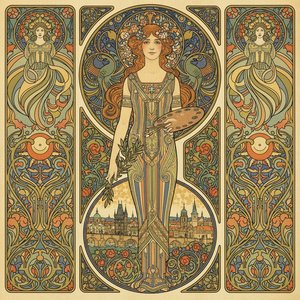
His hands worked as much with porcelain as they did with paper. As the decades passed, his focus shifted toward the organic curves of Art Nouveau. He took on roles that brought art into the domestic sphere, serving as an art assistant and later as the art director at the Rörstrand porcelain factory from 1900. His designs for Rörstrand, such as the Iris vase and the Swan service set, brought a specific aesthetic to everyday objects.
The motifs he chose often drew from the natural world. He had a fondness for flowers, which frequently appeared in his compositions. His work spanned several mediums:
- Pastel on paper
- Oil painting
- Etching
- Ceramics and porcelain design
- Glass and furniture design
In his later years, he remained active in the Swedish art scene, working at Kosta glasbruk and serving as a curator for Sveriges allmänna konstförening. He also taught freehand drawing at the Technical School. His life ended in Stockholm in 1914, leaving behind a body of work that moved between the fine arts of painting and the functional beauty of craft.
Soru ve Cevaplar
Alf Wallander hangi takma adlar veya alternatif isimlerle tanınmaktadır?
Alf Wallander, Wallander, Альф Валландер isimleriyle de tanınmaktadır.
Alf Wallander eserlerine ruh haline göre göz atabilir miyim?
Sanatçının Ruh Haline Göre Sanat sayfası, Alf Wallander eserlerini hissettirdikleri atmosfere göre gruplandırılmış bir şekilde sunuyor.
Alf Wallander’in eserlerini tekniğe göre gruplandırılmış halde nerede bulabilirim?
Alf Wallander tarafından belirli bir teknikte üretilmiş tüm eserleri bulmak için sanatçının Tüm Teknikler sayfasını kullanabilirsiniz.
Alf Wallander sanatçısının sanat akımlarına göre gruplandırılmış eserlerine nereden ulaşabilirim?
Tüm Sanat Akımları sayfası, Alf Wallander eserlerini sanat akımlarına göre gruplandırır.