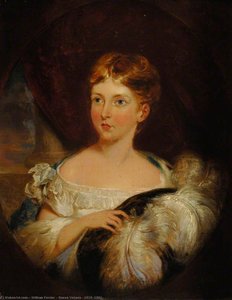
The Architect of Antiquity
Winterton, Lincolnshire, holds the origins of a man whose hands moved between the precision of construction and the delicate strike of the engraver. Born to Joseph Fowler, a builder, William Fowler grows within the structural logic of stone and mortar. He does not merely observe the landscape; he builds it. As an architect and builder in Winterton, his early life is defined by the weight of materials and the permanence of design.
A shift occurs around 1796. The focus moves from the rising walls of local structures to the silent, buried history beneath the earth. Roman pavements discovered in the region demand a different kind of preservation. Fowler begins making drawings of these ancient surfaces, capturing the geometric ghosts of a lost era. He carries these observations to London, seeking the skill to translate stone into print.
The Copper-Plate Precision
In the studios of London, the transition from builder to engraver takes shape. Under the guidance of his brother-in-law, Mr Hill, Fowler masters the process of copper-plate engraving. The heavy tools of the architect are replaced by the fine needles of the printmaker. By April 1799, he releases a colored engraving of a Roman pavement at Roxby, marking his entry into the realm of published antiquarian art.
The years between 1799 and 1829 see a prolific output of documented history. His work is characterized by a strict fidelity to the subject matter. He does not invent; he records. Through three volumes of colored engravings, he presents:
- Twenty-five Roman pavements.
- Thirty-nine subjects derived from painted glass.
- Five brasses and incised slabs.
- Four fonts and various miscellaneous antiquities.
He utilizes tracings, rubbings, and direct observation to ensure accuracy. It is claimed he was the first to introduce lead-lines into the representation of painted glass, a technical advancement that brings a new level of structural truth to the medium. His work finds a home in the North Lincolnshire Museum and the Baysgarth House Museum.
A Life of Stone and Spirit
Fowler’s existence remains anchored to the soil of Lincolnshire even as his reputation reaches the royal family at Windsor. He moves through different social spheres, acting as a class-leader among Methodists while remaining a member of the Church of England. His architectural legacy continues in the renovation of churches such as Manton, Appleby, and Winteringham.
The builder’s hand leaves behind more than prints. He constructs houses like Cleatham Hall Coach House and the Gothic cottage, The Chains, in West Street. These structures, much like his engravings, reflect a commitment to the tangible reality of his surroundings. He dies in September 1832, buried under a cruciform slab in Winterton, leaving behind a record of the ancient world etched in copper and stone.
Soru ve Cevaplar
William Fowler adlı sanatçının eserleri ne kadar popüler?
William Fowler için bu web sitesi üzerinde, sanatçının eserlerine dair istatistikleri sunan bir İstatistikler sayfası bulunmaktadır.
William Fowler sanatçısına ait katalogda kaç adet eser bulunuyor?
Tüm Sanat Eserleri sayfasında William Fowler imzalı 18 sanat eseri eseri inceleyebilirsiniz.
William Fowler için kronolojik bir döküm mevcut mu?
William Fowler sanatçısının Sanat Yolculuğu sayfası, sanatçının eserlerini kariyer dönemlerine göre gruplandırılmış bölümler halinde kronolojik sırayla sunan, kaydırmaya duyarlı bir zaman çizelgesidir.