Preview
 Send
Send Share
Share
 Details
 Guide
Guide

 Download
 Similars
 X-Ray
X-Ray Diaporama
 Stats
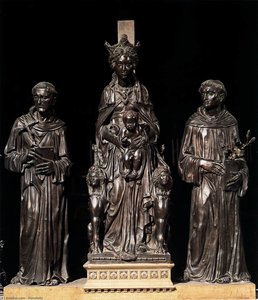
StatsMadonna with the Child


This bronze sculpture, created in 1448 by Donatello for the High Altar of the Basilica di Sant’Antonio in Padua, exemplifies the Early Renaissance style. The work departs from traditional depictions of the Madonna and Child, presenting Mary not simpl
 Read More
Donatello (1386-1466): Florentine sculptor of the Early Renaissance. Pioneer of freestanding nude sculpture like 'David,' known for expressive realism, classical influence & innovative techniques. Explore his masterpieces and legacy.
Giclée / Art Print
Museum-quality giclée or canvas print with fast production and flexible finish options. ( Buy Hand Made Painting Switch to Digital Image)




P118B $10

P118H $10

P118W $10

P438Z $10

P508JH $12

P508YH $12

P805H $10

P805Z $10

P919BZ $10

P919G $10

P919XJ $10

P959ZH $10

P968JZ $12

W106C $8

W218G $10

W218JH $8

W218Y $10

W307PJ $10

W316G $10

W316PJ $8

W316Y $10

W398PJ $8

W4111J $10

W500HY $15

W500JH $15

W692G $12

W849H $8

W940BG $15

W953PJ $8




Standard
custom
CM
INCH
Pick from our preset sizes that match the artwork's original proportions.
Loading sizes...

width
height
Type the width and the height you need, to fit your frame or your wall. A print can only be cut, never made bigger than the picture, so a size with a different shape loses a part of the image. We send you a digital mockup to approve before we print anything. The picture shown on this page does not show the real cut — only the mockup does.
Worldwide Delivery () in 2 weeks instead of standard 4/5 weeks. (26 October)

Free Worldwide Express Shipping

High-Quality Linen Canvas

Full Shipping Insurance

Customs Tax Refund Guarantee

True Color Matching Guarantee

100-Day Return Policy (Defects Only)

100% Money-Back Guarantee

Bulk Discount Offer
 Glass option is only available in size under 110 CM

Madonna with the Child
Giclée / Art Print
Reproduction Size
-


Total Price
$ 70
A Divine Encounter: The Early Renaissance Vision of Donatello’s Madonna
Donatello's Madonna with the Child, sculpted in 1448 for the High Altar of the Basilica di Sant’Antonio in Padua, isn’t merely a depiction of Mary and Jesus; it’s a profound statement about faith, humanity, and the burgeoning spirit of the Early Renaissance. Far removed from the stylized piety of preceding generations, this sculpture embodies a newfound realism and emotional depth that would forever alter the course of Western art. Commissioned during a period of intense artistic and intellectual ferment in Florence, it reflects a shift towards celebrating human experience within a religious context – a subtle yet revolutionary change.
The statue immediately captivates with its intimate portrayal of the Virgin holding her infant son. Donatello masterfully captures the delicate curve of Mary’s neck as she gazes down at Jesus, his tiny hand resting gently on hers. This isn't a distant, ethereal figure; it’s a mother in palpable connection with her child, radiating warmth and tenderness. The crown adorning Mary’s head – a deliberate reference to the biblical imagery of the Queen of Heaven – subtly elevates her status while simultaneously grounding her in human reality. The inclusion of the scepter and shield further reinforces this duality: she is both divine and profoundly relatable.
- Material & Technique: Crafted from white marble, the sculpture showcases Donatello’s exceptional skill in capturing texture and form. The smooth surface of Mary's robes contrasts beautifully with the slightly rougher texture of Jesus’ skin, creating a dynamic interplay of visual interest.
- Compositional Innovation: Unlike many earlier depictions of the Madonna and Child, Donatello places Mary and Jesus within a relatively shallow space, drawing the viewer directly into their embrace. This intimate arrangement fosters a sense of immediacy and connection.
The Influence of Classical Antiquity
Donatello’s work is deeply rooted in the rediscovery of classical sculpture – a defining characteristic of the Renaissance. He studied the works of ancient Greek and Roman sculptors, particularly their emphasis on human anatomy and realistic portrayal. This influence is evident in the idealized beauty of Mary's figure, reminiscent of classical goddesses. The contrapposto pose—where the weight shifts to one leg, creating a natural curve in the body—is another clear example of this classical inspiration.
However, Donatello doesn’t simply imitate antiquity; he adapts and transforms it to suit his own artistic vision. He imbues the sculpture with a distinctly Christian sensibility, imbuing the figures with an emotional intensity that transcends mere imitation. The subtle expressions on their faces—a hint of serenity in Mary's gaze, a quiet contemplation in Jesus’ expression—speak volumes about the profound spiritual connection between mother and child.
A Window into Renaissance Florence
The Madonna with the Child was created during a period of immense social and political change in Florence. The Medici family, powerful patrons of the arts, were instrumental in fostering an environment where artistic innovation flourished. Donatello’s sculpture reflects this spirit of experimentation and creativity, pushing the boundaries of traditional religious art.
Further research reveals that this piece was part of a larger altarpiece intended for the Basilica di Sant'Antonio, alongside works by other prominent artists like Andrea del Verrocchio and Giovanni di Tura. The entire composition aimed to create a visually stunning and spiritually uplifting experience for worshippers. The presence of other figures – children surrounding Mary – suggests a broader theme of family, community, and divine grace.
Symbolism and Emotional Resonance
Beyond its technical brilliance, the sculpture is rich in symbolism. The crown signifies Mary’s role as Queen of Heaven, while the scepter and shield represent her authority and protection. The inclusion of children reinforces the theme of family and the promise of new life. But perhaps most powerfully, the image evokes a sense of profound love, tenderness, and spiritual connection – emotions that resonate deeply with viewers across centuries.
Today, reproductions of Donatello’s Madonna with the Child continue to inspire artists and designers alike. Its timeless beauty and emotional depth make it a truly remarkable masterpiece of the Early Renaissance—a testament to the enduring power of art to capture the essence of human experience.
Questions & Answers
What is the overall mood of "Madonna with the Child" by Donatello?
"Madonna with the Child" has an elegant atmosphere.
In which year and which movement was "Madonna with the Child" made?
"Madonna with the Child" was created in 1448 as a work of the Early Renaissance movement. Date and movement anchor the artwork in art history.
At what size is "Madonna with the Child" recommended to be printed?
The recommended print size for "Madonna with the Child" by Donatello is large.
Artist Biography
early life and career
donato di niccolò di betto bardi, known as donatello, was born in florence, italy around 1386. he studied classical sculpture, which heavily influenced his development of an early renaissance style. this new approach to art and culture would eventually become the hallmark of the florentine renaissance.key works and innovations
donatello's most famous work, david, was the first freestanding nude male sculpture since antiquity. commissioned by the medici family, it showcased his innovative style and technical expertise. other notable works include:- st. louis of toulouse (now in the museum of the basilica di santa croce), which featured a classical frame designed by donatello.
- the sacrifice of isaac, created for the campanile of santa maria del fiore in florence, characterized by strong portrait details.
- crucifix (1425) for santa croce, which portrayed christ in a moment of agony.
artistic style and legacy
donatello's style can be divided into broad phases, beginning with the development of expressiveness and classical monumentality. his work was not immediately accepted by the community but eventually became the most popular, influencing other italian courts and european artists. key art movements:personal life and working style
donatello was known for being amiable and well-liked, but poor at the business side of his career. he tended to accept more commissions than he could handle, often completing works late or handing them over to other sculptors. notable artworks and artists:- leonardo da vinci: annunciation (detail)
- amico aspertini: statua di pan/leone che azzanna un cavallo
- michelangelo buonarroti: tondo pitt
museums and art collections:
- museo della collegiata (empoli, italy): a hidden gem of the renaissance, featuring works by francesco botticini and raffaello botticini.
- the early italian renaissance art movement

Donatello
1386 - 1466 , Italy
Quick Facts
- Full Name: Donatello di Niccolò
- Nationality: Italian
- Date Of Birth: 1386
- Date Of Death: 1466
- Place Of Birth: Florence, Italy
- Notable Artworks:
- David
- St. Louis of Toulouse
- Sacrifice of Isaac
- Crucifix
- Artistic Movement Or Style: Early Renaissance
- Artists Who Influenced This Artist: ['Classical sculpture']
- Artists Or Movements Influenced By This Artist:
- Italian Renaissance
- Early Renaissance
- Florentine Renaissance
Related Articles

The Eternal Glow of Bronze: A Guide to Sculpting with Light, Strength, and Timeless Artistry
Explore the profound beauty of bronze sculpture. From the ancient lost-wax technique to the interplay of light and patina, discover how this enduring alloy captures human emotion and history through masterful artistry and strength.
Explore artworks organized by themes, styles, and characteristics.