Atelier — Complimentary worldwide shipping — Delivery 2–6 weeks

      Baroque, master by master

      The 100 Greatest Baroque Painters

      Among the Baroque painters, Rembrandt (1606–1669) holds the first place, celebrated for The return of the prodigal son and Isaac and Rebecca, known as. Caravaggio, Diego Velázquez, Peter Paul Rubens and Johannes Vermeer follow. The catalogue spans 100 masters, from Palma il Giovane (born 1550) to Giovanni Domenico Tiepolo (born 1727), across 8 countries.

      About this catalogue. This catalogue gathers the artists whose works our collection records as Baroque, ordered by our fame ranking. Artists born after 1955 with no Wikidata record await verification. Beside each name, the number of our 32 languages in which Wikipedia devotes an article to the artist.

      1. The return of the prodigal son by Rembrandt1Rembrandt
      2. Sick Bacchus by Caravaggio2Caravaggio
      3. Las Meninas (The Maids of Honor) or the Royal Family by Diego Velázquez3Diego Velázquez

      The collection in brief

      Baroque: the collection in brief

      • 100Artists
      • 1550–1727Years of birth
      • 8Countries of birth
      • 6Women
      • 23,452Works in our catalogue
      Cities with most births
      Antwerp (8), Bologna (7), Leiden (5), Haarlem (5)
      Museums holding the most key works
      Museo del Prado (14), The Louvre (14), Rijksmuseum (12), Metropolitan Museum of Art (12)

      Master by master

      The catalogue: 100 Baroque Painters

      1of 100

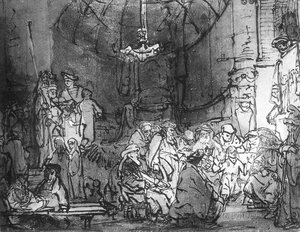
      Rembrandt

      Dutch Born in Leiden Dutch Golden Age Wikipedia, 32 of 32 languages

      Rembrandt

      Rembrandt had a way of making light feel like a physical presence in a room. This was not merely a trick of the light; it was a way to guide the eye and suggest the hidden depths of a person's character.

      On view at His legacy is spread across many collections, with the National Gallery in London holding sixteen of his works.

      Pupil of Pieter Lastman #99 · Master of Godfrey Kneller #77, Gerrit Dou #56, Carel Fabritius #29, Ferdinand Bol #65, Samuel van Hoogstraten #93

      Principal works · The hundred celebrated works

      2of 100

      Caravaggio

      Born in Milan Baroque, Tenebrism, Chiaroscuro Wikipedia, 32 of 32 languages

      Caravaggio

      Light does not merely illuminate the scene; it strikes. Instead, he brings the people of the Roman streets—the laborers and the outcasts—into the realm of the sacred. His influence ripples through the works of giants like Peter Paul Rubens and Rembrandt, whose own handling of light and shadow owes a debt to his radical naturalism.

      On view at The physical remnants of his vision are scattered across Europe’s most significant institutions.

      Principal works · The hundred celebrated works

      3of 100

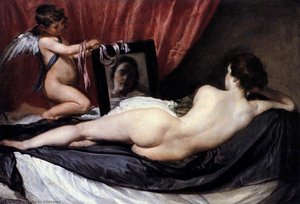
      Diego Velázquez

      Spanish Born in Seville Spanish Baroque / Spanish Golden Age Wikipedia, 31 of 32 languages

      Diego Velázquez

      His training under Francisco Pacheco provided a foundation in these traditional methods, but the young painter soon felt a pull toward something more direct. Christ in the House of Martha and Mary. In the 19th century, French Realist painters like Gustave Courbet looked to his work as a model for their own commitment to depicting life without idealization.

      On view at To stand before a Velázquez is to encounter the quiet weight of history.

      Principal works · The hundred celebrated works

      4of 100

      Peter Paul Rubens

      Flemish Born in Siegen Baroque Wikipedia, 32 of 32 languages

      Peter Paul Rubens

      He took the anatomical precision of Michelangelo and the coloristic depth of Titian, stripping away the static qualities of the High Renaissance to create something more muscular and immediate. When he returned to Antwerp in 1608, he brought back a style that was ready to dominate the European market. Rubens remains the most influential figure in the Flemish Baroque tradition.

      Master of Anthony van Dyck #11

      Principal works · The hundred celebrated works

      5of 100

      Johannes Vermeer

      Dutch Born in Delft Dutch Golden Age Wikipedia, 32 of 32 languages

      Johannes Vermeer

      Vermeer found his purpose in the quietude of domestic life. His work is defined by a specific, careful way of handling light. When the light finally faded for Vermeer in Delft in December 1675, he was only forty-three.

      On view at In Amsterdam, the Rijksmuseum holds The Milkmaid, where the light settles on the earthenware and the bread.

      Principal works · The hundred celebrated works

      6of 100

      Nicolas Poussin

      French Born in Le Havre French Baroque, French Classicism

      Nicolas Poussin

      Poussin arrived in Rome in 1624, having traveled via Venice. He remained in Rome until his death in 1665, having transformed from an unformed immigrant into a central figure of the classical tradition. Artists such as Jacques-Louis David and Paul Cézanne acknowledged their debt to his intellectual depth and his preference for line over color.

      Principal works · The hundred celebrated works

      7of 100

      Artemisia Gentileschi

      Italian Born in Rome Baroque Wikipedia, 32 of 32 languages

      Artemisia Gentileschi

      This technique directs the viewer's attention toward the essential movements of her subjects, often emerging from deep, impenetrable shadows. In her depiction of Susanna and the Elders, she utilized a vertical composition to create a sense of malevolent pressure, emphasizing the psychological tension of the scene. Artemisia Gentileschi is recognized among the most accomplished artists of the 17th century.

      On view at The physical presence of her art remains scattered across Europe, a map of her movement and the enduring demand for her vision.

      Pupil of Orazio Gentileschi #33

      Principal works · The hundred celebrated works

      8of 100

      Frans Hals

      Born in Antwerp Wikipedia, 32 of 32 languages

      Frans Hals

      Hals distinguished himself through a remarkably fresh and spontaneous style. This technique imbued his paintings with a sense of immediacy and vitality, capturing the personality and character of his subjects in a way that was revolutionary for its time. However, it's likely he was aware of the work of earlier Flemish painters like Pieter Bruegel the Elder.

      Master of Adriaen van Ostade #97, Judith Leyster #53, Philips Wouwerman #85

      Principal works · The hundred celebrated works

      9of 100

      Claude Lorrain

      Born in Chamagne Wikipedia, 29 of 32 languages

      Claude Lorrain

      Luminous Sunlight: A defining feature of Claude’s work is his masterful depiction of light. Detailed Drawings: He was a prolific draughtsman, creating numerous sketches and studies in pen, watercolor wash, and chalk – many preserved in his Liber Veritatis. Claude’s early influences included the landscape traditions of Northern Europe, particularly those of the Flemish painters.

      Principal works · The hundred celebrated works

      10of 100

      Georges de la Tour

      French Born in Vic-sur-Seille French Baroque Wikipedia, 26 of 32 languages

      Georges de la Tour

      The origins of Georges de La Tour remain partially obscured by the shadows of the early seventeenth century. By 1616, he had already established himself as a fully trained painter, possessing a technical maturity that would define his subsequent career. The specific nuances of his style—the way he used light to bridge the gap between Caravaggism and French Classicism —were largely lost to the broader historical memory.

      On view at The presence of his canvases is felt across several major institutions, scattered between the quiet halls of Europe and the expansive galleries of the Americas.

      Principal works · The hundred celebrated works

      11of 100

      Anthony van Dyck

      Flemish Born in Antwerp Baroque Wikipedia, 32 of 32 languages

      Anthony van Dyck

      Between 1621 and late 1627, he traveled through Italy, a period that would refine his ability to navigate the complex social hierarchies of European nobility. This era of travel was less a wandering and more a strategic immersion into the visual language of the Mediterranean elite. This mentorship provided van Dyck with a direct connection to the leading artistic currents of the seventeenth century, allowing him to observe firsthand the creation of large-scale compositions and the management of a prolific workshop.

      Pupil of Peter Paul Rubens #4

      Principal works · The hundred celebrated works

      12of 100

      Francisco de Zurbarán

      Spanish Born in Fuente de Cantos Spanish Baroque, Tenebrism Wikipedia, 31 of 32 languages

      Francisco de Zurbarán

      His style drew from the realism of Caravaggio and his followers, but it was also shaped by the quiet precision of Juan Sánchez Cotán and the influence of polychrome sculpture. His work was influenced by the textures found in the paintings of Murillo and Titian, yet he maintained a hard-edged, solemn quality that suited his religious subjects. After Velázquez, Francisco de Zurbarán was the most significant painter of the Spanish Golden Age.

      On view at In Madrid, Spain, the Prado Museum houses a version of his Agnus Dei, a work that captures the stark, heavy presence of the lamb.

      Principal works · The hundred celebrated works

      13of 100

      Bartolomé Esteban Murillo

      Spanish Born in Seville Spanish Baroque Wikipedia, 32 of 32 languages

      Bartolomé Esteban Murillo

      Murillo’s hand changed as he grew, moving away from the heavy, somber realism of his early years toward a more idealized way of seeing. He had a way of building up forms through a layered approach, using delicate glazes and subtle brushwork to create depth. Later artists, including Gainsborough and Greuze, acknowledged the impact of his luminous style on their own approach to light and form.

      On view at In Spain, the Museo del Prado in Madrid holds several of his paintings, offering a direct connection to the spirit of the Golden Age.

      Principal works · The hundred celebrated works

      14of 100

      Canaletto

      Italian Born in Venice Vedute, topographical style Wikipedia, 30 of 32 languages

      Canaletto

      His first known signed and dated work, an Architectural Capriccio from 1723, appeared in a private collection in Milan. In 1725, he painted The Stonemason's Yard, a work that shows his early skill in capturing architectural detail. Across the Atlantic, the National Gallery of Art in Washington holds his 1742 work, View of the Church and the Doge's Palace from the Procuratie Vecchie.

      On view at His presence remains felt in the collections of major institutions across Europe and beyond.

      Principal works · The hundred celebrated works

      15of 100

      Guido Reni

      Italian Born in Bologna Baroque, Bolognese school, Classicism Wikipedia, 29 of 32 languages

      Guido Reni

      With the passing of Annibale Carracci, the artist stepped into a position of leadership, becoming the figurehead of the Bolognese school. Through these movements between Bologna, Rome, and Naples, he established himself as a painter of great reach. Giovanni Francesco Barbieri, known as il Guercino, and the Flemish painter Anthony van Dyck both drew from the well of his refined technique and classical ideals.

      Principal works · The hundred celebrated works

      16of 100

      Annibale Carracci

      Italian Born in Bologna Baroque Wikipedia, 28 of 32 languages

      Annibale Carracci

      Yet, he also recognized the power of color and atmospheric effects championed by Venetian painters like Titian, infusing his own work with a vibrant luminosity and emotional depth. This eclectic blend became the hallmark of the Bolognese School, a significant branch of Baroque art that emphasized both classical ideals and naturalistic observation. He admired the clarity of line and compositional balance found in the works of Raphael and Andrea del Sarto, seeking to emulate their grace and harmony.

      Principal works · The hundred celebrated works

      17of 100

      Jan Brueghel the Elder

      Flemish Born in Brussels Flemish Baroque Wikipedia, 26 of 32 languages

      Jan Brueghel the Elder

      His fascination with the botanical world led to his reputation as "Flower" Brueghel. Still Life with a Tazza, Garland and Bouquet of Flowers in a Porcelain Vase.

      Principal works · The hundred celebrated works

      18of 100

      Charles Le Brun

      French Born in Paris Baroque Wikipedia, 30 of 32 languages

      Charles Le Brun

      Upon returning to Paris in 1646, Le Brun quickly gained recognition and patronage. Le Brun's artistic evolution involved moving away from strict adherence to classical models towards a more dynamic and expressive Baroque style. His work helped define the Baroque style in France and established him as one of the most important artists of his time.

      Pupil of Simon Vouet #27, Nicolas Poussin #6

      Principal works · The hundred celebrated works

      19of 100

      Jan Steen

      Dutch Born in Leiden Baroque, Genre painting Wikipedia, 27 of 32 languages

      Jan Steen

      His early compositions from the 1640s leaned into the grotesque, utilizing exaggerated and distorted figures to drive his narratives. This raw, almost jarring approach to characterization provided a foundation for the more nuanced social observations that would define his later output.

      Pupil of Adriaen van Ostade #97

      Principal works · The hundred celebrated works

      20of 100

      Jacob Jordaens

      Flemish Born in Antwerp Baroque Wikipedia, 27 of 32 languages

      Jacob Jordaens

      Jordaens possessed a hand that favored the tangible and the real over the idealized dreams of the court. This careful layering gave his surfaces a certain glow, even when the subjects themselves were of a most earthly nature. While his contemporaries often looked toward the courtly elegance of Italy, Jordaens found his strength in the soil of Flanders.

      On view at In Paris, the Louvre preserves his hand, while the Museo del Prado in Madrid offers a glimpse into his ability to render the human form with such substantial presence.

      Principal works · The hundred celebrated works

      21of 100

      Pieter de Hooch

      Dutch Born in Rotterdam Delft School, Dutch Golden Age Wikipedia, 26 of 32 languages

      Pieter de Hooch

      Pieter de Hooch was born on December 20, 1629, in Rotterdam, Netherlands. During these formative years, de Hooch was a pupil of Claes Berchem. His compositions often shared thematic ground and structural similarities with the works of Emanuel de Witte, particularly in their approach to interior spaces.

      Principal works · The hundred celebrated works

      22of 100

      Gian Lorenzo Bernini

      Italian Born in Naples Baroque Wikipedia, 32 of 32 languages

      Gian Lorenzo Bernini

      He was a remarkably versatile artist who made significant contributions to architecture and urban planning, fundamentally reshaping the cityscape of Rome. The Fountain of the Four Rivers in Piazza Navona, with its allegorical figures representing major rivers from different continents, is a prime example of his ability to create dynamic and engaging urban environments. This innate ability quickly attracted attention, most notably from Cardinal Maffeo Barberini, who would later ascend to the papacy as Urban VIII and become Bernini's most influential patron, shaping not only his career but also the very aesthetic landscape of Rome itself.

      Principal works · The hundred celebrated works

      23of 100

      Jusepe de Ribera

      Spanish Born in Xàtiva Baroque Wikipedia, 30 of 32 languages

      Jusepe de Ribera

      The influence of Caravaggio is undeniable; Ribera absorbed the master's revolutionary use of tenebrism – that dramatic interplay of light and shadow – to create scenes charged with emotional power. He synthesized this technique with elements gleaned from other masters like Guido Reni, incorporating a classical sensibility into his compositions while retaining the visceral impact of Caravaggio's realism. He became a pivotal figure in Spanish Baroque painting, alongside masters like Velázquez, Zurbarán, and Murillo.

      Master of Luca Giordano #26

      Principal works · The hundred celebrated works

      24of 100

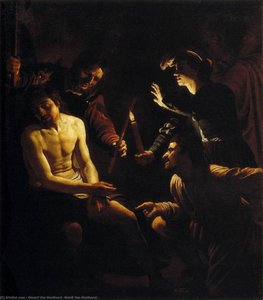
      Gerard van Honthorst

      Dutch Born in Utrecht Baroque, Caravaggism Wikipedia, 23 of 32 languages

      Gerard van Honthorst

      He was a key figure in the Utrecht Caravaggisti movement – a group of Dutch painters who embraced Caravaggio's dramatic realism and tenebrism.

      Pupil of Abraham Bloemaert #88

      Principal works · The hundred celebrated works

      25of 100

      Hyacinthe Rigaud

      Born in Perpignan Wikipedia, 26 of 32 languages

      Hyacinthe Rigaud

      Anthony van Dyck: For his elegant portraiture and refined technique. Rembrandt: For his masterful use of light and shadow, and psychological depth. His work remains a significant contribution to the history of portraiture.

      Pupil of Charles Le Brun #18

      Principal works · The hundred celebrated works

      26of 100

      Luca Giordano

      Italian Born in Naples Late Baroque Wikipedia, 23 of 32 languages

      Luca Giordano

      He moves away from the somber, tenebrist manner of his early training toward a light, airy, and delicately colored style. This transition introduces a new sense of light and glowing colour into his compositions. With an estimated production of over six hundred paintings, his hand moved through the late Baroque with a speed that earned him the moniker Luca fa presto.

      On view at The physical presence of Giordano’s output remains scattered across the major repositories of Europe.

      Pupil of Jusepe de Ribera #23

      Principal works · The hundred celebrated works

      27of 100

      Simon Vouet

      French Born in Paris Baroque painting Wikipedia, 25 of 32 languages

      Simon Vouet

      Born into an artistic family – his father Laurent was a painter and his brother Aubin also pursued art – Vouet received early training that laid the foundation for his future success. His grandson, Ludovico Dorigny, would continue the family’s artistic legacy. Rome (1614-1627): His time in Rome proved transformative.

      Master of Charles Le Brun #18, Pierre Mignard I #58

      Principal works · The hundred celebrated works

      28of 100

      Philippe de Champaigne

      French Born in Brussels Baroque Wikipedia, 23 of 32 languages

      Philippe de Champaigne

      This shift was partly influenced by the theological currents of Jansenism – a Catholic movement emphasizing divine grace and human depravity – which found expression in the mood and subject matter of some of his most compelling pieces.

      Principal works · The hundred celebrated works

      29of 100

      Carel Fabritius

      Dutch Born in Middenbeemster Baroque art Wikipedia, 23 of 32 languages

      Carel Fabritius

      What sets Fabritius apart is his masterful manipulation of light. The Goldfinch, perhaps his most celebrated work, exemplifies this perfectly. Beyond The Goldfinch, Fabritius’s oeuvre includes other compelling works that showcase his distinctive vision.

      Pupil of Rembrandt #1

      Principal works · The hundred celebrated works

      30of 100

      Ludovico Carracci

      Italian Born in Bologna Baroque Painting Wikipedia, 25 of 32 languages

      Ludovico Carracci

      The historical significance of Ludovico Carracci cannot be overstated.

      Principal works · The hundred celebrated works

      31of 100

      Andrea Pozzo

      Italian Born in Trento Baroque Wikipedia, 24 of 32 languages

      Andrea Pozzo

      His initial exposure to artistic pursuits was fostered within the structured environment of the local Jesuit High School, where he received a grounding in humanities that would later subtly inform the narrative depth of his work. At seventeen, Pozzo embarked on formal training with an as-yet unidentified artist in Trento, laying the foundation for skills that would eventually captivate Europe. In 1693, and again in 1700, he published Perspectiva Pictorum et Architectorum (Perspective for Painters and Architects), a treatise that meticulously detailed his techniques and became an essential resource for artists throughout Europe.

      Principal works · The hundred celebrated works

      32of 100

      David Teniers the Younger

      Born in Antwerp Wikipedia, 18 of 32 languages

      David Teniers the Younger

      The early years of Teniers's career show a painter finding his footing through the shadows of others. This period of imitation is a bridge toward a highly specialized focus on genre painting. As the leading genre painter of his era, he moved the focus of Northern European painting away from grand mythological narratives and toward the immediate realities of the common people.

      On view at The legacy of Teniers is anchored in the major collections of Europe, where his depictions of everyday life remain accessible to those tracing the history of Flemish Baroque painting.

      Principal works · The hundred celebrated works

      33of 100

      Orazio Gentileschi

      Italian Born in Pisa Baroque, Caravaggism Wikipedia, 22 of 32 languages

      Orazio Gentileschi

      The turn of the 17th century marked a turning point in Gentileschi’s artistic trajectory. However, he wasn’t merely an imitator; rather, he filtered Caravaggio’s innovations through his existing artistic sensibilities. The revolutionary naturalism of Caravaggio burst onto the Roman art scene, challenging established conventions with its dramatic use of light and shadow – tenebrism – and unflinching realism.

      Principal works · The hundred celebrated works

      34of 100

      Frans Snyders

      Flemish Born in Antwerp Baroque Wikipedia, 20 of 32 languages

      Frans Snyders

      Their relationship proved remarkably fruitful, with Snyders frequently tasked with painting the animals and still life elements within Rubens ’ grand compositions. Beyond Rubens, Snyders collaborated with Anthony van Dyck, Jacob Jordaens, and Abraham Janssens, demonstrating his versatility and adaptability. Snyders’ influence can also be seen in the Dutch Golden Age still life tradition, where artists like Willem Claeszoon Heda and Pieter Claesz embraced a similar focus on texture, light, and composition.

      Principal works · The hundred celebrated works

      35of 100

      Adriaen Brouwer

      Flemish Born in Oudenaarde Baroque, Genre painting Wikipedia, 21 of 32 languages

      Adriaen Brouwer

      Brouwer’s artistic development was shaped by a fascinating confluence of influences. He deeply admired the meticulous realism of the Flemish Primitives – artists like Jan van Eyck and Robert Campin – evident in his attention to detail and precise rendering of textures. Brouwer embraced the dramatic lighting and emotional intensity characteristic of Baroque art, injecting a dynamic energy into his compositions.

      Principal works · The hundred celebrated works

      36of 100

      Gabriel Metsu

      Dutch Born in Leiden Eclectic; genre, portrait, still life Wikipedia, 23 of 32 languages

      Gabriel Metsu

      By 1650, he had ceased to be a subscriber to the guild. Once settled in Amsterdam, he lived on the Prinsengracht. His work is credited with influencing several major figures of the era, including Johannes Vermeer, Jan Steen, Frans van Mieris, and Pieter de Hooch.

      On view at Tracing the presence of his paintings requires traveling through several major collections.

      Pupil of Gerrit Dou #56

      Principal works · The hundred celebrated works

      37of 100

      Agostino Carracci

      Italian Born in Bologna Baroque, Naturalism Wikipedia, 25 of 32 languages

      Agostino Carracci

      He was not merely a craftsman but a visionary pedagogue, shaping the future generation of artists through the Accademia degli Incamminati, alongside Annibale and Ludovico Carracci.

      Master of Giovanni Lanfranco #40

      Principal works · The hundred celebrated works

      38of 100

      Pierre Puget

      French Born in Marseille Baroque Wikipedia, 22 of 32 languages

      Pierre Puget

      Early Commissions: Upon his return, Puget received commissions for paintings and altarpieces, demonstrating an evolving style influenced by Annibale Carracci and Rubens. Vaux-le-Vicomte (1660s): Nicolas Fouquet commissioned Puget to sculpt Hercules for his château at Vaux-le-Vicomte, marking a significant moment in his career and demonstrating the patronage of powerful figures. Journey to Italy (1640): Seeking opportunities, he traveled to Italy, initially to Livorno and then Florence.

      Principal works · The hundred celebrated works

      39of 100

      Alonso Cano

      Spanish Born in Granada Baroque Wikipedia, 21 of 32 languages

      Alonso Cano

      This proximity to power allowed him to leave an indelible mark on the architectural landscape of Spain; notably, he served as the chief architect of the Granada Cathedral, designing its magnificent façade which was eventually erected following his passing.

      Principal works · The hundred celebrated works

      40of 100

      Giovanni Lanfranco

      Italian Born in Parma Baroque painting Wikipedia, 20 of 32 languages

      Giovanni Lanfranco

      Giovanni Lanfranco played a crucial role in shaping the artistic landscape of 17th-century Rome.

      Pupil of Agostino Carracci #37

      Principal works · The hundred celebrated works

      41of 100

      Willem Kalf

      Dutch Born in Rotterdam Dutch Golden Age, Still Life Wikipedia, 17 of 32 languages

      Willem Kalf

      His semi-monochrome still lifes exerted a notable influence on French art, particularly within the circle of the Le Nain brothers, who admired his sophisticated use of light and shadow.

      Principal works · The hundred celebrated works

      42of 100

      Meindert Hobbema

      Dutch Born in Amsterdam Golden Age Dutch Landscape Art Wikipedia, 23 of 32 languages

      Meindert Hobbema

      While his early works often mirrored the river scenes and compositions of his mentor, Hobbema gradually developed a distinctive vision marked by a heightened sensitivity to light and color. His paintings do not merely document the topography of 17th-century Holland; they evoke a sense of stillness and permanence.

      Principal works · The hundred celebrated works

      43of 100

      Giovanni Domenico Tiepolo

      Italian Born in Venice Rococo Wikipedia, 18 of 32 languages

      Giovanni Domenico Tiepolo

      In the luminous heart of eighteenth-century Venice, a period defined by the decadent splendor of the Rococo, Giandomenico Tiepolo emerged as a master of both grand spectacle and intimate human drama.

      Principal works · The hundred celebrated works

      44of 100

      Nicolaes Maes

      Dutch Born in Dordrecht Baroque, Dutch Golden Age Wikipedia, 20 of 32 languages

      Nicolaes Maes

      Returning to Dordrecht in 1654, Maes began to forge his own artistic path, gradually distancing himself from direct imitation of his former master. A particular fascination emerged with the intricate art of lacemaking, inspiring numerous variations on this theme, each a testament to Maes’s meticulous observation and skill. His paintings offer invaluable insights into the social customs, domestic interiors, and psychological complexities of the Dutch Golden Age.

      Pupil of Rembrandt #1

      Principal works · The hundred celebrated works

      45of 100

      Giovanni Battista Gaulli

      Italian Born in Genoa High Baroque Wikipedia, 16 of 32 languages

      Giovanni Battista Gaulli

      His ability to manipulate light and space left an indelible mark on the Roman school of painting, influencing generations of artists who sought to capture the sublime. As he moved through the late 17th century, his works became increasingly complex, pushing the boundaries of what could be achieved with pigment and plaster. Born in Genoa on May 8, 1639, his early life was shaped by the vibrant artistic currents of Northern Italy, yet it was his migration to Rome in 1657 that would forever alter the trajectory of Western art.

      Principal works · The hundred celebrated works

      47of 100

      Emanuel de Witte

      Dutch Born in Alkmaar Baroque art Wikipedia, 17 of 32 languages

      Emanuel de Witte

      Emanuel de Witte stands as an important figure in the last phase of architectural painting in the Netherlands, bridging the gap between meticulous documentation and atmospheric interpretation.

      Principal works · The hundred celebrated works

      48of 100

      Pietro da Cortona

      Italian Born in Cortona Baroque Wikipedia, 27 of 32 languages

      Pietro da Cortona

      Roman Baroque Masters: His arrival in Rome exposed him to the revolutionary work of artists such as Annibale Carracci, Caravaggio, and later, Bernini and Borromini. Venetian Colorism: The rich color palettes and atmospheric effects of Venetian painters like Titian and Veronese profoundly influenced Cortona’s approach to painting, adding a sensual quality to his works. He returned to Florence in 1637 and again in 1640, leaving his mark on the Pitti Palace with frescoes representing the Four Ages of Man.

      Principal works · The hundred celebrated works

      49of 100

      Giovanni Battista Piazzetta

      Italian Born in Venice Rococo Wikipedia, 16 of 32 languages

      Giovanni Battista Piazzetta

      Giovanni Battista Piazzetta, born in Venice on February 13th, either in 1682 or 1683 – records from the period are somewhat ambiguous – emerged into a city steeped in artistic tradition yet undergoing subtle shifts in taste. This foundational period instilled the basics of technique, but it was Piazzetta's sojourn to Bologna between 1703 and 1705 that proved truly transformative. The “Soothsayer,” now housed in the Gallerie dell’Accademia in Venice, exemplifies this perfectly.

      Principal works · The hundred celebrated works

      50of 100

      Francesco Solimena

      Italian Born in Serino Baroque Wikipedia, 16 of 32 languages

      Francesco Solimena

      However, he didn't merely imitate; instead, he synthesized these influences into a uniquely Neapolitan aesthetic. The hallmarks of his work include dynamic compositions brimming with emotional intensity, reflecting the Baroque period’s penchant for grandeur and theatricality. Notable among his students were Francesco de Mura, Giuseppe Bonito, Pietro Capelli, and Corrado Giaquinto – each contributing significantly to the evolution of Neapolitan painting.

      Principal works · The hundred celebrated works

      51of 100

      Peter Lely

      Dutch, British Born in Soest Baroque, Dutch influence Wikipedia, 18 of 32 languages

      Peter Lely

      He possessed an exceptional ability to render fabrics with astonishing realism – a hallmark of his portraits – and his use of light and shadow created a sense of depth and atmosphere that captivated viewers. He was also a keen collector of Old Master drawings, which undoubtedly informed his understanding of anatomy, perspective, and artistic principles. Initially, he produced mythological and religious scenes, often set within idyllic pastoral landscapes – a style reminiscent of Anthony van Dyck, who had become immensely popular with the English court before his untimely death in 1641.

      Principal works · The hundred celebrated works

      52of 100

      Juan de Valdés Leal

      Spanish Born in Seville Baroque Wikipedia, 16 of 32 languages

      Juan de Valdés Leal

      The canvases of Valdés Leal reject gentle radiance. This is a visceral art of the Baroque era, where the boundaries between the earthly and the divine dissolve into darkness.

      Principal works · The hundred celebrated works

      53of 100

      Judith Leyster

      Dutch Born in Haarlem Dutch Golden Age Wikipedia, 24 of 32 languages

      Judith Leyster

      leyster's first known signed works, serenade and jolly topper, date back to 1629 when she was just twenty years old. by 1633, she became a member of the haarlem guild of st. luke, making her one of the first female artists to be part of this prestigious organization.

      Pupil of Frans Hals #8

      Principal works · The hundred celebrated works

      54of 100

      Giovanni Paolo Panini

      Italian Born in Piacenza Baroque, Vedutismo Wikipedia, 26 of 32 languages

      Giovanni Paolo Panini

      Giovanni Paolo Panini, a name synonymous with the grandeur and romantic allure of 18th-century Rome, was more than just a painter; he was a visual architect of memory. His works are now held in prestigious collections worldwide, including the Prado Museum, the Louvre, and the Museo Nazionale di Capodimonte, testament to his enduring appeal.

      Principal works · The hundred celebrated works

      55of 100

      Salvator Rosa

      Italian Born in Naples Baroque Wikipedia, 24 of 32 languages

      Salvator Rosa

      The trajectory of Rosa's career shifts with the political and social tides of 17th-century Italy. In 1635, he leaves his native Naples for Rome, entering the undisputed art center of the era. The impact of Salvator Rosa ripples through the evolution of Baroque art.

      On view at The physical remnants of Rosa’s restless career are scattered across the major art capitals of Europe and the Americas.

      Principal works · The hundred celebrated works

      56of 100

      Gerrit Dou

      Dutch Born in Leiden Dutch Golden Age, Leiden fijnschilders Wikipedia, 22 of 32 languages

      Gerrit Dou

      He was a leading figure of the Leiden fijnschilders, a group that prioritized a refined and meticulous technique. Rather than working on large, sweeping canvases, he preferred small-scale works that invited close inspection. Gerrit Dou left a mark on the Dutch Golden Age that extended far beyond his own studio in Leiden.

      On view at Finding the traces of Gerrit Dou's hand requires a trip through some of Europe's most significant halls.

      Pupil of Rembrandt #1 · Master of Gabriel Metsu #36

      Principal works · The hundred celebrated works

      57of 100

      Rachel Ruysch

      Dutch Born in The Hague Still life, Floral painting Wikipedia, 23 of 32 languages

      Rachel Ruysch

      Ruysch didn’t simply follow in the footsteps of her predecessors; she forged her own path, developing a style instantly recognizable for its meticulous detail, vibrant color palettes, and dynamic asymmetry. She died in 1750 at the age of 86, leaving behind a substantial body of work that continues to inspire awe and admiration.

      Principal works · The hundred celebrated works

      58of 100

      Pierre Mignard I

      French Born in Troyes Baroque Wikipedia, 24 of 32 languages

      Pierre Mignard I

      He quickly gained patronage from influential figures, including King Louis XIV himself, yet his ascent coincided with the dominance of Charles Le Brun, who held the prestigious title of peintre du roi. Despite this conflict, he flourished as a portraitist, immortalizing prominent individuals such as Turenne, Molière, Bossuet, and Madame de Maintenon on canvas. His religious works, particularly those depicting the Madonna and Child created during his Roman period, also hold a significant place in art history.

      Pupil of Simon Vouet #27

      Principal works · The hundred celebrated works

      59of 100

      Guercino

      Italian Born in Cento Baroque Wikipedia, 25 of 32 languages

      Guercino

      Museums and Collections: Guercino’s works grace the halls of institutions like the Pinacoteca Nazionale (Ferrara), the Palazzo Brignole-Sale (Genoa), and the Galleria Spada (Rome).

      Principal works · The hundred celebrated works

      60of 100

      Jan van Huysum

      Dutch Born in Amsterdam Dutch Golden Age, Still life Wikipedia, 18 of 32 languages

      Jan van Huysum

      He employed smooth, glossy brushstrokes, building up layers of paint to create an almost enamel-like surface that enhanced the richness and vibrancy of his colors. Van Huysum’s compositions are characterized by a refined elegance and balance. Born into an artistic family—his father, Justus van Huysum the Elder, was also a respected flower painter, and his brothers Jacob and Michiel followed suit—Jan’s path seemed predetermined.

      Principal works · The hundred celebrated works

      61of 100

      Gerard ter Borch

      Dutch Born in Zwolle Dutch Golden Age Wikipedia, 21 of 32 languages

      Gerard ter Borch

      December 1617 marks the beginning of Gerard ter Borch in Zwolle, within the province of Overijssel in the Dutch Republic. By 1632, Gerard ter Borch is in Amsterdam. He likely studies under Willem Cornelisz Duyster or Pieter Codde, absorbing the technical foundations required for a professional career.

      Principal works · The hundred celebrated works

      62of 100

      Mattia Preti

      Italian Born in Taverna Baroque Wikipedia, 20 of 32 languages

      Mattia Preti

      While initially steeped in Caravaggism, he gradually moved beyond its strict confines, embracing the dynamism and emotional intensity that characterized the High Baroque. He masterfully employed dramatic contrasts of light and shadow, inherited from Caravaggio, not simply as a technical device but as a means of intensifying emotional impact and guiding the viewer's eye. Mattia Preti continued to receive commissions from across Europe following his success in Malta, solidifying his position as a leading figure in Italian Baroque art.

      Principal works · The hundred celebrated works

      63of 100

      Jan Davidsz De Heem

      Dutch, Flemish Born in Utrecht Dutch Golden Age, Baroque Wikipedia, 18 of 32 languages

      Jan Davidsz De Heem

      Initially, his works mirrored the conventions of Leiden – carefully rendered objects arranged on dark cloths, often with a focus on breakfast scenes. However, as he settled in Antwerp, his paintings underwent a dramatic transformation. His portraits, particularly those featuring Prince William III surrounded by an abundance of flowers and fruits, demonstrate his versatility as a painter and his keen understanding of aristocratic taste.

      Principal works · The hundred celebrated works

      64of 100

      Elisabetta Sirani

      Italian Born in Bologna Baroque painting Wikipedia, 23 of 32 languages

      Elisabetta Sirani

      While some accounts suggest initial hesitation on her father’s part regarding fully embracing Elisabetta as a pupil, fearing she might surpass his own skill, it quickly became evident that her talent was exceptional. Giovanni Andrea had been a student and close collaborator of Guido Reni, ensuring that this master’s influence permeated the family studio. She was often hailed as the “diva” of Bolognese painting—the female reincarnation of Guido Reni himself.

      Principal works · The hundred celebrated works

      65of 100

      Ferdinand Bol

      Dutch Born in Dordrecht Baroque painting Wikipedia, 23 of 32 languages

      Ferdinand Bol

      Notably, he received orders for chimney pieces for the new Amsterdam Town Hall, designed by Jacob van Campen, a testament to his growing reputation and artistic standing. He even took on pupils of his own, most notably Godfrey Kneller, who would later achieve fame as an English portrait painter. Despite his success during his lifetime, Ferdinand Bol’s reputation waned considerably after his death in 1680.

      Pupil of Rembrandt #1, Abraham Bloemaert #88 · Master of Godfrey Kneller #77

      Principal works · The hundred celebrated works

      67of 100

      Domenichino

      Italian Born in Bologna Baroque Wikipedia, 25 of 32 languages

      Domenichino

      Domenichino, born Domenico Zampieri in Bologna around 1581, stands as a cornerstone of Bolognese Baroque art – a movement characterized by dramatic contrasts of light and shadow, opulent ornamentation, and an idealized depiction of human emotion. Domenichino's influence extended far beyond his immediate contemporaries, shaping the artistic sensibilities of subsequent generations.

      Pupil of Ludovico Carracci #30

      Principal works · The hundred celebrated works

      68of 100

      Cristofano Allori

      Italian Born in Florence Mannerism Wikipedia, 23 of 32 languages

      Cristofano Allori

      In the twilight of the Renaissance, as the balanced harmonies of the previous century gave way to the restless energy of Mannerism, Cristofano Allori emerged as a vital voice in the Florentine school. Born in 1577 into a city steeped in artistic prestige, Allori was destined for the brush.

      Principal works · The hundred celebrated works

      69of 100

      Nicolas de Largillière

      French Born in Paris Baroque, Rococo Wikipedia, 18 of 32 languages

      Nicolas de Largillière

      His compositions were often carefully structured, reflecting a Renaissance sensibility while incorporating the dynamism of the Baroque period. Portraits of King Augustus II of Poland, Jacques-Antoine Arlaud, and Nicolas Couston demonstrate this mature phase of his artistic development. Nicolas de Largillière left behind a substantial body of work that offers invaluable insights into 18th-century French society.

      Principal works · The hundred celebrated works

      70of 100

      Clara Peeters

      Flemish Born in Antwerp Dutch Golden Age Wikipedia, 18 of 32 languages

      Clara Peeters

      The precise circumstances surrounding Peeters’s artistic education remain shrouded in mystery, largely due to the limitations imposed upon women during this period. However, her distinctive style—characterized by exceptional technical polish and compositional sophistication—strongly suggests training within the Antwerp tradition, where artists prioritized meticulous detail and careful finish. She represents a crucial milestone in recognizing women's artistic capabilities during the Dutch Golden Age —the earliest significant female painter of this era.

      Principal works · The hundred celebrated works

      71of 100

      Sebastiano Ricci

      Italian Born in Belluno Late Baroque school of Venice Wikipedia, 15 of 32 languages

      Sebastiano Ricci

      The Duke provided him with a monthly salary of 25 crowns and lodging within the Farnese palace in Rome, offering a stability that his earlier years had lacked. In 1692, he was tasked with a significant undertaking for the French crown: copying Raphael's Coronation of Charlemagne in Vatican City for Louis XIV. As an elder contemporary of Giovanni Battista Tiepolo, his presence in Venice helped shape the visual language that the younger generation would eventually inherit.

      Principal works · The hundred celebrated works

      72of 100

      Bartholomeus van der Helst

      Dutch Born in Haarlem Dutch Golden Age, Baroque Wikipedia, 18 of 32 languages

      Bartholomeus van der Helst

      Van der Helst’s artistic signature lies in his ability to portray the elegance and affluence of Amsterdam's elite. But beyond technical mastery, Van der Helst understood how to capture the essence of his subjects—their personality, their ambitions, and their place in the world. Van der Helst's influence extended beyond his own lifetime.

      Principal works · The hundred celebrated works

      73of 100

      Abraham van Beijeren

      Dutch Born in The Hague Still Life Wikipedia, 18 of 32 languages

      Abraham van Beijeren

      The historical significance of Abraham Hendricksz. van Beyeren lies in his ability to elevate the still life genre from mere decorative craft to a high art form capable of expressing complex philosophical truths.

      Principal works · The hundred celebrated works

      74of 100

      Valentin de Boulogne

      French Born in Coulommiers Tenebrism Wikipedia, 16 of 32 languages

      Valentin de Boulogne

      When he arrived in Rome around 1620, he did not merely observe the existing art scene; he immersed himself in it, joining the Bentvueghels, a boisterous and often unruly collective of expatriate artists.

      Pupil of Simon Vouet #27

      Principal works · The hundred celebrated works

      75of 100

      Willem Claesz Heda

      Dutch Born in Haarlem Golden Age painting Wikipedia, 20 of 32 languages

      Willem Claesz Heda

      Throughout his career, Heda remained largely devoted to still life painting, refining his technique and exploring variations on the breakfast piece theme.

      Principal works · The hundred celebrated works

      76of 100

      Adriaen van der Werff

      Dutch Born in Kralingen Baroque Wikipedia, 16 of 32 languages

      Adriaen van der Werff

      His reputation as a "fine painter" earned him the patronage of the highest echelons of European royalty, including Johann Wilhelm, the Elector Palatine, and the illustrious Anna Maria Luisa de' Medici.

      Principal works · The hundred celebrated works

      77of 100

      Godfrey Kneller

      Italian Born in Lübeck Baroque Wikipedia, 18 of 32 languages

      Godfrey Kneller

      Kneller’s artistic vision was profoundly shaped by the traditions of Flemish and Italian Baroque painting —particularly Rembrandt van Rijn and Caravaggio—whose dramatic use of light and shadow established a precedent for portraying emotion and psychological complexity. He embraced the Grand Manner style, characterized by monumental scale, idealized figures, and carefully orchestrated compositions designed to convey dignity and authority.

      Pupil of Rembrandt #1, Ferdinand Bol #65

      Principal works · The hundred celebrated works

      78of 100

      Juan Carreño de Miranda

      Spanish Born in Avilés Spanish Baroque Wikipedia, 16 of 32 languages

      Juan Carreño de Miranda

      He wasn't simply mimicking Velázquez; he was building upon that foundation, infusing his work with a distinct sensibility. His work embodies a Baroque drama through dramatic lighting and composition, enhancing visual impact while maintaining an air of dignified restraint. Born in the coastal city of Avilés, Spain, in 1614, Juan Carreño de Miranda emerged as one of the most significant Spanish portraitists of the Baroque era.

      Principal works · The hundred celebrated works

      79of 100

      Jan Asselijn

      Dutch Born in Dieppe Italianate landscape Wikipedia, 16 of 32 languages

      Jan Asselijn

      His works are now held in prestigious collections such as the Rijksmuseum in Amsterdam, ensuring his legacy endures as a significant figure within the Dutch Golden Age.

      Principal works · The hundred celebrated works

      80of 100

      Jan Brueghel the Younger

      Flemish Born in Antwerp Flemish Baroque Wikipedia, 23 of 32 languages

      Jan Brueghel the Younger

      The significance of Jan The Younger Brueghel lies in his role as a custodian of Flemish excellence. Lineage and Continuity: The successful stewardship of one of the most important artistic workshops in Antwerp. As the son of Jan Brueghel the Elder and the grandson of the legendary Pieter Bruegel the Elder, his very existence was intertwined with the evolution of Renaissance and Baroque painting.

      Principal works · The hundred celebrated works

      81of 100

      Carlo Maratta

      Italian Born in Camerano Baroque classicism Wikipedia, 17 of 32 languages

      Carlo Maratta

      Born on May 15, 1625, in Camerano, within the Papal States—now part of Italy—his artistic journey began with an early move to Rome at the age of eleven. Sacchi’s influence would profoundly shape Maratta's developing style, instilling in him a dedication to clarity, balance, and a restrained emotionalism that distinguished him from more flamboyant Baroque contemporaries. Philip Neri (circa 1675), now housed in the Pitti Palace in Florence, is a prime example of his ability to interpret such themes with grace and profound emotional resonance.

      Principal works · The hundred celebrated works

      83of 100

      Barbieri Gian Francesco (Guercino Il)

      Italian Baroque painting

      Barbieri Gian Francesco (Guercino Il)

      Throughout his prolific life, which concluded in 1666, Guercino remained a steadfast architect of light. His achievements can be summarized through several key artistic pillars: Mastery of Chiaroscuro: The use of extreme light and shadow to create depth, volume, and psychological tension. Stylistic Synthesis: The seamless blending of Caravaggio’s dramatic realism with the refined traditions of the Bolognese school.

      Principal works · The hundred celebrated works

      84of 100

      Jean-Baptiste Oudry

      Born in Paris Wikipedia, 17 of 32 languages

      Jean-Baptiste Oudry

      Initially focused on portraiture, Oudry gradually expanded his repertoire to include still lifes, particularly of fruits and animals, as well as religious subjects. He demonstrated mastery in both painting and design, seamlessly transitioning between canvas and tapestry creation. Influenced By: Nicolas de Largillière played a crucial role in Oudry’s early artistic development, providing foundational training in portraiture and technique.

      Pupil of Nicolas de Largillière #69

      Principal works · The hundred celebrated works

      85of 100

      Philips Wouwerman

      Dutch Born in Haarlem Dutch Golden Age Wikipedia, 21 of 32 languages

      Philips Wouwerman

      Emerging Style (Mid-1640s): A characteristic compositional element emerged – a diagonal slope of land often accompanied by a tree acting as a repoussoir (a device used to create depth). Mature Period (c. 1650-1660): Wouwerman developed his individual style, expanding his subject matter considerably. Family of Artists: His brothers, Jan (1629–1666) and Pieter (1623–1682), were also painters, often initially attributed to Philips.

      Pupil of Frans Hals #8

      Principal works · The hundred celebrated works

      86of 100

      Carlo Dolci

      Italian Born in Florence Baroque Wikipedia, 18 of 32 languages

      Carlo Dolci

      Apprenticed to Jacopo Vignali at a remarkably young age, he absorbed the lessons of a master known for dramatic flair, yet Dolci soon began to forge his own distinct voice. While other artists sought the bustling artistic scene of Rome, Dolci remained in Florence, deeply connected to its traditions and patrons. His paintings continue to grace prestigious institutions such as the Uffizi Gallery in Florence, where the Contini Bonacossi Collection offers a particularly rich representation of his oeuvre.

      Principal works · The hundred celebrated works

      87of 100

      Mary Beale

      British Born in Barrow Baroque Wikipedia, 20 of 32 languages

      Mary Beale

      Mary Beale’s artistic style was deeply rooted in the Baroque period, characterized by dramatic lighting, rich colors, and a keen attention to detail. She developed a distinctive approach that set her apart from contemporaries like Lely, infusing her portraits with a warmth and psychological depth that resonated with her sitters. Mary Beale’s career was not without its challenges.

      Principal works · The hundred celebrated works

      88of 100

      Abraham Bloemaert

      Dutch Born in Gorinchem Baroque, Mannerism Wikipedia, 20 of 32 languages

      Abraham Bloemaert

      Beyond painting, Bloemaert was a highly skilled printmaker, proficient in both etching and engraving. Notable works such as “The Expulsion of Hagar and Ishmael,” “ Venus and Adonis ”, and "Warrior & Young Standard-Bearer" exemplify this range, showcasing his ability to handle complex compositions and convey nuanced emotions with equal skill. Beyond his immediate family, Bloemaert mentored a generation of Dutch artists, including Jan Aerntsz de Hel, Nicolaes van Bercheyck, Leonaert Bramer, Bartholomeus Breenbergh, Hendrick ter Brugghen, and Gerrit van Honthorst.

      Master of Gerard van Honthorst #24

      Principal works · The hundred celebrated works

      89of 100

      Abraham Brueghel

      Flemish Born in Antwerp Baroque Wikipedia, 19 of 32 languages

      Abraham Brueghel

      However, Abraham’s path diverged somewhat from his ancestors, leading him towards Italy where he became a pivotal figure in the development of decorative Baroque still lifes. From an early age, Abraham demonstrated considerable promise, nurtured by his father, Jan Brueghel the Younger, a skilled painter himself and frequent collaborator with Peter Paul Rubens. These collaborations included prominent Italian painters like Carlo Maratta, Giovanni Battista Gaulli, and Giacinto Brandi, as well as French artist Guillaume Courtois.

      Principal works · The hundred celebrated works

      90of 100

      Adam Elsheimer

      German Born in Frankfurt Baroque painting Wikipedia, 20 of 32 languages

      Adam Elsheimer

      He spent considerable time in Venice, absorbing the vibrant color palettes and dramatic compositions of masters like Tintoretto and Paolo Veronese. A crucial period followed as an assistant to Johann Rottenhammer, a German painter specializing in cabinet paintings. His work was highly regarded by contemporaries, including Peter Paul Rubens, who deeply lamented his early death and praised his exceptional talent.

      Principal works · The hundred celebrated works

      91of 100

      Roelant Savery

      Flemish Born in Kortrijk Dutch Golden Age Painting Wikipedia, 19 of 32 languages

      Roelant Savery

      It was here, amidst the burgeoning artistic energy of the Low Countries, that Savery began his formative apprenticeship under his elder brother Jacob Savery and the esteemed Hans Bol. Around 1604, he traveled to Prague, where he entered the orbit of the Holy Roman Emperors Rudolf II and Matthias. His travels through Italy allowed him to encounter the monumental legacies of Andrea Palladio and Titian, influences that helped refine his technique and expand his stylistic repertoire beyond the rigid structures of Mannerism.

      Principal works · The hundred celebrated works

      92of 100

      Palma il Giovane

      Italian Born in Venice Venetian School Wikipedia, 18 of 32 languages

      Palma il Giovane

      Following the death of Tintoretto in 1594, Palma il Giovane ascended to a position of preeminence, becoming the dominant artistic force in Venice.

      Principal works · The hundred celebrated works

      93of 100

      Samuel van Hoogstraten

      Dutch Born in Dordrecht Dutch Golden Age, Baroque Wikipedia, 18 of 32 languages

      Samuel van Hoogstraten

      A portrait from 1645, now residing in the Liechtenstein collection in Vienna, serves as a clear testament to this apprenticeship. However, unlike many students who remained tethered to their master’s style, Van Hoogstraten possessed an insatiable desire for experimentation and a restless spirit that propelled him beyond imitation. He built upon the foundations laid by Karel van Mander in his earlier work, Het Schilder-Boeck, seeking to create a systematic framework for understanding and practicing the art of painting.

      Pupil of Rembrandt #1

      Principal works · The hundred celebrated works

      94of 100

      Balthasar van der Ast

      Dutch Born in Middelburg Golden Age Painting Wikipedia, 18 of 32 languages

      Balthasar van der Ast

      By welcoming artists like Roelandt Savery into the local guild, he helped foster an environment where tonality and realism could flourish. His ability to infuse inanimate objects with a sense of life—a quality seen in his depictions of lizards and insects crawling amidst fruit—set a new standard for the Dutch Golden Age.

      Principal works · The hundred celebrated works

      95of 100

      Martin van Meytens

      Swedish Born in Stockholm Baroque portraiture Wikipedia, 14 of 32 languages

      Martin van Meytens

      This technique allowed him to illuminate the intricate textures of silk, lace, and ermine, making the opulence of the Habsburg court feel tangible to the viewer. This stylistic approach ensured that every portrait was not just a record of a face, but an immersive experience of Baroque splendor. His rise was so complete that he eventually served as the Director of the Viennese Academy of Fine Arts, a testament to his influence and authority within the artistic community.

      Principal works · The hundred celebrated works

      96of 100

      François de Troy

      French Born in Toulouse Rococo, Baroque Wikipedia, 12 of 32 languages

      François de Troy

      These paintings weren't merely decorative; they offered a glimpse into the values and aspirations of the aristocracy, becoming highly sought-after status symbols in themselves. He wasn’t simply painting people; he was painting a lifestyle. As Director of the French Academy in Rome from 1738, he played a role in shaping the next generation of artists, though his tenure was marked by some controversy due to his personal indulgences.

      Principal works · The hundred celebrated works

      97of 100

      Adriaen van Ostade

      Born in Haarlem Wikipedia, 20 of 32 languages

      Adriaen van Ostade

      Comparison with David Teniers the Younger: Art historians often compare Van Ostade's work to that of David Teniers the Younger, another prominent genre painter.

      Pupil of Frans Hals #8 · Master of Jan Steen #19

      Principal works · The hundred celebrated works

      98of 100

      Adam Frans van der Meulen

      Flemish Born in Brussels Baroque Wikipedia, 15 of 32 languages

      Adam Frans van der Meulen

      Recognized for his contributions, Van der Meulen received numerous honors – a royal privilege allowing engravings of his works, appointment as “Ordinary Painter to the King” in 1673, and admission to the prestigious Royal Academy of Painting and Sculpture without having to submit a traditional reception piece—a testament to his established reputation.

      Principal works · The hundred celebrated works

      99of 100

      Pieter Lastman

      Dutch Born in Amsterdam Dutch Golden Age painting Wikipedia, 21 of 32 languages

      Pieter Lastman

      He began his artistic training under Gerrit Pietersz Sweelinck, brother to the renowned composer Jan Pieterszoon Sweelinck, receiving a solid foundation in technique before embarking on a transformative journey to Italy around 1604.

      Master of Rembrandt #1

      Principal works · The hundred celebrated works

      100of 100

      Frans van Mieris the Elder

      Dutch Born in Leiden Fijnschilder, Genre painting Wikipedia, 15 of 32 languages

      Frans van Mieris the Elder

      His influence resonated within his family; his son Willem van Mieris (1662–1747) and grandson Frans van Mieris the Younger (1689–1763) both became accomplished genre painters, continuing the artistic tradition.

      Principal works · The hundred celebrated works

      Plates

      Celebrated Baroque paintings

      1. The return of the prodigal son by Rembrandt

        The return of the prodigal son

        Rembrandt

        1662 · Hermitage Museum, Saint Petersburg

      2. Sick Bacchus by Caravaggio

        Sick Bacchus

        Caravaggio

        1593 · Galleria Borghese, Rome

      3. Las Meninas (The Maids of Honor) or the Royal Family by Diego Velázquez

        Las Meninas (The Maids of Honor) or the Royal Family

        Diego Velázquez

        1656 · Museo del Prado, Madrid

      4. The Descent from the Cross by Peter Paul Rubens

        The Descent from the Cross

        Peter Paul Rubens

        1612 · Courtauld Gallery, London

      5. The Girl with a Pearl Earring by Johannes Vermeer

        The Girl with a Pearl Earring

        Johannes Vermeer

        1665 · Mauritshuis, The Hague

      6. The Death of Germanicus, Minneapolis Institute by Nicolas Poussin

        The Death of Germanicus, Minneapolis Institute

        Nicolas Poussin

        1627

      7. Susanna and the Elders by Artemisia Gentileschi

        Susanna and the Elders

        Artemisia Gentileschi

        1610 · Schloss Weissenstein, Poppenhausen

      8. The Laughing Cavalier by Frans Hals

        The Laughing Cavalier

        Frans Hals

        1624 · Wallace Collection, London

      Chronology

      A Baroque chronology in paintings

      1. 1585
      2. 1601
      3. 1624
      4. 1630
      5. 1635
      6. 1638
      7. 1642
      8. 1646
      9. 1652
      10. 1655
      11. 1658
      12. 1661
      13. 1665
      14. 1700

      Notes and figures

      The catalogue in figures

      Index of artists

      List of the 100 Baroque painters

      1. 1RembrandtRembrandtDutch · 1606–1669
      2. 2CaravaggioCaravaggio1571–1610
      3. 3Diego VelázquezDiego VelázquezSpanish · 1599–1660
      4. 4Peter Paul RubensPeter Paul RubensFlemish · 1577–1640
      5. 5Johannes VermeerJohannes VermeerDutch · 1632–1675
      6. 6Nicolas PoussinNicolas PoussinFrench · 1594–1665
      7. 7Artemisia GentileschiArtemisia GentileschiItalian · 1593–1653
      8. 8Frans HalsFrans Hals1580–1666
      9. 9Claude LorrainClaude Lorrain1600–1682
      10. 10Georges de la TourGeorges de la TourFrench · 1593–1652
      11. 11Anthony van DyckAnthony van DyckFlemish · 1599–1641
      12. 12Francisco de ZurbaránFrancisco de ZurbaránSpanish · 1598–1664
      13. 13Bartolomé Esteban MurilloBartolomé Esteban MurilloSpanish · 1617–1682
      14. 14CanalettoCanalettoItalian · 1697–1768
      15. 15Guido ReniGuido ReniItalian · 1575–1642
      16. 16Annibale CarracciAnnibale CarracciItalian · 1560–1609
      17. 17Jan Brueghel the ElderJan Brueghel the ElderFlemish · 1568–1625
      18. 18Charles Le BrunCharles Le BrunFrench · 1619–1690
      19. 19Jan SteenJan SteenDutch · 1626–1679
      20. 20Jacob JordaensJacob JordaensFlemish · 1593–1678
      21. 21Pieter de HoochPieter de HoochDutch · 1629–1684
      22. 22Gian Lorenzo BerniniGian Lorenzo BerniniItalian · 1598–1680
      23. 23Jusepe de RiberaJusepe de RiberaSpanish · 1591–1652
      24. 24Gerard van HonthorstGerard van HonthorstDutch · 1592–1656
      25. 25Hyacinthe RigaudHyacinthe Rigaud1659–1743
      26. 26Luca GiordanoLuca GiordanoItalian · 1634–1705
      27. 27Simon VouetSimon VouetFrench · 1590–1649
      28. 28Philippe de ChampaignePhilippe de ChampaigneFrench · 1602–1674
      29. 29Carel FabritiusCarel FabritiusDutch · 1622–1654
      30. 30Ludovico CarracciLudovico CarracciItalian · 1555–1619
      31. 31Andrea PozzoAndrea PozzoItalian · 1642–1709
      32. 32David Teniers the YoungerDavid Teniers the Younger1610–1690
      33. 33Orazio GentileschiOrazio GentileschiItalian · 1563–1639
      34. 34Frans SnydersFrans SnydersFlemish · 1579–1657
      35. 35Adriaen BrouwerAdriaen BrouwerFlemish · 1605–1638
      36. 36Gabriel MetsuGabriel MetsuDutch · 1629–1667
      37. 37Agostino CarracciAgostino CarracciItalian · 1557–1602
      38. 38Pierre PugetPierre PugetFrench · 1620–1694
      39. 39Alonso CanoAlonso CanoSpanish · 1601–1667
      40. 40Giovanni LanfrancoGiovanni LanfrancoItalian · 1582–1647
      41. 41Willem KalfWillem KalfDutch · 1619–1693
      42. 42Meindert HobbemaMeindert HobbemaDutch · 1638–1709
      43. 43Giovanni Domenico TiepoloGiovanni Domenico TiepoloItalian · 1727–1804
      44. 44Nicolaes MaesNicolaes MaesDutch · 1634–1693
      45. 45Giovanni Battista GaulliGiovanni Battista GaulliItalian · 1639–1709
      46. 46Francesco AlbaniFrancesco AlbaniItalian · 1578–1660
      47. 47Emanuel de WitteEmanuel de WitteDutch · 1617–1692
      48. 48Pietro da CortonaPietro da CortonaItalian · 1596–1669
      49. 49Giovanni Battista PiazzettaGiovanni Battista PiazzettaItalian · 1683–1754
      50. 50Francesco SolimenaFrancesco SolimenaItalian · 1657–1747
      51. 51Peter LelyPeter LelyDutch, British · 1618–1680
      52. 52Juan de Valdés LealJuan de Valdés LealSpanish · 1622–1690
      53. 53Judith LeysterJudith LeysterDutch · 1609–1660
      54. 54Giovanni Paolo PaniniGiovanni Paolo PaniniItalian · 1691–1765
      55. 55Salvator RosaSalvator RosaItalian · 1615–1673
      56. 56Gerrit DouGerrit DouDutch · 1613–1675
      57. 57Rachel RuyschRachel RuyschDutch · 1664–1750
      58. 58Pierre Mignard IPierre Mignard IFrench · 1612–1695
      59. 59GuercinoGuercinoItalian · 1591–1666
      60. 60Jan van HuysumJan van HuysumDutch · 1682–1749
      61. 61Gerard ter BorchGerard ter BorchDutch · 1617–1681
      62. 62Mattia PretiMattia PretiItalian · 1613–1699
      63. 63Jan Davidsz De HeemJan Davidsz De HeemDutch, Flemish · 1606–1684
      64. 64Elisabetta SiraniElisabetta SiraniItalian · 1638–1665
      65. 65Ferdinand BolFerdinand BolDutch · 1616–1680
      66. 66Ludolf BakhuizenLudolf BakhuizenDutch · 1630–1708
      67. 67DomenichinoDomenichinoItalian · 1581–1641
      68. 68Cristofano AlloriCristofano AlloriItalian · 1577–1621
      69. 69Nicolas de LargillièreNicolas de LargillièreFrench · 1656–1746
      70. 70Clara PeetersClara PeetersFlemish · 1587–1657
      71. 71Sebastiano RicciSebastiano RicciItalian · 1659–1734
      72. 72Bartholomeus van der HelstBartholomeus van der HelstDutch · 1613–1670
      73. 73Abraham van BeijerenAbraham van BeijerenDutch · 1620–1690
      74. 74Valentin de BoulogneValentin de BoulogneFrench · 1591–1632
      75. 75Willem Claesz HedaWillem Claesz HedaDutch · 1594–1680
      76. 76Adriaen van der WerffAdriaen van der WerffDutch · 1659–1722
      77. 77Godfrey KnellerGodfrey KnellerItalian · 1646–1723
      78. 78Juan Carreño de MirandaJuan Carreño de MirandaSpanish · 1614–1685
      79. 79Jan AsselijnJan AsselijnDutch · 1610–1652
      80. 80Jan Brueghel the YoungerJan Brueghel the YoungerFlemish · 1601–1678
      81. 81Carlo MarattaCarlo MarattaItalian · 1625–1713
      82. 82Bernardo StrozziBernardo StrozziItalian · 1581–1644
      83. 83Barbieri Gian Francesco (Guercino Il)Barbieri Gian Francesco (Guercino Il)Italian · 1591–1666
      84. 84Jean-Baptiste OudryJean-Baptiste Oudry1686–1755
      85. 85Philips WouwermanPhilips WouwermanDutch · 1619–1668
      86. 86Carlo DolciCarlo DolciItalian · 1616–1686
      87. 87Mary BealeMary BealeBritish · 1633–1699
      88. 88Abraham BloemaertAbraham BloemaertDutch · 1564–1651
      89. 89Abraham BrueghelAbraham BrueghelFlemish · 1631–1690
      90. 90Adam ElsheimerAdam ElsheimerGerman · 1578–1610
      91. 91Roelant SaveryRoelant SaveryFlemish · 1576–1639
      92. 92Palma il GiovanePalma il GiovaneItalian · 1550–1628
      93. 93Samuel van HoogstratenSamuel van HoogstratenDutch · 1627–1678
      94. 94Balthasar van der AstBalthasar van der AstDutch · 1593–1657
      95. 95Martin van MeytensMartin van MeytensSwedish · 1695–1770
      96. 96François de TroyFrançois de TroyFrench · 1645–1730
      97. 97Adriaen van OstadeAdriaen van Ostade1610–1685
      98. 98Adam Frans van der MeulenAdam Frans van der MeulenFlemish · 1632–1690
      99. 99Pieter LastmanPieter LastmanDutch · 1583–1633
      100. 100Frans van Mieris the ElderFrans van Mieris the ElderDutch · 1635–1681

      The visitor asks

      Frequently asked questions

      Reading room

      Essays on TopImpressionists.com

      Famous paintings

      Masterpieces we love, by movement

      Further rooms

      Continue the visit