Atelier — Complimentary worldwide shipping — Delivery 2–6 weeks

      Post-impressionist, master by master

      The 88 Greatest Post-impressionist Artists

      Among the Post-impressionist artists, Vincent van Gogh (1853–1890) holds the first place, celebrated for Starry Night (New York, MoMA) and Sunflowers. Paul Cézanne, Paul Gauguin, Henri De Toulouse-Lautrec and Paul Signac follow. The catalogue spans 88 masters, from George Henry (born 1828) to Yuri Ivanovych Khymych (born 1928), across 23 countries.

      About this catalogue. This catalogue gathers the artists whose works our collection records as Post-impressionist, ordered by our fame ranking. Artists born after 1955 with no Wikidata record await verification. Beside each name, the number of our 32 languages in which Wikipedia devotes an article to the artist.

      1. Starry Night (New York, MoMA) by Vincent van Gogh1Vincent van Gogh
      2. The Card Players by Paul Cézanne2Paul Cézanne
      3. Children in the Pasture (also known as Orchard below Bihorel Church) by Paul Gauguin3Paul Gauguin

      The collection in brief

      Post-impressionist: the collection in brief

      • 88Artists
      • 1828–1928Years of birth
      • 23Countries of birth
      • 4Women
      • 17,657Works in our catalogue
      Cities with most births
      Paris (4), Zundert (2), Budapest (2), Adelaide (2)
      Museums holding the most key works
      Musée d'Orsay (10), MOMA - Museum of Modern Art (4), Tate Gallery (3), Van Gogh Museum (2)

      Master by master

      The catalogue: 88 Post-impressionist Artists

      1of 88

      Vincent van Gogh

      Born in Zundert Wikipedia, 32 of 32 languages

      Vincent van Gogh

      The city brought him into contact with the Impressionist and Post-Impressionist movements, shifting his focus away from the dark, heavy tones of his earlier years. He spent time absorbing the techniques of masters like Monet, Renoir, and Pissarro. The weight of his influence became clear in the early 20th century.

      On view at To see the physical traces of his brushwork, one can travel to several specific collections.

      Principal works · The hundred celebrated works

      2of 88

      Paul Cézanne

      French Born in Aix-en-Provence Post-Impressionism Wikipedia, 32 of 32 languages

      Paul Cézanne

      The move to Paris in 1862 marked a period of both struggle and essential exposure. The rejection from the École des Beaux-Arts was a setback, yet it led him to the Académie Suisse, where he could continue his development away from the rigid constraints of the academy. Both Picasso and Matisse recognized the weight of his contribution, with the former famously referring to him as the father of us all.

      On view at The physical presence of his vision remains scattered across several major institutions, allowing the viewer to trace his evolution from the dark, expressive brushwork of his youth to the structured clarity of his later years.

      Principal works · The hundred celebrated works

      3of 88

      Paul Gauguin

      French Born in Paris ['Post-Impressionist', 'Symbolist', 'Synthetism', 'Primitivism'] Wikipedia, 32 of 32 languages

      Paul Gauguin

      The years between 1886 and 1891 were marked by a restless search for a visual language that could transcend mere observation. While he had been influenced by the works of Camille Pissarro and Paul Cézanne, he found himself increasingly drawn toward the more structured and symbolic approaches of the Synthetists and Symbolist groups. By prioritizing the expression of internal meaning over the accurate depiction of the external world, he helped shift the focus of the French avant-garde toward a more subjective, symbolic language.

      On view at In Paris, the Musée d'Orsay preserves a significant portion of his output, offering a glimpse into the evolution of his color and form.

      Principal works · The hundred celebrated works

      4of 88

      Henri De Toulouse-Lautrec

      French Born in Albi Post-Impressionism Wikipedia, 31 of 32 languages

      Henri De Toulouse-Lautrec

      His hand moved with a precision that transformed simple lines into instruments of character and emotion. This mastery of line was often paired with a flattened perspective and bold compositions, a stylistic choice heavily influenced by the aesthetic of Japanese woodblock prints. The transition from Impressionism to modern art found a distinct voice in the works of Henri de Toulouse-Lautrec.

      On view at The Musée Toulouse-Lautrec, housed within the Palais de la Berbie, maintains the most significant collection, containing over 1000 works that trace his evolution from an aristocratic youth to a chronicler of the Parisian night.

      Principal works · The hundred celebrated works

      5of 88

      Paul Signac

      French Born in Paris Neo-Impressionism, Pointillism Wikipedia, 29 of 32 languages

      Paul Signac

      He moved away from the traditional method of mixing pigments on a palette, which he believed could dull the true intensity of color. In 1899, he articulated these complex theories in his writing, From Eugène Delacroix to Neo-Impressionism. Signac’s approach to the canvas inspired artists like Henri Matisse and André Derain, who would later push the boundaries of color even further.

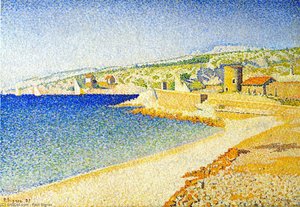
      On view at The Musée d'Orsay holds nine of his works, offering a significant gathering of his vision.

      Principal works · The hundred celebrated works

      6of 88

      Pierre Bonnard

      French Born in Fontenay-aux-Roses Post-Impressionism, Intimism, Les Nabis Wikipedia, 27 of 32 languages

      Pierre Bonnard

      He became a founding member of Les Nabis, a group of artists who sought to move beyond mere representation. He was a leading figure in the transition from Impressionism to Modernism, navigating the space between the fleeting light of the previous generation and the more structured, subjective explorations of the new century. La Vielle Femme, l’Enfant, et la Bassett (1927).

      On view at The physical presence of Bonnard’s vision remains scattered across several major institutions, allowing his specific approach to light and domesticity to be studied in various contexts.

      Principal works · The hundred celebrated works

      7of 88

      Émile Bernard

      Born in Lille Wikipedia, 28 of 32 languages

      Émile Bernard

      Bernard’s artistic development was significantly influenced by his travels in Brittany, where he encountered local traditions and landscapes that deeply resonated with him. Bernard's style played a crucial role in shaping Gauguin’s mature work, particularly his exploration of symbolism and flattened forms. He also associated with Vincent van Gogh, forming part of the “School of Petit-Boulevard” alongside Anquetin and Toulouse-Lautrec.

      Principal works · The hundred celebrated works

      8of 88

      Suzanne Valadon

      French Born in Bessines-sur-Gartempe Post-Impressionism Wikipedia, 27 of 32 languages

      Suzanne Valadon

      For nearly a decade, Valadon worked as an artist’s model, posing for prominent figures like Pierre-Auguste Renoir, Henri de Toulouse-Lautrec, and Edgar Degas. This period of modeling proved pivotal; Valadon wasn’t simply a passive subject but an active observer, dissecting the artistic gaze and internalizing its principles. In 1894, she became the first woman painter admitted to the prestigious Société Nationale des Beaux-Arts, a significant milestone in breaking down barriers for female artists.

      Master of Maurice Utrillo #12

      Principal works · The hundred celebrated works

      9of 88

      Maurice Denis

      French Born in Granville Nabis, Symbolism Wikipedia, 26 of 32 languages

      Maurice Denis

      Throughout his career, Denis’s style underwent a fascinating evolution. While remaining committed to the principles of symbolism and spiritual expression, he experimented with various techniques and influences. He was also a prolific writer and art critic, articulating his aesthetic theories in numerous essays and articles.

      Principal works · The hundred celebrated works

      10of 88

      Édouard Vuillard

      French Born in Cuiseaux Les Nabis, Intimism Wikipedia, 23 of 32 languages

      Édouard Vuillard

      Jean-Édouard Vuillard was born on 11 November 1868 in Cuiseaux, France. He joined the studio of Diogène Maillart, located in the former workspace of Eugène Delacroix on Place Fürstenberg. His tenure as a prominent member of the Nabis, a group of post-impressionist artists, allowed him to experiment with a visual language that prioritized subjective experience over mere imitation.

      On view at The quiet, patterned interiors that defined his career are preserved in several major international collections.

      Principal works · The hundred celebrated works

      11of 88

      Amrita Sher-Gil

      Hungarian-Indian Born in Budapest Modern Indian art, Avant-garde Wikipedia, 20 of 32 languages

      Amrita Sher-Gil

      She possessed an extraordinary ability to convey psychological depth in her portraits, capturing not just the physical likeness of her subjects but also their inner lives, their hopes, and their struggles. She didn’t merely depict what she saw; she imbued her paintings with emotion, creating works that are both visually stunning and deeply moving. She is rightfully regarded as a pioneer of modern Indian painting, bridging Western artistic techniques with indigenous traditions and paving the way for future generations of artists.

      Principal works · The hundred celebrated works

      12of 88

      Maurice Utrillo

      French Born in 18th arrondissement of Paris Post-Impressionism, School of Paris Wikipedia, 25 of 32 languages

      Maurice Utrillo

      Around 1909, Utrillo entered a distinctive phase of his work known as the "White Period." During these years, his approach to the canvas became deeply physical. This method allowed him to capture the weathered walls and timeworn facades of the Montmartre streets he knew so well. Utrillo remains a singular figure in the history of the School of Paris, largely because he was one of the few notable painters of Montmartre who was actually born and raised within the district.

      On view at To experience the quiet, textured streets of Montmartre through his eyes, one can travel to several major institutions.

      Pupil of Suzanne Valadon #8

      Principal works · The hundred celebrated works

      13of 88

      Félix Vallotton

      Swiss and French Born in Lannes Post-Impressionism, Symbolism, Les Nabis

      Félix Vallotton

      Vallotton’s approach to art was marked by a certain controlled distance. His style blended elements of Post-Impressionism and Symbolism, often resulting in a look that felt both modern and strangely still. This quality made him a major figure within the French avant-garde group Les Nabis, even if he remained a somewhat distinct presence among his peers.

      On view at To encounter the quiet tension of Vallotton’s interiors, one might travel to the Cantonal Museum of Fine Arts in Lausanne, Switzerland, where The Red Room is kept.

      Principal works · The hundred celebrated works

      14of 88

      Tom Thomson

      Canadian Born in Claremont Canadian Modernism Wikipedia, 18 of 32 languages

      Tom Thomson

      Before dedicating himself to art, Thomson explored various trades: he worked at an iron foundry, briefly attended business college, and even ventured west to Seattle where he honed his skills as a commercial artist. However, it was the discovery of Algonquin Park in 1912 that truly ignited Thomson’s artistic passion. Though he died before the formal establishment of the Group of Seven in 1920, Thomson is widely considered an unofficial member – a foundational influence whose artistic vision paved the way for their groundbreaking work.

      Principal works · The hundred celebrated works

      15of 88

      Emily Carr

      Canadian Born in Victoria Modernism, Post-Impressionism

      Emily Carr

      She pursued formal training at the San Francisco Art Institute (1890-1892) and later at the Westminster School of Art in London (1899), immersing herself in European artistic currents. A pivotal moment in her development came through her encounters with the First Nations communities along the British Columbia coast. Though recognition came relatively late in life, Emily Carr is now widely celebrated as “the Mother of Modern Canadian Art.” Her paintings are treasured for their beauty, their emotional depth, and their historical significance.

      Principal works · The hundred celebrated works

      16of 88

      Giovanni Segantini

      Italian Born in Arco Symbolism, Divisionism Wikipedia, 19 of 32 languages

      Giovanni Segantini

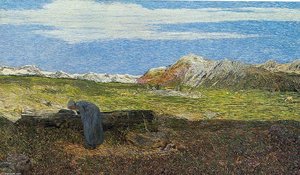
      Training at the Brera Academy: Segantini attended classes at the prestigious Brera Academy in Milan, where he encountered influential figures of the Scapigliatura movement. Symbolism: Alongside Divisionism, Segantini incorporated Symbolist elements into his work, imbuing his landscapes with deeper meanings and allegorical representations of life, death, and spirituality. Key Influences: His work was significantly influenced by Anton Mauve and Jean-François Millet, introduced to him through Vittorio Grubicy de Dragon, who became his advisor and dealer.

      Principal works · The hundred celebrated works

      17of 88

      Paul Sérusier

      French Born in Paris Post-Impressionism, Nabis, Synthetism Wikipedia, 21 of 32 languages

      Paul Sérusier

      Sérusier’s approach to the canvas was a deliberate departure from the pursuit of realistic depth. In works like Celtic Tale (1894), this method produces an arresting visual effect through the use of intensified colors.

      On view at It holds The Talisman, the work that defined his early departure from academicism.

      Principal works · The hundred celebrated works

      18of 88

      Henri Edmond Cross

      French Born in Douai Neo-Impressionism Wikipedia, 21 of 32 languages

      Henri Edmond Cross

      Cross’s initial artistic explorations leaned towards the Realist tradition, manifesting in portraits and still lifes that demonstrated technical skill but lacked a distinctive spark. Simultaneously, recurring bouts of rheumatism led him to seek solace in the warmer climate of southern France, beginning in 1883 and culminating in a permanent settlement in Saint-Clair in 1891. His first individual exhibition at the Galerie Druet in 1905, followed by a retrospective organized by Félix Fénéon at the Galerie Bernheim-Jeune in 1908, cemented his reputation as a leading figure in Neo-Impressionism.

      Principal works · The hundred celebrated works

      19of 88

      Theo van Rysselberghe

      Belgian Born in Ghent Neo-Impressionism Wikipedia, 19 of 32 languages

      Theo van Rysselberghe

      The true turning point in van Rysselberghe’s artistic development arrived with his encounter with Georges Seurat's A Sunday on La Grande Jatte at the eighth Impressionist exhibition in Paris in 1886. He forged close friendships with other Neo-Impressionist painters like Paul Signac, traveling with him along the French Riviera and exchanging ideas about technique and theory. His works are now held in prominent museum collections worldwide, including the Musée du Luxembourg in Paris and the Museum voor Schone Kunsten in Ghent, ensuring that his contribution to the history of art continues to be celebrated and appreciated by generations to come.

      Principal works · The hundred celebrated works

      21of 88

      Roger Fry

      British Born in London Post-Impressionism Wikipedia, 19 of 32 languages

      Roger Fry

      Born in 1866 into a prosperous Quaker family in Highgate, London, Fry’s early life was steeped in intellectual curiosity and a liberal atmosphere that fostered his burgeoning artistic sensibilities.

      Principal works · The hundred celebrated works

      22of 88

      Tivadar Csontváry Kosztka

      Hungarian Born in Sabinov Post-Impressionism, Expressionism Wikipedia, 19 of 32 languages

      Tivadar Csontváry Kosztka

      He embarked upon a period of intense preparation, fueled by unwavering self-belief and a relentless pursuit of artistic mastery. Initially rebuffed by traditional art schools, he persevered, traveling extensively throughout Europe—Rome, Paris, Munich—studying the masters and honing his skills. His paintings are held in prestigious collections such as the Hungarian National Gallery in Budapest and the Csontváry Museum in Pécs, ensuring that his legacy will endure for generations to come.

      Principal works · The hundred celebrated works

      23of 88

      Joos Vincent De Vos

      Dutch Born in Zundert Romanesque art

      Joos Vincent De Vos

      Born in Zundert, Netherlands, in 1853, Joos Vincent de Vos’s early life remains somewhat shrouded in mystery. He was the son of Jan Eugene Vos, a miller, and Marie Anne Verhaeghe. Furthermore, there’s a discernible connection to the Dutch Golden Age painters like Nicolaes Berchem, whose idyllic landscapes and meticulous rendering of objects share similarities with De Vos’s compositions.

      Principal works · The hundred celebrated works

      24of 88

      Duncan Grant

      Scottish Born in Aviemore Post-Impressionism Wikipedia, 13 of 32 languages

      Duncan Grant

      Duncan James Corrowr Grant, born in 1885 amidst the rugged beauty of Rothiemurchus Forest District in Scotland, embarked on a life that would indelibly mark the landscape of British art. His legacy is preserved in museums worldwide, including the Musée des Arts Décoratifs in Paris and numerous collections within the United Kingdom.

      Principal works · The hundred celebrated works

      25of 88

      Moïse Kisling

      Polish-French Born in Kraków Post-Impressionism, Expressionism Wikipedia, 19 of 32 languages

      Moïse Kisling

      Early works hinted at the structural innovations of Paul Cézanne and the bold chromaticism of André Derain, with subtle Cubist tendencies emerging – as evidenced in pieces like Portrait of Andre Salmon (1912). However, the outbreak of World War I proved a turning point. Following the war’s conclusion, Kisling returned to France in 1946, settling in Sanary-sur-Mer where he continued to paint until his death in 1953.

      Principal works · The hundred celebrated works

      26of 88

      Edward Seago

      British Impressionism

      Edward Seago

      The trajectory of Seago’s career was profoundly shaped by the turbulent era of World War II. The prestige of being collected by figures such as Queen Elizabeth The Queen Mother and Prince Philip solidified his standing as a premier chronicler of the British landscape. While he was largely a self-taught artist, his path was illuminated by the guidance of luminaries such as Sir Alfred Munnings and Bertram Priestman.

      Principal works · The hundred celebrated works

      27of 88

      Paul Ranson

      French Born in Limoges Post-Impressionism Wikipedia, 16 of 32 languages

      Paul Ranson

      As a central figure in the Les Nabis movement, Ranson moved beyond the fleeting impressions of light that defined his predecessors, seeking instead to weave a tapestry of symbolism and spiritual depth. The legacy of Paul Elie Ranson extends far beyond the boundaries of the Nabi movement.

      Principal works · The hundred celebrated works

      29of 88

      Henri Lebasque

      French Born in Champigné Post-Impressionism Wikipedia, 13 of 32 languages

      Henri Lebasque

      The Nabis’ emphasis on flattened forms, decorative patterns, and subtle color harmonies resonated deeply with his own artistic inclinations. Simultaneously, exposure to the theories of Georges Seurat and Paul Signac introduced him to the principles of Chromoluminarism – the scientific application of complementary colors to create luminous effects.

      Principal works · The hundred celebrated works

      30of 88

      József Rippl-Rónai

      Hungarian Born in Kaposvár ['Impressionism', 'Post-Impressionism', 'Symbolism'] Wikipedia, 15 of 32 languages

      József Rippl-Rónai

      A notable early piece, The Inn at Pont-Aven, established his ability to convey atmosphere through nuanced color palettes and expressive techniques. He was influenced by Mihály Munkácsy and later embraced the philosophies of Les Nabis. Rippl-Rónai Museum (Kaposvár): Established in 1934, this museum houses over 400 of his paintings, drawings, and personal items, serving as a vital center for preserving and promoting his legacy.

      Principal works · The hundred celebrated works

      31of 88

      George Henry

      Scottish Glasgow Boys

      George Henry

      Born in Irvine, Scotland, in 1858, Henry became a cornerstone of the influential Glasgow Boys movement, a group of rebellious young artists who sought to break free from the stifling constraints of academic realism. The foundations of Henry’s aesthetic were laid during his formative years at the Glasgow School of Art. He is now recognized not just as a regional painter, but as a pioneer who helped bridge the gap between traditional Scottish painting and the modern European avant-garde.

      Principal works · The hundred celebrated works

      32of 88

      Maxime Maufra

      French Born in Nantes Post-impressionism; Pointillism Wikipedia, 11 of 32 languages

      Maxime Maufra

      This pivotal decision coincided with the arrival of fellow artists Paul Gauguin and Paul Sérusier at the Bateau-Lavoir, fostering a collaborative environment conducive to experimentation and innovation. The rugged Breton coastline served as an inexhaustible source of inspiration for Maufra’s canvases—studies of dramatic skies, turbulent seascapes, and serene harbors—each imbued with palpable emotion and atmospheric depth. “ Study for Pont-Aven Red Sky (Former Title: L)” remains a cornerstone of Breton art history, housed in the Musée de Pont-Aven —a poignant reminder of Maufra’s enduring contribution to Impressionist and Symbolist aesthetics.

      Principal works · The hundred celebrated works

      33of 88

      Roderic O'Conor

      Irish Born in Castleknock Post-Impressionism

      Roderic O'Conor

      Early works still bear the imprint of Impressionistic techniques, but they gradually evolve into a more individual style incorporating elements of Pointillism and expressive mark-making. Initially, his subject matter centered on Breton life – peasants, landscapes, and scenes of rural existence. His association with prominent figures like Somerset Maugham, Gerald Kelly, and Aleister Crowley further underscores his involvement in the vibrant intellectual life of Paris.

      Principal works · The hundred celebrated works

      34of 88

      Charles van den Eycken

      Belgian Born in Brussels Post-Impressionism

      Charles van den Eycken

      The influence of Post-Impressionism is subtly present in his work, particularly in his use of color and brushwork. Though he didn't fully embrace the radical experimentation of artists like Van Gogh, he adopted a brighter palette and looser application of paint than was typical of earlier academic painting.

      Principal works · The hundred celebrated works

      35of 88

      Augustus Edwin John

      Welsh Born in Tenby Post-Impressionism

      Augustus Edwin John

      The subtle tonal harmonies of Puvis de Chavannes also left an indelible mark on his aesthetic vision. These diverse influences coalesced into a distinctive style characterized by vibrant hues, fluid brushwork, and a compelling focus on capturing the essence of his subjects. Simultaneously, he absorbed the innovations of French contemporaries like Matisse and Gauguin, embracing their expressive use of color and rejection of traditional academic constraints.

      Principal works · The hundred celebrated works

      36of 88

      Georges Lemmen

      Belgian Born in Schaerbeek Neo-Impressionism, Pointillism Wikipedia, 12 of 32 languages

      Georges Lemmen

      In the vibrant tapestry of late nineteenth-century European art, few threads shimmer with as much scientific precision and poetic grace as those woven by Georges Lemmen. His formative training at Saint George’s Hospital in London provided him with a profound understanding of human anatomy —a skill honed alongside his contemporary, Helen Lemmens. The Spirit of Les XX: His contribution to one of history's most important artistic collectives, which challenged the status quo and paved the way for modernism.

      Principal works · The hundred celebrated works

      37of 88

      Nicolas Tarkhoff

      Russian/French ['Impressionism', 'Post-Impressionism', 'Fauvism']

      Nicolas Tarkhoff

      Nicolas Alexandrovich Tarkhoff, born in Moscow on January 20, 1871, emerged from a family of prosperous merchants—a background that initially seemed destined for commerce rather than canvas. He briefly fulfilled military obligations before finding employment with the Brest-Litovsk Railways—a period of deferment before fully embracing his artistic calling. He initially settled in Munich before permanently relocating to the French capital in November 1898.

      Principal works · The hundred celebrated works

      38of 88

      Jan Sluijters

      Dutch Born in 's-Hertogenbosch Expressionism, Luminism Wikipedia, 8 of 32 languages

      Jan Sluijters

      He produced a diverse collection of portraits, ranging from formal studio studies to informal snapshots of everyday life. Throughout his career, he remained committed to pushing the boundaries of Dutch painting, forging his own unique path amidst the shifting currents of modern art. While renowned for his landscapes, Sluijters was also a prolific portrait painter.

      Principal works · The hundred celebrated works

      39of 88

      Charles Cottet

      French Born in Le Puy-en-Velay Post-Impressionism, Symbolism, Pont-Aven School, Bande Noire Wikipedia, 12 of 32 languages

      Charles Cottet

      cottet's artistic style is characterized by dark, evocative paintings of rural brittany and seascapes. he led a school of painters known as the bande noire or "nubians" group, which was influenced by the realism and dark colors of courbet. his work is also associated with the picturesque seaside symbolism of the pont-aven school.

      Principal works · The hundred celebrated works

      40of 88

      Émile Schuffenecker

      French Born in Fresne-Saint-Mamès Post-Impressionism Wikipedia, 12 of 32 languages

      Émile Schuffenecker

      The work of Schuffenecker is characterized by a delicate balance between the observational accuracy of Impressionism and the emotive, flattened planes of Post-Impressionism. Color Harmony: An intentional use of palette to evoke specific emotional responses, influenced by his studies with Gauguin. Claude Émile Schuffenecker (1851–1934) belongs to that evocative second group—a figure whose brushstrokes helped define the edges of Post-Impressionism even as he remained somewhat obscured by the monumental shadows of his contemporaries.

      Principal works · The hundred celebrated works

      41of 88

      Roger Eliot Fry

      British Post-Impressionism

      Roger Eliot Fry

      Though initially drawn to the natural sciences at Cambridge University, Fry’s true calling lay elsewhere, beckoning him towards the vibrant world of art. He embarked on studies in Paris and Italy, honing his skills as a landscape painter, yet it was not merely technical proficiency he sought but an understanding of the very essence of visual expression. Roger Eliot Fry, born in London on December 14th, 1866, emerged from a distinguished Quaker family steeped in intellectual rigor and social conscience.

      Principal works · The hundred celebrated works

      43of 88

      Spencer Gore

      British Born in Epsom Post-Impressionism Wikipedia, 9 of 32 languages

      Spencer Gore

      Gore’s artistic approach distinguished itself through a deliberate embrace of pictorial construction, mirroring the stylistic innovations championed by Impressionists and Post-Impressionists. Color Palette: Gore favored harmonious palettes dominated by muted greens, blues, and yellows—colors that evoked the tranquility and grandeur of the natural world. Tate curator Helena Bonett noted that Gore's death from pneumonia was sudden, leaving behind an unfinished masterpiece—a testament to his unwavering pursuit of artistic excellence.

      Principal works · The hundred celebrated works

      44of 88

      Igor Grabar

      Russian Born in Buda Post-Impressionism Wikipedia, 16 of 32 languages

      Igor Grabar

      This role evolved as the political landscape shifted, and he eventually served as the Head of the State Tretyakov Gallery from 1918 to 1925. Beyond the classroom, he took on the responsibility of directing the Scientific Research Institute of Art History at the Academy of Sciences. He remained at the top of the Soviet art establishment until his death on May 16, 1960.

      On view at His paintings can be found in several major collections across Russia and Ukraine.

      Principal works · The hundred celebrated works

      45of 88

      Samuel Peploe

      Scottish Born in Edinburgh Post-Impressionism, Colourist Wikipedia, 8 of 32 languages

      Samuel Peploe

      However, a crucial shift occurred during painting trips to northern France with J.D. The influence of Édouard Manet is particularly evident in his fluid brushwork and the interplay of light and shadow, while Paul Cézanne’s structural approach to composition also began to subtly inform his work. Paintings like Still Life with Pink and Red Roses in a Chinese Vase demonstrate his mastery of still life, while works such as The Green Blouse showcase his ability to capture light and form.

      Principal works · The hundred celebrated works

      48of 88

      Henry Lamb

      British Born in Adelaide Post-Impressionism

      Henry Lamb

      John's emphasis on drawing from life, a direct lineage from the Slade School tradition, instilled in Lamb a commitment to observation and expressive line work. Lamb’s involvement in the Camden Town Group in 1911 and later the London Group in 1913 solidified his position within the progressive art movement challenging conventional artistic norms.

      Principal works · The hundred celebrated works

      49of 88

      Maurice Prendergast

      Newfoundlander-American Born in St. John's Post-Impressionism Wikipedia, 12 of 32 languages

      Maurice Prendergast

      Prendergast’s time in Paris between 1891 and 1895 was the period where his technical foundation met the radical shifts of the late nineteenth century. He did not rely on a single institution, instead splitting his focus between the Académie Colarossi and the Académie Julian. Rather than following the social realism of his contemporaries in The Eight, he pushed the movement toward a more decorative and rhythmic sensibility.

      On view at Prendergast’s presence in major American collections confirms his lasting impact on the development of modernism.

      Principal works · The hundred celebrated works

      50of 88

      Gustave Loiseau

      French Born in 16th arrondissement of Paris Post-Impressionism Wikipedia, 9 of 32 languages

      Gustave Loiseau

      Gustave Loiseau, a name perhaps less immediately recognized than some of his Post-Impressionist contemporaries, nevertheless occupies a significant place in the story of French painting at the turn of the 20th century. Throughout his career, Loiseau exhibited regularly at prestigious venues such as the Salon des Indépendants and the Salon de la Société Nationale, gaining recognition from both critics and collectors.

      Principal works · The hundred celebrated works

      52of 88

      Konstantin Yuon

      Russian Born in Moscow Impressionism, Symbolism, Socialist Realism Wikipedia, 10 of 32 languages

      Konstantin Yuon

      Konstantin Fyodorovich Yuon, born in Moscow on October 24, 1875, emerged from a family steeped in both Swiss-Russian heritage and artistic inclination. There, he came under the tutelage of distinguished masters like Konstantin Savitsky and Konstantin Korovin, absorbing their techniques and philosophies that would shape his initial artistic trajectory. Notable Works: New Planet, Bean Vine, Parade on the Red Square on November 7, 1941.

      Principal works · The hundred celebrated works

      53of 88

      Albert André

      French Born in 2nd arrondissement of Lyon Post-Impressionism Wikipedia, 7 of 32 languages

      Albert André

      André’s influence extends beyond his own artistic output. His meticulous study of Renoir's work and his dedication to preserving the artist's legacy resulted in one of the most comprehensive and insightful biographies of Renoir ever written—a testament to André’s deep appreciation for his friend and mentor. He wasn't a painter who sought fame or recognition; his primary motivation was to capture the beauty and complexity of the world around him—particularly the intimate corners of domestic life.

      Principal works · The hundred celebrated works

      56of 88

      David Jandi

      Hungarian Impressionism & Post-Impressionism

      David Jandi

      Despite this influence, Jandi skillfully blended tonal considerations with Impressionistic color harmonies, resulting in paintings that possessed both depth and luminosity. Notable Subjects: Jandi’s artistic output focused primarily on Hungarian landscapes, particularly those surrounding Nagybánya (Bathory), where he established his studio. Although overshadowed by more celebrated contemporaries, Jandi’s contribution to Hungarian art history is undeniable—he represents a crucial bridge between Impressionism and tonal painting, embodying the spirit of artistic exploration during Hungary's Belle Époque.

      Principal works · The hundred celebrated works

      57of 88

      Francisco Iturrino

      Spanish Born in Santander Post-Impressionism, Fauvism Wikipedia, 7 of 32 languages

      Francisco Iturrino

      A particularly significant relationship fueled this evolution: his close friendship with Henri Matisse. His travels throughout Spain, France, and Morocco were not simply geographical shifts but immersive experiences that infused his canvases with the essence of each locale. Iturrino’s association with Pablo Picasso further enriched his early career, culminating in a joint exhibition at the prestigious Vollard Gallery in 1901—a landmark moment that signaled his arrival on the Parisian art scene.

      Principal works · The hundred celebrated works

      58of 88

      Charles-François-Prosper Guérin

      French Born in Sens Post-Impressionism Wikipedia, 9 of 32 languages

      Charles-François-Prosper Guérin

      Intimate Still Lifes where everyday objects were transformed through light and color;. Through mediums like oil and pastel, Guérin explored themes of memory and emotion, ensuring that his legacy remains a vital and vibrant chapter in the history of French Post-Impressionism. Born into the artistic heartbeat of Paris in 1875, Charles-François Guérin carried the weight of a profound creative inheritance.

      Principal works · The hundred celebrated works

      59of 88

      Emmanuel Zairis

      Greek Realism, Impressionism

      Emmanuel Zairis

      He spent considerable time there, capturing scenes from the Trinità dei Monti – the iconic church overlooking the city – and other bustling corners of the Eternal City. The influence of Roman art is evident in Zairis’s compositions, his use of light and shadow, and his meticulous attention to detail. Works like “ The Old Egg Seller ” exemplify this style—a solitary figure bathed in sunlight, conveying both resilience and vulnerability.

      Principal works · The hundred celebrated works

      62of 88

      James Dickson Innes

      British Born in Llanelli Post-Impressionism, Fauvism Wikipedia, 5 of 32 languages

      James Dickson Innes

      Perhaps most importantly, he was included in the groundbreaking Armory Show in New York City, Chicago, and Boston in 1913—a watershed moment that introduced modernist art to an American audience and brought international attention to Innes's unique vision.

      Principal works · The hundred celebrated works

      63of 88

      Edouard Cortès

      French Born in Lagny-sur-Marne Post-Impressionism Wikipedia, 9 of 32 languages

      Edouard Cortès

      The atmospheric effects and subtle play of light recall the Impressionists, particularly Camille Pissarro and Alfred Sisley. Post-Impressionist artists like Eugène Boudin also influenced his approach to capturing fleeting moments and atmospheric conditions. In his final year, 1969, he received the prestigious Prix Antoine-Quinson from the Salon de Vincennes – a fitting tribute to a lifetime dedicated to artistic expression.

      Principal works · The hundred celebrated works

      64of 88

      Konstantinos Maleas

      Greek Born in Istanbul Post-Impressionism Wikipedia, 6 of 32 languages

      Konstantinos Maleas

      Maleas's arrival in Athens coincided with a period of artistic conservatism. He traveled extensively throughout Greece, Western Europe, Palestine, and Egypt, constantly seeking new inspiration and refining his artistic vision. Beyond painting, Maleas actively engaged in public discourse, contributing to discussions about modernizing the Greek language and illustrating the first alphabet book in Demotiki—the new modern Greek vernacular.

      Principal works · The hundred celebrated works

      66of 88

      William Henry Margetson

      British Born in Denmark Hill Victorian Elegance & Post-Impressionism Wikipedia, 4 of 32 languages

      William Henry Margetson

      William Henry Margetson, born in Camberwell, Surrey, in December 1861, was a painter whose career unfolded across the shifting tides of Victorian and early 20th-century British art. His journey began with formal training at Dulwich College, followed by studies at the prestigious Royal College of Art and the Royal Academy Schools – a path typical for aspiring artists of his time, yet one he navigated with distinct talent and sensitivity.

      Principal works · The hundred celebrated works

      67of 88

      Filippo De Pisis

      Italian Born in Ferrara Post-Impressionism Wikipedia, 8 of 32 languages

      Filippo De Pisis

      His legacy is found in: The fusion of poetry and painting: Proving that visual art can be as lyrical and metaphorically rich as the written word. He remains a celebrated figure in the annals of Italian art, remembered not just as a painter of scenes, but as a chronicler of the ephemeral soul. Despite the disruptions of World War II and his eventual return to Italy, De Pisis never lost the cosmopolitan spirit that had defined his youth.

      Principal works · The hundred celebrated works

      68of 88

      Henry Ottmann

      French Born in Ancenis Impressionism/Post-Impressionism Wikipedia, 6 of 32 languages

      Henry Ottmann

      Ottmann’s artistic output was remarkably diverse, encompassing sensitive portraits, intimate nudes, vibrant still lifes, and evocative scenes of modern life. His portraiture stands out for its ability to capture not just the likeness but also the inner character of his subjects. Exhibiting alongside these masters at the Galerie Paul Durand-Ruel in 1911 and 1912 allowed Ottmann to absorb their techniques and stylistic approaches firsthand.

      Principal works · The hundred celebrated works

      69of 88

      Ernest Zobole

      Welsh Expressionism

      Ernest Zobole

      Ernest Zobole (1927-1999) remains a singular voice in Welsh art history, an artist whose canvases breathed with the grit and beauty of the Rhondda Valleys during the twilight years of industrial Britain. Born in Tylorstown, within the heart of Rhondda Cynon Taf, Zobole’s formative years were deeply steeped in the atmosphere of coal mining communities. His work provides a visual archive of the 56 Group Wales era and the broader post-war Welsh art movement, documenting the social and physical transformations of his homeland.

      Principal works · The hundred celebrated works

      70of 88

      Allen Tucker

      American Born in Brooklyn Post-Impressionism Wikipedia, 3 of 32 languages

      Allen Tucker

      He fostered a close relationship with Wilhelmina Weber Furlong and her husband Thomas Furlong, both influential figures within the League’s administration. Throughout his career, he continued to paint prolifically, spending summers exploring diverse landscapes—from the rugged coast of New England to the majestic Rockies and the sun-drenched vistas of New Mexico. While often compared to Van Gogh for his expressive brushwork and emotional intensity, Tucker carved out his own distinct niche in American art history.

      Principal works · The hundred celebrated works

      72of 88

      Anna Ostroumova-Lebedeva

      Russian Born in Saint Petersburg Watercolor painting; Woodcut technique Wikipedia, 9 of 32 languages

      Anna Ostroumova-Lebedeva

      As a member of the influential Mir iskusstva (World of Art) group and later The Four Arts association, she remained at the heart of the modernist movement, advocating for an aesthetic that valued beauty, craftsmanship, and historical continuity.

      Principal works · The hundred celebrated works

      73of 88

      Yuriy Khymych

      Yuriy Khymych

      His canvases are characterized by bold brushstrokes, vibrant color palettes dominated by yellows, blues, and greens – the colors of the Ukrainian flag – and a dynamic interplay of light and shadow. This isn’t an abandonment of realism, but rather a transformation of it; Khymych seeks to convey the emotional truth of his subjects through poetic abstraction. He also demonstrates an affinity for the bold color palettes and expressive brushwork of Vincent van Gogh and the post-impressionists.

      Principal works · The hundred celebrated works

      74of 88

      Bertalan Pór

      Hungarian Born in Babiná Modernism, Fauvism, Cubism Wikipedia, 5 of 32 languages

      Bertalan Pór

      Pór's artistic trajectory took a decisive turn upon his return to Hungary with his involvement with “The Eight” (Nyolcak), a collective of artists who challenged the conservative norms of the Hungarian art establishment. Though they only mounted three collective exhibitions, their impact was seismic, introducing Hungary to the radical aesthetics of Fauvism, Cubism, and Expressionism. Notable Works: Bulls, The Family, Margitka, Proletarians of the World, Unite!

      Principal works · The hundred celebrated works

      75of 88

      Hayley Lever

      Australian/American Born in Adelaide Post-Impressionism Wikipedia, 4 of 32 languages

      Hayley Lever

      Ives in 1906 marked a period of personal stability that coincided with an intensification of his artistic exploration, culminating in the evocative “ Van Gogh’s Hospital, Holland” series of 1908—a clear indication of the profound influence Van Gogh's expressive use of color and emotion had on his developing style.

      Principal works · The hundred celebrated works

      76of 88

      Liu Kang

      Born in Henan

      Liu Kang

      He moved away from strict realism towards a more emotive representation of his subjects. Southeast Asian Focus: A defining characteristic of his work is the focus on scenes depicting life in Southeast Asia – capturing everyday moments, cultural practices, and landscapes with sensitivity and warmth. Shi Kai’s Impact: The artist Shi Kai is identified as a significant influence on Liu Kang's artistic development.

      Principal works · The hundred celebrated works

      79of 88

      William Penhallow Henderson

      American Born in Medford Post-Impressionism Wikipedia, 3 of 32 languages

      William Penhallow Henderson

      His imaginative and often surreal designs for productions like “Alice in Wonderland” (1915) showcased a remarkable versatility and a willingness to experiment with unconventional materials and techniques. The costumes he created – particularly ‘ Two of Spades,’ a striking clown ensemble—were bold, expressive, and deeply rooted in the spirit of the story. He drew inspiration from a diverse range of sources, including the works of J.M.W.

      Principal works · The hundred celebrated works

      80of 88

      Julio Vila y Prades

      Spanish Born in Valencia Post-Impressionism Wikipedia, 4 of 32 languages

      Julio Vila y Prades

      Born in Valencia in 1873, his life was a journey through the vibrant landscapes of Spain and the sweeping vistas of Latin America, leaving behind a body of work that serves as a window into a bygone era.

      Principal works · The hundred celebrated works

      81of 88

      Malcolm Drummond

      British Born in Maidenhead Post-Impressionism, Camden Town Group Wikipedia, 3 of 32 languages

      Malcolm Drummond

      The tensions within the group, particularly surrounding Sickert’s relationships, ultimately led to its dissolution, but it served as a crucial incubator for artistic experimentation and innovation. His paintings of interiors—densely packed rooms filled with furniture, figures, and a palpable sense of atmosphere—are particularly compelling, offering glimpses into the lives of ordinary Londoners. During this period, he produced some of his most memorable works, including depictions of the Hammersmith Palais de Danse and the London Law Courts – scenes that capture the energy and dynamism of early 20th-century London.

      Principal works · The hundred celebrated works

      82of 88

      Bernard Meninsky

      British Born in Konotop Post-Impressionism Wikipedia, 4 of 32 languages

      Bernard Meninsky

      He absorbed the bold colors and expressive brushwork of artists like Cézanne and Van Gogh, but tempered them with a distinctly British sensibility. The impact of his wartime experiences undoubtedly shaped his artistic vision.

      Principal works · The hundred celebrated works

      84of 88

      Jozsef Nemes Lamperth

      Hungarian Born in Budapest Post-Impressionism, Secessionism Wikipedia, 1 of 32 languages

      Jozsef Nemes Lamperth

      Born in Budapest, Hungary, in 1891, József Nemes Lamperth’s life was tragically cut short at the young age of thirty-three. Influenced by artists like Vincent van Gogh, Paul Gauguin, and the German Expressionists, Lamperth embraced a subjective approach to artmaking, prioritizing emotional intensity over strict representation. The Memorial Exhibition held at the Hungarian National Gallery in 2014, titled “The Painter and the Museum,” served as a crucial step in recognizing his contribution to the country’s artistic heritage.

      Principal works · The hundred celebrated works

      85of 88

      Josep Mompou i Dencausse

      Spanish Born in Barcelona Post-Impressionism & Fauvism Wikipedia, 2 of 32 languages

      Josep Mompou i Dencausse

      His journey into the heart of visual expression was deeply personal, rooted in a lineage of creativity; as the son of a painter, his eyes were trained from childhood to perceive the subtle shifts in atmosphere and the rhythmic dance of color across the Spanish landscape. The historical significance of Josep Mompou Dencausse lies in his role as a bridge between the traditional landscape traditions of Spain and the avant-garde movements of Europe.

      Principal works · The hundred celebrated works

      86of 88

      Charles Cundall

      British Born in Stretford Post-Impressionism, Fauvism Wikipedia, 1 of 32 languages

      Charles Cundall

      Born in Stretford, Lancashire, Charles Ernest Cundall emerged as a remarkably versatile figure within the British art landscape of the early twentieth century. His travels through Paris, Italy, Sweden, Russia, and Spain further expanded his visual vocabulary, allowing him to absorb the diverse light and atmosphere of the European continent, which would eventually manifest in his mastery of topographical subjects. His election as a Royal Academician in 1944 was a crowning achievement, reflecting his standing among the most distinguished painters of his generation.

      Principal works · The hundred celebrated works

      87of 88

      Theophrastos Triantafyllidis

      Greek Born in İzmir Impressionism, Post-Impressionism, Expressionism Wikipedia, 1 of 32 languages

      Theophrastos Triantafyllidis

      Photographer: Impressionistic watercolor captures a nostalgic scene of an artist & children. Bathers on the boat: An evocative oil painting blending expressionism & impressionism, capturing a moment of transition with fluid forms and atmospheric depth. Triantafyllidis’s artistic vision was profoundly shaped by the Impressionist movement, spearheaded by artists like Monet and Renoir.

      Principal works · The hundred celebrated works

      88of 88

      Theodor Kern

      Austrian Born in Salzburg Impressionism Wikipedia, 1 of 32 languages

      Theodor Kern

      As his training progressed through the Fine Art Academy in Vienna, Kern began to develop a command over draftsmanship that would later allow him to transition seamlessly between the delicate precision of religious frescoes and the expansive, sweeping vistas of the natural world.

      Principal works · The hundred celebrated works

      Plates

      Celebrated Post-impressionist paintings

      1. Starry Night (New York, MoMA) by Vincent van Gogh

        Starry Night (New York, MoMA)

        Vincent van Gogh

        1889 · MOMA - Museum of Modern Art, New York City

      2. The Card Players by Paul Cézanne

        The Card Players

        Paul Cézanne

        1893 · Musée d'Orsay, Paris

      3. Children in the Pasture (also known as Orchard below Bihorel Church) by Paul Gauguin

        Children in the Pasture (also known as Orchard below Bihorel Church)

        Paul Gauguin

        1884 · Thyssen-Bornemisza Museum, Madrid

      4. La Goulue Dancing (also known as Les Almees) by Henri De Toulouse-Lautrec

        La Goulue Dancing (also known as Les Almees)

        Henri De Toulouse-Lautrec

        1895 · Musée d'Orsay, Paris

      5. The Jetty, Cassis, Opus 198 by Paul Signac

        The Jetty, Cassis, Opus 198

        Paul Signac

        1889 · Metropolitan Museum of Art, new york

      6. The Dining Room in the countryside by Pierre Bonnard

        The Dining Room in the countryside

        Pierre Bonnard

      7. Iron Bridges at Asnières by Émile Bernard

        Iron Bridges at Asnières

        Émile Bernard

        1887 · MOMA - Museum of Modern Art, New York City

      Chronology

      A Post-impressionist chronology in paintings

      1. 1881
      2. 1887
      3. 1887
      4. 1889
      5. 1889
      6. 1891
      7. 1894
      8. 1895
      9. 1895
      10. 1898
      11. 1907
      12. 1917
      13. 1918
      14. 1921

      Notes and figures

      The catalogue in figures

      Country of birth
      France24
      United Kingdom10
      Hungary5
      Italy4
      Netherlands3
      Canada3
      Belgium3
      Ukraine3
      Decade of birth
      1820s1
      1830s1
      1840s1
      1850s11
      1860s25
      1870s20
      1880s12
      1890s7
      1900s3
      1910s2
      1920s3
      Museums holding their key works
      Musée d'Orsay10
      MOMA - Museum of Modern Art4
      Tate Gallery3
      Van Gogh Museum2
      Art Institute of Chicago2
      Thyssen-Bornemisza Museum2
      Ferens Art Gallery2
      Hungarian National Gallery2

      Index of artists

      List of the 88 Post-impressionist artists

      1. 1Vincent van GoghVincent van Gogh1853–1890
      2. 2Paul CézannePaul CézanneFrench · 1839–1906
      3. 3Paul GauguinPaul GauguinFrench · 1848–1903
      4. 4Henri De Toulouse-LautrecHenri De Toulouse-LautrecFrench · 1864–1901
      5. 5Paul SignacPaul SignacFrench · 1863–1935
      6. 6Pierre BonnardPierre BonnardFrench · 1867–1947
      7. 7Émile BernardÉmile Bernard1868–1941
      8. 8Suzanne ValadonSuzanne ValadonFrench · 1865–1938
      9. 9Maurice DenisMaurice DenisFrench · 1870–1943
      10. 10Édouard VuillardÉdouard VuillardFrench · 1868–1940
      11. 11Amrita Sher-GilAmrita Sher-GilHungarian-Indian · 1913–1941
      12. 12Maurice UtrilloMaurice UtrilloFrench · 1883–1955
      13. 13Félix VallottonFélix VallottonSwiss and French · 1865–1925
      14. 14Tom ThomsonTom ThomsonCanadian · 1877–1917
      15. 15Emily CarrEmily CarrCanadian · 1871–1945
      16. 16Giovanni SegantiniGiovanni SegantiniItalian · 1858–1899
      17. 17Paul SérusierPaul SérusierFrench · 1864–1927
      18. 18Henri Edmond CrossHenri Edmond CrossFrench · 1856–1910
      19. 19Theo van RysselbergheTheo van RysselbergheBelgian · 1862–1926
      20. 20Walter SickertWalter SickertBritish · 1860–1942
      21. 21Roger FryRoger FryBritish · 1866–1934
      22. 22Tivadar Csontváry KosztkaTivadar Csontváry KosztkaHungarian · 1853–1919
      23. 23Joos Vincent De VosJoos Vincent De VosDutch · 1853–1890
      24. 24Duncan GrantDuncan GrantScottish · 1885–1978
      25. 25Moïse KislingMoïse KislingPolish-French · 1891–1953
      26. 26Edward SeagoEdward SeagoBritish · 1910–1974
      27. 27Paul RansonPaul RansonFrench · 1861–1909
      28. 28David BurliukDavid BurliukRussian/Ukrainian · 1882–1967
      29. 29Henri LebasqueHenri LebasqueFrench · 1865–1937
      30. 30József Rippl-RónaiJózsef Rippl-RónaiHungarian · 1861–1927
      31. 31George HenryGeorge HenryScottish · 1828–1895
      32. 32Maxime MaufraMaxime MaufraFrench · 1861–1918
      33. 33Roderic O'ConorRoderic O'ConorIrish · 1860–1940
      34. 34Charles van den EyckenCharles van den EyckenBelgian · 1859–1923
      35. 35Augustus Edwin JohnAugustus Edwin JohnWelsh · 1878–1961
      36. 36Georges LemmenGeorges LemmenBelgian · 1865–1916
      37. 37Nicolas TarkhoffNicolas TarkhoffRussian/French · 1871–1930
      38. 38Jan SluijtersJan SluijtersDutch · 1881–1957
      39. 39Charles CottetCharles CottetFrench · 1863–1925
      40. 40Émile SchuffeneckerÉmile SchuffeneckerFrench · 1851–1934
      41. 41Roger Eliot FryRoger Eliot FryBritish · 1866–1934
      42. 42Frank BramleyFrank BramleyEnglish · 1857–1915
      43. 43Spencer GoreSpencer GoreBritish · 1878–1914
      44. 44Igor GrabarIgor GrabarRussian · 1871–1960
      45. 45Samuel PeploeSamuel PeploeScottish · 1871–1935
      46. 46Herbert F RoyleHerbert F RoyleBritish · 1870–1958
      47. 47Medardo RossoMedardo RossoItalian, French · 1858–1928
      48. 48Henry LambHenry LambBritish · 1883–1960
      49. 49Maurice PrendergastMaurice PrendergastNewfoundlander-American · 1858–1924
      50. 50Gustave LoiseauGustave LoiseauFrench · 1865–1935
      51. 51Yuri Ivanovych KhymychYuri Ivanovych KhymychUkrainian · 1928–2003
      52. 52Konstantin YuonKonstantin YuonRussian · 1875–1958
      53. 53Albert AndréAlbert AndréFrench · 1869–1954
      54. 54Charles Langton LocktonCharles Langton LocktonBritish · 1856–1932
      55. 55Georges D'EspagnatGeorges D'EspagnatFrench · 1870–1950
      56. 56David JandiDavid JandiHungarian · 1893–1944
      57. 57Francisco IturrinoFrancisco IturrinoSpanish · 1864–1924
      58. 58Charles-François-Prosper GuérinCharles-François-Prosper GuérinFrench · 1875–1939
      59. 59Emmanuel ZairisEmmanuel ZairisGreek · 1878–1948
      60. 60Konstantin GorbatovKonstantin GorbatovRussian · 1876–1945
      61. 61Mark GertlerMark GertlerBritish · 1891–1939
      62. 62James Dickson InnesJames Dickson InnesBritish · 1887–1914
      63. 63Edouard CortèsEdouard CortèsFrench · 1882–1969
      64. 64Konstantinos MaleasKonstantinos MaleasGreek · 1879–1928
      65. 65Jules Alexandre GrunJules Alexandre GrunFrench · 1868–1938
      66. 66William Henry MargetsonWilliam Henry MargetsonBritish · 1861–1940
      67. 67Filippo De PisisFilippo De PisisItalian · 1896–1956
      68. 68Henry OttmannHenry OttmannFrench · 1877–1927
      69. 69Ernest ZoboleErnest ZoboleWelsh · 1927–1999
      70. 70Allen TuckerAllen TuckerAmerican · 1866–1939
      71. 71Antonio SicurezzaAntonio SicurezzaItalian · 1905–1979
      72. 72Anna Ostroumova-LebedevaAnna Ostroumova-LebedevaRussian · 1871–1955
      73. 73Yuriy KhymychYuriy Khymych
      74. 74Bertalan PórBertalan PórHungarian · 1880–1964
      75. 75Hayley LeverHayley LeverAustralian/American · 1876–1958
      76. 76Liu KangLiu Kang
      77. 77Eduardo VianaEduardo VianaSpanish · 1881–1967
      78. 78Fikret Muallâ SaygıFikret Muallâ SaygıFrench · 1903–1967
      79. 79William Penhallow HendersonWilliam Penhallow HendersonAmerican · 1877–1943
      80. 80Julio Vila y PradesJulio Vila y PradesSpanish · 1873–1930
      81. 81Malcolm DrummondMalcolm DrummondBritish · 1880–1945
      82. 82Bernard MeninskyBernard MeninskyBritish · 1891–1950
      83. 83Panagiotis TetsisPanagiotis TetsisGreek · 1925–2016
      84. 84Jozsef Nemes LamperthJozsef Nemes LamperthHungarian · 1891–1924
      85. 85Josep Mompou i DencausseJosep Mompou i DencausseSpanish · 1888–1968
      86. 86Charles CundallCharles CundallBritish · 1890–1971
      87. 87Theophrastos TriantafyllidisTheophrastos TriantafyllidisGreek · 1881–1955
      88. 88Theodor KernTheodor KernAustrian · 1900–1969

      The visitor asks

      Frequently asked questions

      Reading room

      Essays on TopImpressionists.com

      Famous paintings

      Masterpieces we love, by movement

      Further rooms

      Continue the visit