


 실제 크기로 보기
 보내기
보내기 공유하기
공유하기
 상세 보기
상세 보기 가이드 보기

 이미지 다운로드
 유사 작품 더 보기
 X-레이
X-레이 슬라이드 쇼 보기
 통계 정보
통계 정보In the Woods


 상세 보기
상세 보기
지클레 / 아트 프린트
빠른 제작과 다양한 마감 옵션을 선택할 수 있는 박물관 수준의 지클레이 및 캔버스 프린트. ( 수작업 채색 복제본 주문하기 디지털 이미지 판매 채널로 전환)




P118B ₩10

P118H ₩10

P118W ₩10

P438Z ₩10

P508JH ₩12

P508YH ₩12

P805H ₩10

P805Z ₩10

P919BZ ₩10

P919G ₩10

P919XJ ₩10

P959ZH ₩10

P968JZ ₩12

W106C ₩8

W218G ₩10

W218JH ₩8

W218Y ₩10

W307PJ ₩10

W316G ₩10

W316PJ ₩8

W316Y ₩10

W398PJ ₩8

W4111J ₩10

W500HY ₩15

W500JH ₩15

W692G ₩12

W849H ₩8

W940BG ₩15

W953PJ ₩8




표준 규격
맞춤 제작
CM
INCH
작품의 원본 비율을 그대로 유지하는 프리셋 사이즈 중에서 선택해 보세요.
Loading sizes...

가로 너비
높이
액자나 벽면 크기에 맞춰 필요한 가로와 세로 길이를 입력해 주세요. 프린트는 원본 이미지보다 크게 제작할 수 없으며 오직 자르는 것만 가능하므로, 비율이 다른 사이즈를 선택할 경우 이미지의 일부가 잘려 나갈 수 있습니다. 인쇄 작업에 들어가기 전, 최종 확인을 위해 디지털 목업을 보내드립니다. 이 페이지에 표시된 이미지는 실제 잘리는 영역을 나타내지 않으며, 오직 목업을 통해서만 정확한 확인이 가능합니다.


 유리 옵션은 110cm 미만 크기에서만 선택 가능합니다.

In the Woods
지클레 / 아트 프린트
복제본 규격
-


총 결제 금액
₩ 93667
In the Woods
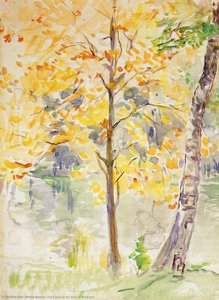
Paul Cézanne’s In the Woods stands as a cornerstone of Post-Impressionism, demonstrating Cézanne's profound ability to distill the essence of nature into a powerfully expressive watercolor.
Created in 1900, this artwork isn’t merely a depiction of trees; it’s an embodiment of Cézanne’s revolutionary artistic vision—a deliberate departure from Impressionistic optical realism and a fervent exploration of form and color as conduits for emotion. The painting captures the serene stillness of a woodland scene bathed in autumnal hues, featuring trees rendered with meticulous detail yet imbued with an underlying dynamism.
The Artistic Vision
Cézanne’s approach to watercolor distinguishes him from his contemporaries. Rather than striving for photographic accuracy, he prioritized conveying feeling and perception—a core principle of Post-Impressionism. He sought to capture not just what the eye sees but how it *feels*. The artist's intention was to portray nature as an active force shaping itself through time.
Consider the composition: Cézanne eschews traditional perspective, flattening the space and presenting multiple viewpoints simultaneously. This technique—characteristic of Cézanne’s oeuvre—creates a sense of depth without relying on conventional linear recession. Instead, he uses overlapping planes of color to suggest volume and texture, inviting the viewer to engage in an imaginative process.
Artistic Techniques
The watercolor medium itself contributes significantly to the painting's aesthetic impact. Cézanne skillfully manipulates pigment layering—applying thin washes of color over thicker glazes—to achieve remarkable luminosity and tonal variation. This technique allows for subtle gradations of hue and shade, capturing the dappled light filtering through the foliage.
Observe the meticulous rendering of individual trees. Cézanne employs a hexagonal brushstroke pattern—a technique he famously described as “drawing with color”—to build up form and texture. These hexagonal strokes are densely packed together, creating an impressionistic surface that vibrates with energy. The artist’s masterful control over pigment placement ensures that each tree possesses its own distinct character.
Historical Context
In the Woods reflects Cézanne’s broader engagement with Symbolism and his fascination with capturing psychological states alongside visual representations.
Cézanne's work aligns perfectly with the movement's core tenets—a rejection of academic conventions and a prioritization of subjective experience. Like many Symbolist painters, Cézanne sought to express inner emotions through imagery rooted in nature, mirroring the Romantic tradition’s preoccupation with sublime landscapes.
Relevance Today
Today, In the Woods continues to resonate with audiences worldwide. Its understated beauty and masterful execution serve as an enduring testament to Cézanne’s artistic genius.
For those seeking inspiration or contemplating a decorative addition to their home—a high-quality reproduction of this iconic artwork—TopImpressionists offers exceptional prints that faithfully capture the painting's luminous palette and textural richness. Explore more masterpieces by Cézanne and similar artists at Paul Cézanne: In the Woods and John Singer Sargent: Study of a Fig Tree.
To delve deeper into the pigments utilized in art, visit The Art Media Pigment.
질의응답
"In the Woods"의 작가는 누구인가요?
"In the Woods"의 작가는 세잔입니다.
세잔의 "In the Woods"은(는) 퍼블릭 도메인인가요?
세잔의 "In the Woods"은(는) 퍼블릭 도메인 - 저작권 보호 기간이 만료되었습니다 상태입니다. 이 상태에 따라 해당 작품 이미지의 복제 가능 여부가 결정됩니다.
세잔의 다른 이름이나 별칭에는 무엇이 있나요?
세잔은(는) 폴 세잔, 폴 세자네(으)로도 알려져 있습니다.




작가 소개
폴 세잔: 자연의 구조를 탐구한 혁신의 선구자
폴 세잔은 1839년 에이즈-프랑스 프로방스에서 태어나 인상주의의 순간적인 감각을 넘어 입체주의의 파편화된 형태로 이어지는 예술계에 지대한 영향을 미친 거장입니다. 그의 여정은 즉각적인 찬사를 받는 것이 아니라, 자기 의심과 비판적 무시로 점철된 예술 탐구의 느린 연소였으며, 결국 현대 미술의 흐름을 영원히 바꾸어 놓을 유산을 남겼습니다. 그의 아버지는 처음에는 모자 장인이었지만 나중에는 은행가가 되어 번영한 가정에서 태어난 세잔은 야심 찬 예술가에게는 드문 재정적 안정을 누렸고, 상업적 성공의 즉각적인 압박 없이 자신의 열정에 헌신할 수 있는 자유를 누렸습니다. 처음에는 아버지의 야망에 따라 법학을 전공하도록 유도되었지만, 예술적 표현의 힘은 너무나 강렬하여 결국 법학을 포기하고 그림을 그리는 길을 선택했습니다. 이는 그의 삶을 정의하는 결정이었습니다. 초기에는 젊은 시절 널리 퍼져 있던 낭만주의와 바비종파 화가들의 풍경에 대한 헌신 등 다양한 영향들을 받았지만, 폴 고갱과 조르주 세라티 같은 예술가들과의 만남을 통해 그들의 혁신적인 색채와 형태 접근 방식을 접하면서 자신만의 독특한 길을 개척하기 시작했습니다.어둠에서 구조로: 스타일 진화
세잔의 초기 작품은 종종 유진 들라크루아의 영향을 받은 낭만주의 회화의 특징인 극적이고 감정적으로 격앙된 주제를 반영하며, 어두운 팔레트와 표현적인 붓놀림이 그의 캔버스를 지배했습니다. 그러나 이 초기 단계는 훨씬 더 분석적이고 혁신적인 접근 방식으로 나아가기 위한 단순한 발판에 불과했습니다. 인상주의자들이 선호하는 빛의 순간적인 감각을 단순히 포착하는 데 만족하지 못한 세잔은 사물의 근본적인 구조를 이해하고 표현하려는 탐구를 시작했습니다. 그는 자신이 보는 것이 아니라, 현실을 구성하는 기본적인 형태가 어떻게 인식되는지를 알고 싶어 했습니다. 이러한 갈망은 자연의 모양을 기하학적 등가물로 분해하게 되었고, 이는 수십 년 후 입체주의 혁명을 예견했습니다. 그의 기술은 복잡한 색채와 질감을 구축하기 위해 세심하게 겹쳐진 작은 반복적인 붓놀림으로 특징지어지며, 이전에는 회화에서 볼 수 없었던 견고함과 깊이를 만들어냈습니다. 그는 환상적인 공간에 관심이 없었으며, 대신 전통적인 관점에 도전하고 그의 구성의 구축된 본성을 적극적으로 참여하도록 강요하는 동시에 여러 관점에서 객체를 제시했습니다. 이러한 의도적인 왜곡은 임의적이지 않았지만, 시간의 단일한 순간을 나타내는 것이 아니라 인식의 종합인 형태에 대한 보다 완전한 이해를 전달하려는 시도였습니다.풍경, 정물, 인체: 주요 작품과 반복되는 모티프
세잔의 작품 세계는 놀라울 정도로 다양하며 풍경, 정물, 초상화, 그리고 수영하는 사람들의 묘사를 포괄하지만, 모든 작품은 그의 독특한 형태와 색채 접근 방식으로 통일되어 있습니다. 1880년에 그려진 <자스 드 부팡 연못>은 그의 풍경 작업을 보여주며, 형태와 음색의 신중한 배열을 통해 자연의 본질을 포착하는 그의 능력을 보여줍니다. 1866년에 제작된 <에밀 졸라 초상화>는 그의 발달하는 스타일을 드러내고 가까운 친구이자 동료 작가인 에밀 졸라의 지적인 강렬함에 대한 설득력 있는 통찰력을 제공합니다. 사과와 다른 과일을 특징으로 하는 정물은 단순히 물체의 표현이 아니라 부피, 빛, 공간 관계 탐구입니다. <몽 생트 빅투아르> 시리즈는 세잔에게 집착이었으며, 수십 년 동안 형태와 관점을 끊임없이 조사할 수 있게 해준 반복적인 모티프였습니다. 이러한 그림들은 산의 묘사가 아닌 깊이, 부피 및 빛과 그림자의 상호 작용에 대한 연구입니다. 마지막으로, 유토피아 풍경 속에 있는 누드 인물을 묘사한 <수영하는 사람> 시리즈는 인체 탐구와 자연과의 연결을 나타내며 종종 시대를 초월하고 조용한 사색의 감각이 스며 있습니다.혁신으로 단련된 유산: 현대 미술에 대한 세잔의 영향
폴 세잔의 후대 예술가들에게 미치는 영향은 측정할 수 없을 정도입니다. 그는 20세기 주요 예술 운동의 길을 열어 그의 선구적인 기여로 인해 "현대 미술의 아버지"로 널리 알려져 있습니다. 파블로 피카소와 조르주 브라크는 세잔의 기하학적 형태와 다중 관점에 대한 강조에 깊이 의존했으며, 이는 입체주의의 핵심 원칙이 되었습니다. 그의 대담한 색채 사용은 앙리 마티스를 비롯한 야수파 운동에도 영감을 주어 자연스럽지 않은 생생한 색조를 포용했습니다. 심지어 초현실주의자 예술가들도 세잔의 주관적인 인식과 심리적 깊이에 대한 탐구에서 공감대를 찾았습니다. 특정 운동을 넘어, 세잔은 전통적인 학문적 제약을 거부하고 자신의 개인적인 비전을 강조하면서 수많은 화가가 새로운 표현 방식을 탐색할 수 있도록 해방했습니다. 그는 현실의 모방이라는 정의 자체를 도전하며, 기본 구조와 주관적인 인식에 기반한 시각적 경험을 구축하는 데 초점을 맞추어 미술사의 새로운 시대가 시작되었습니다. 1906년 그의 죽음은 끝이 아니라 시작 – 그의 혁신적인 비전으로 인해 깊이 형성된 현대 미술사 한 페이지의 여명이었다.
세잔
1839 - 1906 , 프랑스
작가 정보 요약
- 국적: 프랑스
- 대표작:
- 자스 드 부팡 연못
- 에밀 졸라 초상
- 숲
- 생트 빅투아르 산 시리즈
- 목욕하는 사람들
- 사망일: 1906년 10월 22일
- 영향을 받은 예술 사조:
- 입체주의
- 야수파
- 초현실주의
- 영향을 준 예술가:
- 낭만주의
- 바비종파
- 폴 고갱
- 조르주 세라
- 미켈란젤로
- 루벤스
- 피에르 푸제
- 예술 사조: 후기 인상주의
- 전체 이름: 폴 세잔
- 출생일: 1839년 1월 19일
- 출생지: 에이구스탱-프로방스, 프랑스
관련 기사

Ephemeral Visions: Exploring the Artistic Legacy & Contemporary Practice of Watercolor Painting
Explore the captivating world of watercolor painting! Discover its rich history, essential techniques, influential artists & collecting tips. A comprehensive guide for art enthusiasts from TopImpressionists.

Impressionistic Landscapes: 10 Masterpieces That Changed Art & Decor
Journey into the heart of Impressionism! Explore 10 masterpieces by Monet, Renoir & Degas that revolutionized landscape art. Discover their stories, techniques & find museum-quality reproductions to elevate your home decor on TopImpressionists.com.

Watercolor Wonders: 10 Masterpieces That Redefined Art History | TopImpressionists
Journey through 10 legendary watercolor masterpieces by Sargent, Turner & Homer! Explore iconic landscapes, portraits & floral art that redefined history. Find museum-quality reproductions and curated decor ideas at TopImpressionists.com.

폴 세잔 명작 25선: 시대를 초월하는 예술과 공간의 미학 | TopImpressionists
폴 세잔의 시대를 초월하는 명작 25점을 만나보세요. 인상주의를 넘어 후기 인상주의를 개척한 화가의 예술 세계와 정물화, 풍경화 속 숨겨진 이야기를 TopImpressionists에서 감상하세요. 고품질 아트 프린트와 캔버스 액자로 공간에 예술을 더해보세요! 지금 바로 컬렉션을 탐험하세요.

폴 클레 최고작 25선: 색채와 형식이 빚어낸 예술의 정수 | TopImpressionists
폴 클레 최고작 25선을 만나보세요. 추상 미술의 거장 폴 클레의 색채와 감성이 담긴 명화들을 감상하고, 작품 속 숨겨진 이야기와 화풍을 탐구하세요. TopImpressionists에서 고품질 아트 프린트와 인테리어 아이디어를 찾아보세요! 지금 바로 컬렉션을 둘러보세요.
테마, 스타일, 특징별로 큐레이션된 작품들을 만나보세요.


